
 By NewsMatrix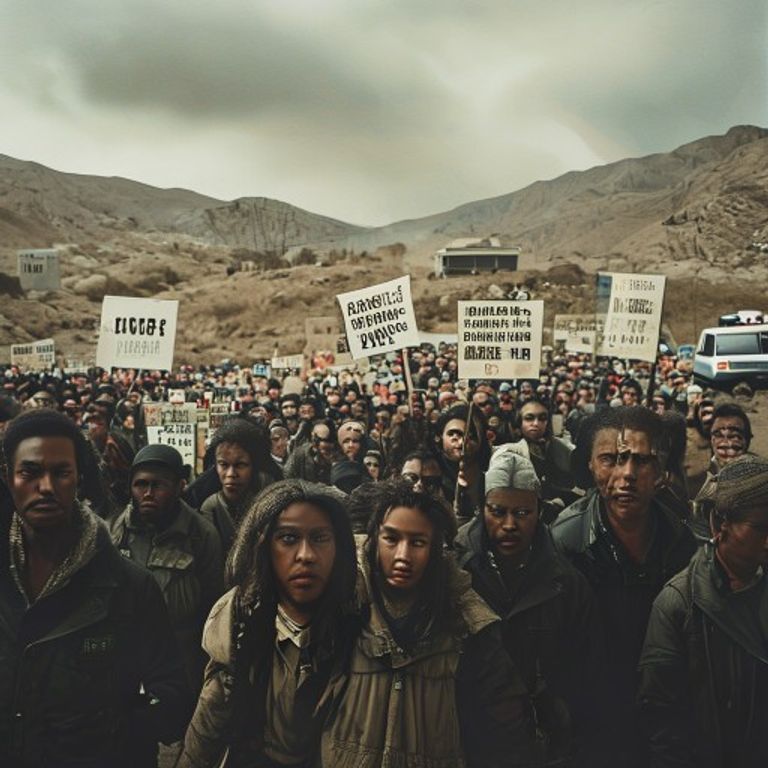
Escalating Crisis in PoJK: Pakistan’s Crackdown and International Outcry Amidst Protests
The already volatile geopolitical landscape of South Asia has been further destabilized by a severe crackdown on intensifying PoJK protests in Pakistan-occupied Jammu and Kashmir (PoJK). The situation reached a critical juncture when Pakistan’s Defence Minister, Khawaja Asif, controversially stated, “I put the protesters of PoJK in the same category as India and consider them as enemies,” a remark that has ignited widespread condemnation. This statement followed reports of over 30 protesters tragically killed during clashes that erupted on Monday, drawing swift and stern criticism from international human rights organizations. Amnesty International USA, expressing deep concern, described the Pakistani government’s actions as “disturbing” and urged Islamabad to “restore all communications access and allow media and independent observers into the area.” The escalating violence and the government’s response underscore a profound humanitarian crisis and raise serious questions about human rights and political stability in the region.
The Genesis of Discontent: Grievances Fueling PoJK Protests
The recent surge in protests across PoJK is not an isolated incident but the culmination of deep-seated socio-economic and political grievances that have festered for decades. Residents of the region have long voiced complaints regarding what they perceive as systemic neglect and exploitation by the Pakistani administration. At the heart of these grievances are severe economic hardships, including rampant inflation, high unemployment rates, and persistent shortages of essential commodities. The cost of living has skyrocketed, making daily survival a struggle for many families. Exacerbating these issues are exorbitant electricity tariffs, which have been a particularly contentious point, leading to widespread public outrage. Despite the region’s significant hydropower potential, local communities often face frequent power outages and unaffordable electricity bills, while accusations persist that the generated power primarily benefits other parts of Pakistan.
Furthermore, residents claim that their natural resources, particularly timber and minerals, are exploited with little to no benefit accruing to the local populace. There is a palpable sense of marginalization and a lack of local control over their own resources and governance. Demands for fair resource distribution, greater administrative autonomy, and an end to perceived economic disenfranchisement have been central to the protest movement. The call for unification with the Indian-administered Kashmir, or at least a greater degree of self-governance, has also been a recurring theme, highlighting the complex political aspirations of the region’s inhabitants. These long-standing issues have created a fertile ground for dissent, culminating in the intensified demonstrations that have recently gripped PoJK, turning a simmering discontent into a full-blown crisis.
Khawaja Asif’s Provocative Statement: A Diplomatic Firestorm
Pakistan’s Defence Minister, Khawaja Asif, plunged the situation into an even deeper crisis with his incendiary remarks concerning the PoJK protesters. When questioned about the ongoing demonstrations and the reported casualties, Asif equated the local populace protesting for their rights with India, labelling them as “enemies.” This statement has been widely condemned as not only insensitive but also deeply problematic, as it appears to delegitimize the grievances of his own citizens and categorize them alongside a geopolitical adversary. Such rhetoric from a high-ranking official carries significant weight and can have profound implications, both domestically and internationally. It risks alienating the very people the government is meant to protect and serve, further fueling anti-establishment sentiments within PoJK.
Critics argue that Asif’s statement exemplifies a dismissive and antagonistic approach to legitimate protest, failing to acknowledge the humanitarian and economic underpinnings of the unrest. Instead of seeking dialogue and de-escalation, his words appear to justify a hardline stance against dissent, potentially emboldening further repressive measures. Diplomatically, such a statement complicates Pakistan’s narrative on Kashmir at international forums, particularly when advocating for the rights of Kashmiris. Equating protesters with an external enemy nation undermines the government’s moral authority and provides ammunition for those who critique Pakistan’s human rights record in the disputed territories. The statement has not only sparked outrage among the affected communities but has also raised concerns among international observers about the Pakistani government’s approach to internal dissent and its commitment to fundamental freedoms.
The Tragic Toll: Casualties and a Deepening Crackdown
The escalation of the PoJK protests has tragically claimed an alarming number of lives, with reports indicating that over 30 individuals have been killed since the demonstrations intensified on Monday. These fatalities, primarily resulting from clashes between protestors and security forces, underscore the severe and often lethal consequences of the state’s response to public dissent. Beyond the grim death toll, numerous others have sustained injuries, some critically, further exacerbating the humanitarian crisis unfolding in the region. Eyewitness accounts and unverified reports suggest the use of disproportionate force by security personnel, leading to widespread condemnation from human rights advocates and international observers.
In the aftermath of the violence, the Pakistani government has allegedly implemented a comprehensive crackdown, extending beyond direct confrontation with protestors. Reports suggest a systematic attempt to control information and restrict communication, including internet shutdowns and disruptions to mobile services across affected areas. This communication blackout severely hampers the ability of residents to communicate with the outside world, report abuses, or coordinate relief efforts. Simultaneously, there have been accusations of media restrictions, with independent journalists and observers reportedly denied access or facing impediments in their efforts to cover the events objectively. Such measures raise serious concerns about transparency and accountability, creating an environment where human rights violations can occur with limited oversight. The suppression of information and media access not only curtails fundamental freedoms but also contributes to an atmosphere of fear and uncertainty among the populace, making it challenging to ascertain the full scope of the tragedy and hold perpetrators accountable.
Amnesty International USA’s Intervention: A Call for Transparency and Rights
Amidst the escalating violence and reports of a government crackdown, Amnesty International USA has emerged as a significant voice, expressing profound alarm over the situation in PoJK. The organization unequivocally described the Pakistani authorities’ actions against the protesters as “disturbing,” a term that carries considerable weight from a leading global human rights watchdog. Amnesty International USA’s statement went beyond mere condemnation, issuing concrete demands to the Pakistani government. Specifically, it urged Islamabad to “restore all communications access and allow media and independent observers into the area.” These demands highlight critical concerns regarding freedom of expression, freedom of assembly, and the right to information, all fundamental human rights that appear to be under threat.
The call for restoring communications access is vital in an age where information flow is crucial for both transparency and humanitarian aid. Communication blackouts not only isolate communities but also prevent external scrutiny of state actions. Similarly, the demand for allowing media and independent observers into the area is paramount for ensuring accurate reporting and impartial investigations into alleged abuses. The presence of independent observers can deter further human rights violations and provide credible accounts of events on the ground. Amnesty International’s intervention elevates the PoJK crisis to an international human rights issue, placing significant pressure on Pakistan to adhere to its international obligations regarding human rights. Their involvement signals that the world is watching, and their reports will be crucial in shaping international perceptions and potential diplomatic responses to the unfolding situation, underscoring the urgency for Islamabad to act transparently and uphold fundamental rights.
Historical Context and Geopolitical Repercussions
The unrest in PoJK is deeply rooted in the complex historical and geopolitical dynamics of the broader Kashmir dispute, a contentious issue that has fueled animosity between India and Pakistan since their partition in 1947. PoJK, administered by Pakistan, and Jammu and Kashmir, administered by India, both lay claim to the entire former princely state of Jammu and Kashmir. This unresolved territorial dispute has led to multiple wars and a persistent state of tension, shaping the lives of millions across the region. The people of PoJK often find themselves caught in the crossfire of this larger conflict, with their own aspirations and grievances frequently overshadowed by the strategic interests of both nations.
Khawaja Asif’s statement, equating local protestors with India, not only highlights the Pakistani government’s perception of internal dissent through a security lens but also risks further complicating the already strained India-Pakistan relationship. Such rhetoric could be interpreted by India as an attempt to deflect attention from internal issues or as further evidence of Pakistan’s alleged heavy-handed approach in the disputed territory. For the international community, the escalating violence and human rights concerns in PoJK add another layer of complexity to an already intractable dispute, potentially attracting greater international scrutiny and mediation efforts. The stability of South Asia is intricately linked to the resolution of the Kashmir issue, and events like the current PoJK protests serve as a stark reminder of the human cost of unresolved historical conflicts and the potential for internal strife to spill over into broader regional instability. The international community, therefore, watches closely, recognizing the potential for these local grievances to escalate into wider geopolitical repercussions.
Voices from the Ground: Demands for Justice and Dignity
Beneath the headlines of violence and political rhetoric lies the poignant struggle of the ordinary people in PoJK, whose voices, though often suppressed, articulate clear demands for justice, dignity, and a better future. The ongoing protests are a visceral manifestation of their desperation and resolve. Central to their demands is an end to what they describe as chronic economic exploitation. They seek equitable distribution of resources, particularly the immense hydroelectric power generated from their region, which they argue is disproportionately benefiting other parts of Pakistan while their own communities suffer from high tariffs and power shortages. The calls for affordable electricity and readily available basic necessities like flour are not mere economic demands; they are fundamental pleas for a dignified existence.
Beyond economic grievances, the protestors also articulate a desire for genuine political representation and autonomy. Many feel disenfranchised, believing that their region lacks adequate local governance and that decisions affecting their lives are made without their input. There is a strong yearning for self-determination, whether through greater integration with Indian-administered Kashmir or through enhanced self-governance within Pakistan. The repeated calls for the restoration of communication services and media access are not just practical needs but symbolic demands for transparency and accountability. They want the world to see their plight and for their narratives to be heard unfiltered. These protests, therefore, represent a collective cry against perceived injustice, a demand for their fundamental human rights to be respected, and an urgent appeal for their aspirations for a just and prosperous future to be acknowledged and addressed by both national and international stakeholders.
The Path Forward: De-escalation and Dialogue
The current crisis in PoJK necessitates immediate and decisive action from the Pakistani government, moving beyond confrontational rhetoric and towards a strategy of de-escalation and genuine dialogue. The loss of over 30 lives and the widespread condemnation from international bodies like Amnesty International underscore the urgent need for a shift in approach. Continued repression and communication blackouts will only deepen public resentment, further alienate the local population, and exacerbate the instability in an already sensitive region. A primary step towards resolving the crisis must involve the cessation of all forms of violence against the protestors and a commitment to upholding fundamental human rights, including the rights to peaceful assembly and freedom of expression.
The government must prioritize restoring full communication services across PoJK, allowing residents to connect with family, access information, and enable transparent reporting by media and independent observers. Furthermore, opening channels for meaningful dialogue with protest leaders and community representatives is crucial. Addressing the core grievances related to economic disparities, resource allocation, and governance issues through transparent and inclusive mechanisms could pave the way for a sustainable resolution. International pressure and diplomatic engagement can also play a vital role in encouraging Islamabad to adopt a more conciliatory and rights-respecting approach. The long-term stability and prosperity of PoJK, and by extension, the broader South Asian region, depend on the ability of all parties to move beyond entrenched positions and work towards a peaceful, just, and equitable solution that respects the rights and aspirations of its people.
Conclusion: A Crisis Demanding Global Attention
The escalating situation in Pakistan-occupied Jammu and Kashmir presents a multifaceted crisis demanding immediate global attention. Khawaja Asif’s controversial statements, the tragic loss of over 30 lives during intense PoJK protests, and the subsequent severe crackdown have painted a grim picture of human rights violations and political instability. Amnesty International USA’s “disturbing” assessment and calls for restored communication and observer access highlight the gravity of the situation and the urgent need for international scrutiny. The grievances fueling these protests are deep-rooted, stemming from decades of alleged economic exploitation, lack of autonomy, and perceived neglect. As the region grapples with the aftermath of violence and widespread dissent, the onus is on the Pakistani government to de-escalate the situation, engage in meaningful dialogue, and uphold its international human rights obligations. Failure to address these fundamental issues with sensitivity and transparency risks further destabilizing an already volatile region, with far-reaching consequences for both its inhabitants and the broader geopolitical landscape of South Asia. The world watches, hoping for a resolution that prioritizes human dignity, justice, and lasting peace.