
 By NewsMatrix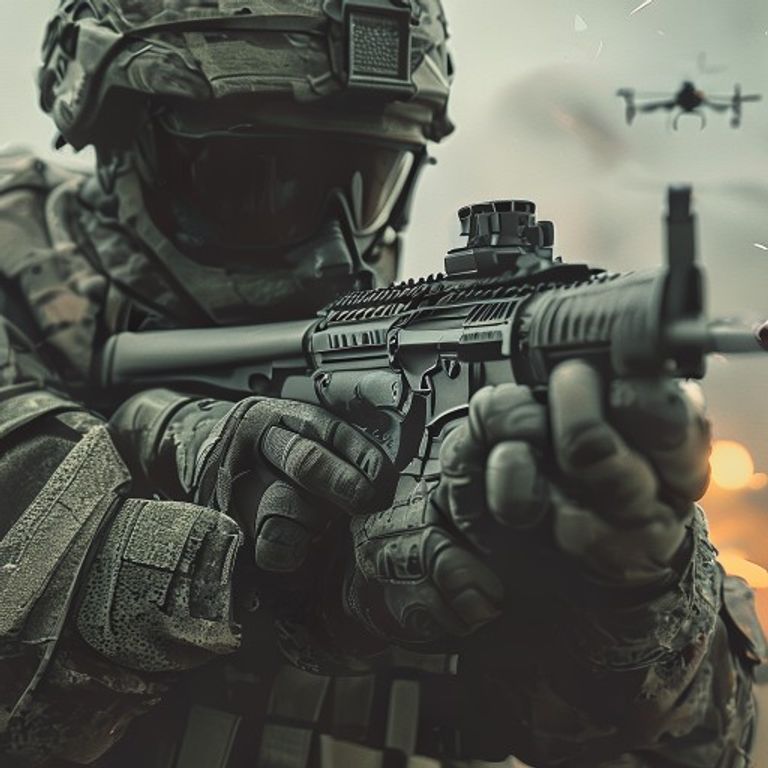
The Changing Face of the Battlefield
Modern warfare is undergoing a rapid and terrifying transformation. The once-clear skies of the frontline are now contested territory, saturated by a relentless swarm of unmanned aerial systems (UAS). From inexpensive, off-the-shelf quadcopters used for real-time reconnaissance to sophisticated, loitering munitions—commonly known as kamikaze drones—the infantry soldier finds themselves under constant surveillance and existential threat. At NewsMatrix, we have closely monitored this evolution, recognizing that the ability of a lone soldier to survive and remain effective hinges on their capacity to neutralize these airborne predators. The traditional reliance on large-scale air defense systems is no longer sufficient; the threat has moved down to the squad level. Enter the era of specialized anti-drone ammunition: a critical last line of defense for the modern infantryman.
The Urgency of the Aerial Threat
For decades, infantry units operated with the luxury of being relatively invisible to aerial observation unless enemy air forces were actively engaged. Today, that luxury has evaporated. Small drones provide adversaries with a bird’s-eye view of defensive positions, directing artillery fire with surgical precision or guiding suicide drones directly into bunkers and vehicles. This shift has necessitated a fundamental rethinking of infantry defense protocols. Soldiers can no longer wait for centralized support to address these immediate threats. They need the tools to act decisively and instantly.
The Vulnerability of Small Units
Small units, operating in remote or forward-deployed locations, are the most vulnerable. They lack the heavy anti-aircraft weaponry required to engage traditional aircraft and often fall outside the protective umbrella of localized electronic jamming devices. This gap in security is exactly where the emerging technology of anti-drone bullets proves its worth. By integrating a defense mechanism directly into the infantry’s primary weapon system, they gain a tangible, reliable method to protect themselves when electronic countermeasures fail or are simply not available.
Engineering the Solution: Specialized Munitions
The concept behind anti-drone ammunition is as innovative as it is essential. These are not standard ball rounds; they are highly engineered projectiles designed specifically for the unique characteristics of small drones. Drones are lightweight, agile, and often made of fragile materials like carbon fiber or plastic. Conventional bullets, designed to penetrate body armor or cover, often pass clean through these delicate structures, causing minimal functional damage unless a direct hit to a battery or flight controller is achieved—a feat akin to hitting a moving target with a needle.
How Anti-Drone Bullets Work
Anti-drone rounds operate on a fundamentally different principle. Upon exiting the muzzle, or following a short flight, these rounds are designed to achieve one of several specialized effects:
- Controlled Fragmentation: The bullet is engineered to break apart upon impact with the drone’s chassis or rotors, creating a cloud of high-velocity shrapnel that increases the probability of disabling the craft.
- Enhanced Surface Area: Some designs incorporate mechanisms to expand significantly upon impact, effectively functioning as a shotgun-like projectile at rifle distances, which is devastating for rotor-based systems.
- Dynamic Proximity Effect: Advanced iterations are exploring miniaturized sensors within the projectile that trigger a fragmentation event when they detect the proximity of a target, significantly reducing the requirement for pinpoint accuracy during high-stress encounters.
India’s Strategic Push: ARDE and Private Innovation
NewsMatrix has been tracking the proactive stance taken by India’s defense sector in addressing this critical security gap. The Armament Research and Development Establishment (ARDE), a primary DRDO laboratory, has been instrumental in spearheading the research into these next-generation munitions. By leveraging their extensive experience in ballistics and warhead design, ARDE is developing indigenous solutions tailored to the diverse terrains in which Indian soldiers operate—from high-altitude mountain passes to dense jungle environments.
Collaborating for Security
Beyond state-run laboratories, the collaboration with private defense firms has accelerated the development timeline. These private entities bring agility, rapid prototyping capabilities, and a commercial mindset to the defense ecosystem. This dual approach ensures that the innovation pipeline is both robust and responsive to the real-world feedback provided by soldiers on the ground. The result is a series of munitions that are not only effective but also cost-efficient and easy to integrate into the existing standard-issue assault rifles used by the infantry.
Empowering the Infantry
The primary benefit of this technology is the profound psychological and tactical shift it provides to the soldier. When equipped with specialized anti-drone rounds, the soldier is no longer a passive target. They are empowered. Knowing they possess a reliable, last-resort defense mechanism significantly improves morale and defensive posture.
Direct Counter-Measures
These munitions allow infantry units to perform a “hard kill” on drones that have bypassed electronic jamming or are operating autonomously. By forcing the adversary to account for the risk of their reconnaissance or kamikaze platforms being shot down, the defender effectively reclaims a degree of freedom and initiative. It forces the enemy to commit more assets and take greater risks, thereby disrupting their operational tempo.
Future Perspectives and Conclusion
As the conflict landscape continues to change, the arms race between aerial intrusion and ground-level defense will only intensify. Anti-drone bullets are not a silver bullet; they are a vital component of a layered defensive strategy that includes jamming, awareness sensors, and tactical maneuver. However, they are arguably the most important element for the individual soldier. At NewsMatrix, we believe that the continued development and widespread deployment of these specialized munitions will be a defining factor in the survivability of infantry in the coming decade.
Investing in the protection of our frontline personnel is the highest priority. By enabling even the smallest, most isolated units to effectively counter the threat from the sky, nations can ensure that their soldiers remain the masters of their own domain, regardless of the technological advancements of the adversary. The future of infantry warfare is here, and it is undeniably linked to the ability to control the airspace directly above one’s head.