
 By NewsMatrix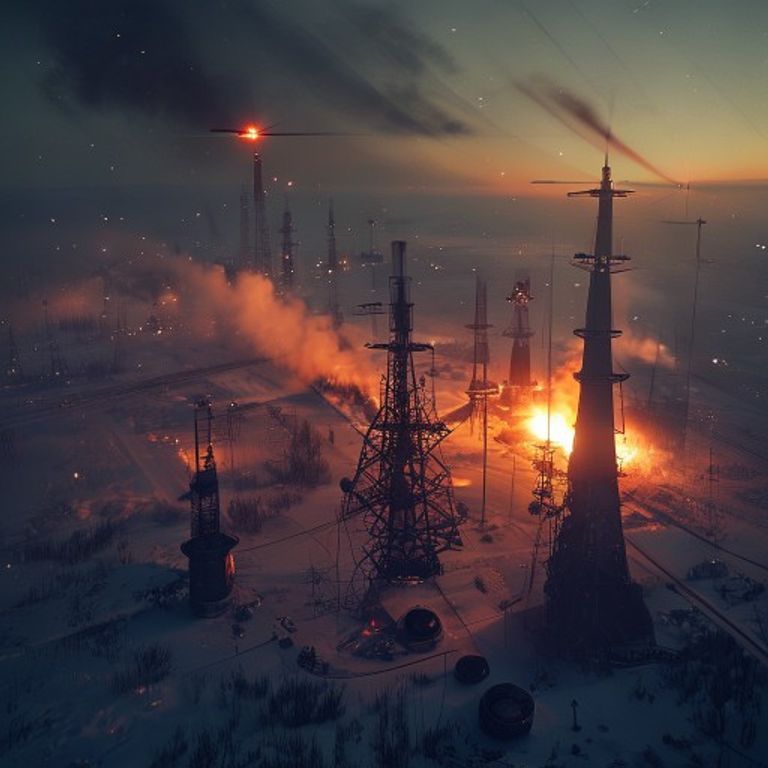
Strategic Escalation in the Heartland
In a significant escalation of its long-range military capabilities, Ukraine has successfully targeted a critical Russian satellite communications center located in Dubna. This latest strike, which President Volodymyr Zelenskyy confirmed, marks the second time the facility has been hit, underscoring Kyiv’s relentless commitment to dismantling the infrastructure that supports Russia’s war machine. As NewsMatrix reports, this operation is not an isolated incident but a central component of an intensifying campaign designed to disrupt Russian military intelligence, coordination, and command structures.
The facility in Dubna, situated over 500 kilometers from the Ukrainian border, represents a profound shift in the conflict. By successfully reaching deep into Russian territory, Ukraine is demonstrating that no Russian asset, regardless of its distance from the front line, is safe from precision long-range strikes. This tactical shift is forcing Moscow to reconsider the vulnerabilities of its domestic infrastructure and the limitations of its air defense systems.
The Strategic Objective: Crippling Intelligence
The primary focus of these long-range drone strikes, as analyzed by military experts at NewsMatrix, is to degrade the technical capabilities that Russia relies on to conduct its operations in Ukraine. Satellite communications centers are the backbone of modern military coordination. They enable real-time communication between command centers, frontline units, and surveillance assets.
By hitting facilities in Dubna, and previous targets in the Moscow and Vladimir regions, Ukraine is effectively blinding and deafening Russian forces. The implications of this are severe:
- Reduced coordination between artillery units and drone operators.
- Delayed transmission of intelligence data regarding Ukrainian troop movements.
- Increased operational friction for Russian commanders struggling to maintain control over fragmented units.
- A psychological toll on the Russian military leadership, who must now account for threats in previously perceived safe zones.
This is a calculated effort to force Russia to disperse its resources and commit more air defense assets to the interior, thereby thinning out the protection provided to forces closer to the battlefield.
Deep Strikes and the Changing Nature of the War
For months, Ukraine has been investing heavily in the development of its own long-range drone technology. These systems, designed to evade detection and travel hundreds of kilometers, have become a cornerstone of Kyiv’s efforts to equalize the battlefield. NewsMatrix has tracked this progression from small-scale tactical strikes to the current campaign against strategic infrastructure.
The hit on the Dubna satellite facility is particularly significant because of its repeat nature. It demonstrates not just a lucky shot, but a persistent and methodical targeting strategy. When a facility is hit for a second time, it signals that the initial damage was insufficient, that the facility was repaired, or that Ukraine is determined to render it permanently inoperable.
This approach highlights a new phase of the war where Ukraine is actively attempting to degrade the economic and military infrastructure that sustains Russia’s capacity to continue its aggression. By targeting these hubs, Kyiv is moving beyond defensive operations to a proactive posture that seeks to create long-term strategic disadvantages for Moscow.
Russia’s Defensive Dilemma
The ability of Ukrainian drones to penetrate Russian airspace, including areas near Moscow, creates a difficult defensive dilemma for the Kremlin. Russia possesses a vast territory, much of which contains critical infrastructure that is difficult to shield entirely. Deploying air defense systems to cover every potential target is logistically impossible and economically unsustainable.
As NewsMatrix observers have noted, Russia is now forced to choose which assets to prioritize for protection. By forcing this choice, Ukraine is creating gaps in coverage that can be exploited by other assets or future missions. Furthermore, the constant threat of these strikes serves to stretch Russian air defense resources, potentially reducing their effectiveness at the actual front lines in Ukraine.
The effectiveness of these long-range strikes also challenges the narrative often propagated by Russian state media, which frequently portrays the Russian interior as untouched by the conflict. Each strike reinforces the reality that the war’s impact is not limited to the Ukrainian border, but is increasingly affecting the stability and security of Russia itself.
Conclusion: A Turning Point?
As NewsMatrix continues to monitor the situation, the strike in Dubna stands as a testament to the evolving nature of this conflict. Through the persistent application of indigenous drone technology, Ukraine is successfully challenging the strategic calculus of the Russian military.
This campaign is about more than just the destruction of individual satellite dishes; it is about systematically dismantling the technical network that allows the Russian military to function at its current level of complexity. Whether this shift will force a change in Russian strategy or lead to a different phase of the war remains to be seen, but one thing is clear: the theater of war has expanded, and with it, the stakes for both Kyiv and Moscow have reached new heights.
As the conflict progresses, NewsMatrix will continue to provide in-depth analysis of these long-range operations and their impact on the broader strategic landscape of the ongoing war in Ukraine.