
 By NewsMatrix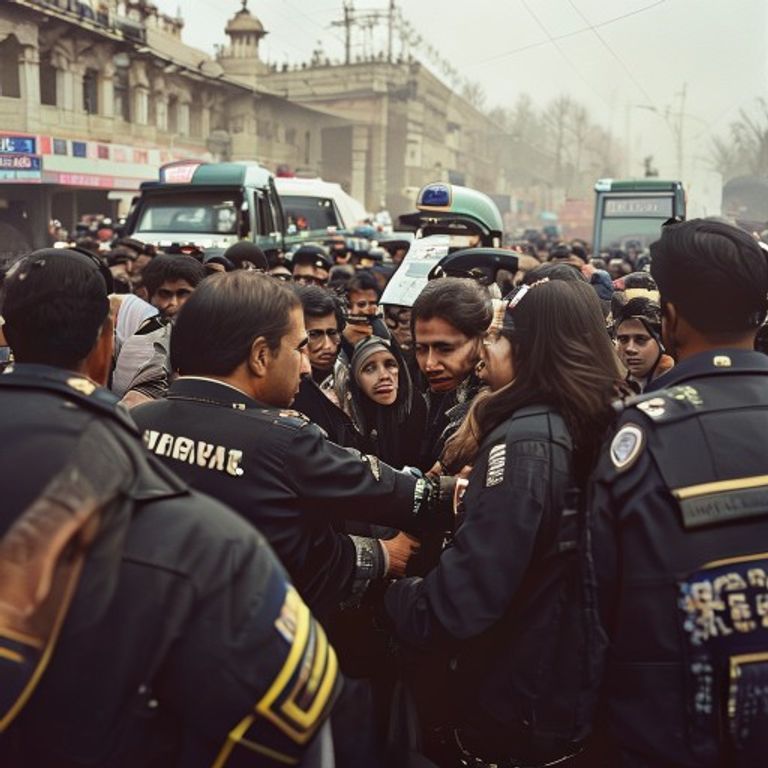
Congress Leaders Detained Amidst Vigorous NEET Protest Over Alleged Irregularities
New Delhi, India – Dramatic scenes unfolded in the heart of the Indian capital as senior leaders of the Indian National Congress party, including prominent figures Rahul Gandhi and Priyanka Gandhi Vadra, were forcibly removed and detained by police during a massive protest. The demonstration, which saw hundreds of party workers and supporters take to the streets, was a vehement expression of discontent over the National Eligibility-cum-Entrance Test (NEET) controversy and alleged police brutality against protesting students. Videos released by the Congress party captured intense moments, showing Rahul Gandhi lying on the road in protest, while Priyanka Gandhi Vadra visibly resisted being pulled into a police bus, highlighting the escalating political tension surrounding the contentious examination and the government’s handling of dissent. This vigorous Congress NEET Protest has brought the issue to the forefront of national discourse, drawing widespread attention to the grievances of students and the opposition’s firm stance.
The Unfolding Drama: Leaders Confront Authorities
The morning began with a planned march by Congress leaders and activists towards the Prime Minister’s residence, aiming to highlight their demands for accountability and justice regarding the NEET examination. However, their path was swiftly intercepted by a heavy police contingent, leading to a direct confrontation. Eyewitness accounts and video footage widely circulated across media platforms painted a vivid picture of the events. Rahul Gandhi, a Member of Parliament from Wayanad, was captured on video lying on the asphalt, a symbolic act of defiance against the police barricades and the perceived inaction of the government. His deliberate positioning on the road served as a potent visual message, emphasizing the gravity of the protest and the party’s unwavering resolve.
Simultaneously, Priyanka Gandhi Vadra, a general secretary of the Congress, engaged in a highly visible standoff with law enforcement officers. As police attempted to usher her into a waiting bus designated for detainees, she firmly resisted, holding onto a railing, making it clear her detention was against her will. The footage showed multiple officers eventually managing to pull her into the vehicle, underscoring the physical nature of the confrontation. These images quickly became symbolic of the larger struggle, sparking debates across social media and news channels about the rights to peaceful protest and the methods employed by authorities to quell political demonstrations.
Beyond these two high-profile leaders, numerous other opposition figures and party workers were also forcibly removed and detained. The area around the Prime Minister’s residence, typically a high-security zone, transformed into a charged arena of political theatre, with slogans of “NEET Nyay” (Justice for NEET) and “anti-government” echoing through the streets. The detentions, according to police, were carried out under relevant sections of the law to maintain public order and prevent unlawful assembly, a standard procedure in such high-profile protests. However, the opposition lambasted the actions as an assault on democracy and a suppressive tactic aimed at silencing legitimate dissent.
The Genesis of Discontent: The NEET Controversy
At the heart of this intense political confrontation lies the National Eligibility-cum-Entrance Test (NEET), a crucial examination for aspiring medical students across India. The 2024 iteration of NEET has been marred by a slew of controversies, triggering widespread anger and anxiety among students and their families. Allegations of paper leaks, discrepancies in scoring, and the controversial awarding of “grace marks” to numerous candidates have cast a dark shadow over the integrity of the examination process. Several petitions have been filed in the Supreme Court, challenging the results and demanding a re-examination, or a thorough investigation into the alleged malpractices.
The NEET controversy gained significant momentum following reports of an unusually high number of students achieving perfect scores, and the revelation that grace marks were awarded to over 1,500 candidates to compensate for lost time during the exam. While the National Testing Agency (NTA), responsible for conducting NEET, initially defended its procedures, mounting pressure led to a partial rollback, with the NTA informing the Supreme Court that grace marks would be rescinded and affected students would be given an option to reappear. However, this measure has been deemed insufficient by many, who argue that the fundamental flaws in the examination system remain unaddressed.
Students and educational activists have voiced concerns about the transparency and fairness of the NTA’s operations. The financial implications for families, many of whom invest heavily in coaching and preparation, add another layer of despair. The dreams of thousands of young individuals aspiring to join the medical profession hang in the balance, creating a potent groundswell of public dissatisfaction that the Congress party has effectively tapped into.
Congress’s Demands and Strategic Positioning
The Indian National Congress has taken a strong, unequivocal stance on the NEET issue, articulating a clear set of demands to the government. At the core of their protest is the call for a complete re-evaluation of the NEET 2024 examination, arguing that its credibility has been irreparably damaged by the alleged irregularities. They have also demanded a Supreme Court-monitored investigation into the entire affair, pushing for accountability from the NTA and other involved parties.
- Cancellation and Re-examination: The primary demand is for the cancellation of the current NEET 2024 results and the conduct of a fresh examination to ensure fairness and rebuild trust.
- CBI Probe: Congress insists on a Central Bureau of Investigation (CBI) inquiry into the alleged paper leaks and other malpractices to identify and punish those responsible.
- Accountability of NTA: The party has called for a complete overhaul of the National Testing Agency, questioning its competence and integrity in conducting such a vital national examination.
- Justice for Students: Above all, the Congress leaders emphasize the need to protect the interests and future of millions of students who have been adversely affected by the controversy.
This vigorous protest by the Congress party is not merely about the NEET exam; it is also a strategic move to position itself as the voice of the aggrieved and to challenge the government on issues of governance and public welfare. Coming on the heels of the recent general elections where the opposition gained significant ground, this protest allows the Congress to maintain political momentum and exert pressure on the ruling dispensation.
Government Response and Allegations of Police Action
The government, through its various ministries and spokespersons, has largely maintained that it is addressing the NEET controversy through appropriate legal channels and that action is being taken against any proven malpractices. The NTA, under government supervision, has announced measures such as the withdrawal of grace marks and the re-conducting of the exam for affected students, attempting to assuage public anger. However, the opposition and student bodies largely view these actions as insufficient and a piecemeal approach to a systemic problem.
Regarding the protests, police authorities have consistently cited the need to maintain law and order, particularly in high-security zones. The forcible removal and detention of leaders are often justified under sections related to preventing unlawful assembly and obstruction of public servants. However, the Congress party and other opposition groups have strongly condemned the police’s handling of both their protest and previous student demonstrations, alleging excessive force and a disregard for fundamental rights.
The “alleged police action on students” refers to incidents in various cities where student protests against NEET were met with baton charges and detentions, leading to accusations of heavy-handedness. These incidents have further fueled public resentment and strengthened the opposition’s narrative that the government is suppressing legitimate concerns rather than addressing them constructively. The images of senior leaders being detained have amplified these concerns on a national stage, putting the police and government under increased scrutiny.
Broader Political Implications and Future Trajectory
The Congress NEET Protest and the subsequent detentions carry significant political ramifications for both the ruling party and the opposition. For the Congress, it is an opportunity to consolidate its position as a strong opposition force, capable of mobilizing public sentiment and holding the government accountable. The visuals of their top leaders facing detention resonate with a narrative of sacrifice and struggle, potentially bolstering their public image.
For the government, the ongoing NEET controversy and the escalating protests pose a significant challenge. It tests their ability to manage a crisis of national importance, address student grievances, and uphold public trust in institutions. The optics of senior opposition leaders being detained can create a perception of authoritarianism, even if the detentions are legally justified from the police’s perspective. The issue is likely to dominate parliamentary sessions and public discourse for the foreseeable future, adding to the government’s legislative and political agenda.
The confrontation also highlights a broader trend of increasing political polarization in India, where crucial issues like education and student welfare often become battlegrounds for political parties. The manner in which the government and opposition navigate this crisis will have lasting implications for democratic practices and the relationship between citizens and the state.
Conclusion: A Crisis of Credibility and Ongoing Struggle
The dramatic detention of Congress leaders, including Rahul Gandhi and Priyanka Gandhi Vadra, during their vigorous protest over the NEET controversy, marks a significant moment in India’s current political landscape. It underscores the deep-seated anger and frustration among millions of students and their families regarding the alleged irregularities in a crucial national examination. The images of leaders resisting detention have not only brought the issue into sharper focus but have also ignited a broader debate about the right to dissent and the state’s response to public protests.
As the legal challenges continue in the Supreme Court and political rhetoric intensifies, the government faces immense pressure to resolve the NEET crisis transparently and effectively. For the Congress, the protest is a clear signal of its intent to remain a vocal and active opposition, championing the cause of the common citizen. The episode serves as a powerful reminder of the delicate balance between maintaining law and order and safeguarding democratic freedoms, suggesting that the struggle for justice and accountability in the NEET affair is far from over, with profound implications for India’s educational future and political dynamics.