
 By NewsMatrix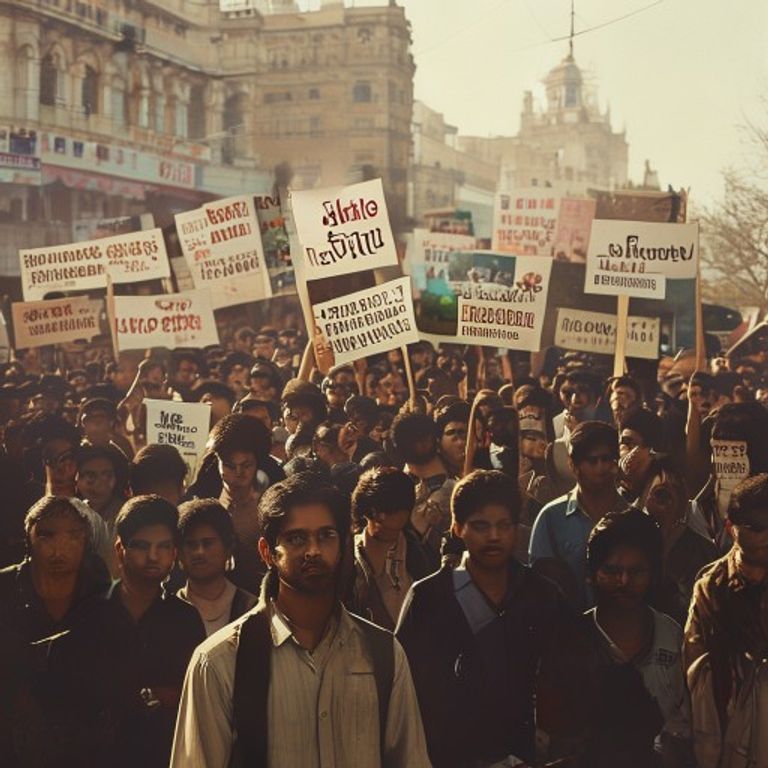
CJP Founder Abhijeet Dipke Warns of Nationwide Protest Over Student Police Harassment
New Delhi, India – Abhijeet Dipke, the dynamic founder of the Cockroach Janta Party (CJP), has issued a stern warning that India could soon face a fresh wave of nationwide protests. The prominent student and youth activist declared that his organization would mobilize a “massive peaceful protest” across the country if the alleged police harassment of students continues unabated. Dipke’s warning, disseminated through a post on the social media platform X on Tuesday, underscores growing concerns over the treatment of students by law enforcement agencies and places immediate pressure on the government to address these grievances. The focus keyword for this article is student police harassment.
In his succinct yet impactful statement, Dipke called upon the government to cease what he termed as “targeting and witch-hunting students,” indicating a deeper institutional issue beyond isolated incidents. The CJP’s readiness to initiate large-scale peaceful demonstrations highlights a simmering discontent within the student community and signals a potential flashpoint in the ongoing dialogue between civil society, student bodies, and state authorities.
The Escalating Tensions and Dipke’s Call to Action
The warning from Abhijeet Dipke is not merely a statement but a clear declaration of intent from a figure who has been vocal on various youth and social issues. His post on X served as a digital clarion call, alerting both the public and governmental apparatus to the CJP’s firm stance. Dipke’s use of terms like “targeting” and “witch-hunting” suggests a belief that police actions are not merely disciplinary but rather punitive and possibly politically motivated against students exercising their rights.
Historically, student movements have been a powerful force in shaping India’s socio-political landscape, from the independence struggle to contemporary movements advocating for social justice, educational reforms, and civil liberties. The CJP’s threat to launch a “massive peaceful protest” taps into this rich legacy, aiming to harness the collective power of students nationwide. The emphasis on “peaceful” protest is crucial, signaling a commitment to democratic means of expression while simultaneously asserting the right to dissent.
This development comes amidst an environment where student bodies frequently voice concerns regarding issues ranging from fee hikes and lack of employment opportunities to academic freedom and political interference in educational institutions. Allegations of police overreach during student demonstrations or in university campuses have periodically surfaced, leading to public debates about the balance between maintaining law and order and protecting fundamental rights.
Understanding the Cockroach Janta Party (CJP)
While the name “Cockroach Janta Party” might evoke a sense of unconventional activism, its founder, Abhijeet Dipke, appears to be positioning it as a significant voice for student welfare and rights. Organisations such as the CJP often emerge from the grassroots, driven by a specific mandate to represent marginalized or aggrieved sections of society, in this case, the student community. Their strength often lies in their ability to mobilize young people, leverage social media for rapid communication, and articulate grievances that resonate widely among students.
The CJP’s stated objective, through Dipke’s warning, is to safeguard students from perceived official excesses. This includes preventing unwarranted surveillance, arbitrary detention, or the use of force during peaceful assemblies. Such groups typically advocate for greater transparency and accountability from law enforcement agencies and government bodies, striving to ensure that educational spaces remain sanctuaries for learning and free expression, rather than zones of contention or fear.
The party’s decision to issue a nationwide protest warning signifies a strategic move to elevate student concerns to a national discourse. It also suggests that previous attempts at dialogue or localized protests may not have yielded satisfactory results, thus necessitating a broader and more impactful response. The CJP, under Dipke’s leadership, is attempting to draw a clear line in the sand, demanding a definitive change in how students are treated across the country.
The Context of Student Activism and Police-State Relations in India
Student activism in India is deeply interwoven with the nation’s democratic fabric. Throughout its post-independence history, universities and colleges have often served as crucibles of political thought and action. Students have been at the forefront of movements demanding social justice, advocating for civil liberties, and challenging government policies they deem unjust or detrimental to public interest. This vibrant tradition underscores the crucial role young people play in democratic accountability.
However, the relationship between student protesters and law enforcement has frequently been fraught with tension. While police forces are tasked with maintaining public order, allegations of disproportionate response, arbitrary detentions, and harassment have been persistent concerns. Critics argue that at times, authorities tend to view student protests not as legitimate expressions of dissent but as law and order problems requiring swift and sometimes forceful suppression. This perception can lead to a breakdown of trust and further escalate tensions.
The term “witch-hunting” used by Dipke is particularly loaded. It implies a systematic effort to identify, target, and persecute individuals or groups based on their perceived opposition or dissenting views, rather than on concrete legal violations. If such practices are indeed prevalent, as alleged, it represents a serious erosion of democratic freedoms and the right to peaceful assembly and expression, guaranteed by the Indian Constitution. It can also create a chilling effect, discouraging students from participating in civic life and expressing their opinions.
Furthermore, the increased use of social media platforms like X by activists has transformed the landscape of protest and political communication. Warnings and calls to action can now spread virally, mobilizing large numbers of people rapidly and drawing national and international attention. This digital activism also puts greater scrutiny on government responses, as actions by police or authorities can be documented and shared instantly, often shaping public opinion.
The Call for Peaceful Protest and its Significance
Dipke’s explicit mention of a “massive peaceful protest” is a critical aspect of the CJP’s strategy. In a democratic society, peaceful protest is a fundamental right and a cornerstone of civil liberties. It allows citizens to voice their grievances, demand accountability from their leaders, and influence public policy without resorting to violence. Emphasizing peace aligns the movement with democratic ideals and garners broader public support, distinguishing it from actions that might involve vandalism or confrontation.
However, organizing and sustaining a nationwide peaceful protest of “massive” scale requires significant coordination, resources, and unwavering commitment. It involves extensive grassroots mobilization, communication strategies, and careful planning to ensure that demonstrations remain non-violent despite potential provocations. The CJP would need to demonstrate robust organizational capabilities to deliver on this promise, transforming public sentiment into tangible collective action.
The success of such a protest would also depend heavily on the nature of the police response. If authorities respond with excessive force or further harassment, it could inadvertently fuel the movement, galvanize public sympathy, and potentially lead to an escalation of tensions. Conversely, a measured and restrained response, coupled with a willingness to engage in dialogue, could de-escalate the situation and pave the way for a constructive resolution.
A nationwide protest also carries significant socio-economic implications. Large-scale demonstrations can disrupt daily life, impact local businesses, and strain public resources. While these are often unintended consequences, they are an inherent part of mass movements and add to the pressure on authorities to address the root causes of the unrest. The government will likely be weighing these potential disruptions against the demands of the protesting students.
Government’s Stance and Future Course of Action
The Indian government, at both central and state levels, now faces a delicate situation. Ignoring Dipke’s warning could be perceived as dismissing legitimate student concerns, potentially leading to further alienation and strengthening the resolve of the protesting groups. Conversely, a heavy-handed approach could backfire, drawing condemnation and potentially expanding the scope of the protests beyond student communities.
A constructive path would involve acknowledging the concerns raised and initiating an open dialogue with student representatives and organizations like the CJP. This could include investigating allegations of police harassment, reviewing existing protocols for handling student protests, and ensuring accountability for any misconduct. Establishing clear channels of communication and demonstrating a genuine willingness to address grievances can often preempt large-scale unrest.
The government’s response will be closely watched by civil society organizations, human rights advocates, and the international community. How a democratic nation handles dissent, especially from its youth, is often seen as a barometer of its commitment to democratic values and human rights. Any perceived failure to protect the rights of students to protest peacefully could attract criticism and potentially impact India’s image on the global stage.
Furthermore, the issue of student police harassment is not unique to India, though its manifestations may vary. Across the world, governments grapple with balancing national security, public order, and the rights of citizens, particularly youth, to express dissent. Learning from international best practices in crowd control, de-escalation techniques, and fostering dialogue between authorities and student bodies could offer valuable insights for India.
The coming weeks will be crucial in determining whether Abhijeet Dipke’s warning translates into concrete nationwide action or if a resolution can be found through dialogue. The ball is now firmly in the court of the government to demonstrate its commitment to protecting student rights and upholding the principles of democratic engagement.
Conclusion
Abhijeet Dipke’s warning of a nationwide peaceful protest by the Cockroach Janta Party, triggered by persistent student police harassment, marks a significant development in India’s socio-political landscape. It brings to the forefront critical questions about the nature of policing, the state’s engagement with its youth, and the fundamental rights of expression and assembly in a democracy. The CJP’s readiness to mobilize students on a massive scale underscores a deep-seated frustration that, if unaddressed, could erupt into widespread demonstrations.
The government has a clear responsibility to heed this warning, investigate the allegations of harassment, and foster an environment where students feel safe to express their views without fear of reprisal. A proactive approach, focusing on dialogue, transparency, and accountability, is paramount to de-escalate tensions and prevent a national confrontation. The eyes of the nation, and indeed a global audience, will be on how India navigates this challenging situation, affirming its commitment to democratic values and the rights of its future generations.