
 By NewsMatrix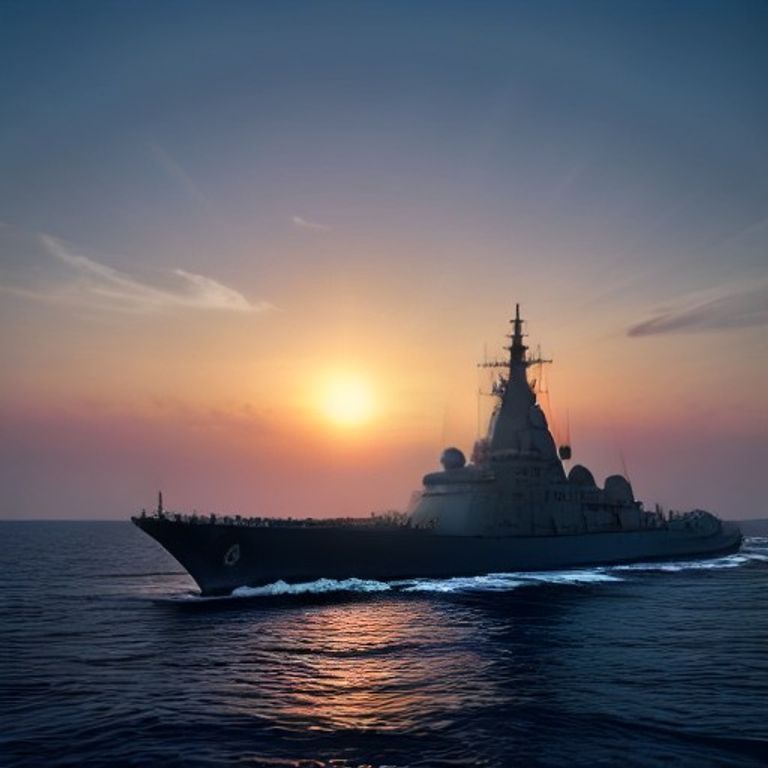
China Escalates South China Sea Tensions with Drills Near Scarborough Shoal
NewsMatrix – Beijing’s recent declaration of joint air and naval drills near Scarborough Shoal, a hotly contested area in the South China Sea, marks a significant escalation of existing territorial disputes. These comprehensive exercises, aimed at bolstering combat readiness and safeguarding territorial sovereignty, are coupled with the announcement of new administrative regulations for the Huangyan Island National Nature Reserve, as China refers to the shoal. Furthermore, the China Coast Guard (CCG) is set to intensify its patrols and law enforcement activities in the vicinity, underscoring Beijing’s unwavering resolve to assert its claims in these strategically vital waters. These multifaceted actions contribute to heightened South China Sea Tensions, drawing considerable attention from regional and international observers.
Introduction: A Resurgence of Assertiveness in Disputed Waters
The South China Sea, a critical artery for global trade and a region rich in natural resources, has long been a flashpoint for geopolitical rivalries. China’s latest maneuvers around Scarborough Shoal represent a calculated move to reinforce its presence and administrative control over an area also claimed by the Philippines. The synchronicity of military exercises, environmental regulations, and increased maritime law enforcement points to a coordinated strategy designed to cement China’s factual sovereignty while simultaneously testing the operational capabilities of its armed forces. This latest development underscores the volatile nature of South China Sea Tensions and the continuous struggle for dominance in one of the world’s most sensitive maritime zones.
For decades, competing claims over islands, reefs, and maritime zones in the South China Sea have fueled diplomatic standoffs, minor confrontations, and a significant military buildup by various claimant states. The international community watches closely, aware that any misstep in these contested waters could have far-reaching implications for global stability and economic prosperity. The current situation around Scarborough Shoal is a microcosm of these broader tensions, reflecting the intricate interplay of national interests, historical narratives, and international law.
Joint Drills and Regulatory Reinforcement: China’s Dual Approach
The People’s Liberation Army (PLA) conducted a series of joint air and naval drills described as routine exercises to enhance combat readiness and ensure the effective defense of China’s “inherent territory.” While specific details regarding the scale and duration of these exercises remain limited, their proximity to Scarborough Shoal sends an unequivocal message about China’s commitment to its claims. Naval vessels, supported by air assets, reportedly engaged in various simulated scenarios, including rapid deployment, maritime interdiction, and anti-submarine warfare, signaling a robust and evolving military capability.
Concurrently, Beijing announced new regulations governing the Huangyan Island National Nature Reserve. These regulations, ostensibly focused on environmental protection and sustainable resource management, are widely interpreted as another mechanism to solidify administrative control over the shoal. By establishing a formal regulatory framework, China aims to legitimize its presence and governance over the disputed feature, effectively treating it as sovereign Chinese territory. The regulations could impose restrictions on fishing, research, and other activities by foreign entities, further complicating the operational environment for other claimants, particularly the Philippines.
Complementing these military and administrative actions, the China Coast Guard (CCG) has pledged to increase its patrols and law enforcement activities around Scarborough Shoal. The CCG, a paramilitary force, plays a crucial role in enforcing China’s maritime claims. Its heightened presence is likely to result in more frequent encounters with fishing vessels and other maritime assets from neighboring countries, particularly those from the Philippines. Past interactions between the CCG and Philippine vessels have often been fraught with tension, including incidents involving water cannons and blockades, leading to considerable diplomatic friction.
Scarborough Shoal: A Strategic Flashpoint
Scarborough Shoal, known as Huangyan Island in China and Panatag Shoal in the Philippines, is a triangular-shaped atoll located approximately 120 nautical miles west of the Philippine island of Luzon, well within the Philippines’ exclusive economic zone (EEZ). Historically, it has been a traditional fishing ground for Filipino, Chinese, and Vietnamese fishermen. Its strategic importance lies not just in its rich fishing grounds but also in its potential as a forward operating base due to its relatively sheltered lagoon.
The dispute over Scarborough Shoal intensified dramatically in 2012 when a standoff occurred between Chinese and Philippine vessels. The Philippines alleged that Chinese vessels prevented its navy from apprehending Chinese fishermen who were illegally harvesting marine life within the shoal’s lagoon. The standoff ultimately led to China gaining effective control of the shoal, preventing Filipino fishermen from accessing its rich waters, a situation that largely persists today.
This incident became a key factor leading the Philippines to initiate an arbitration case against China under the United Nations Convention on the Law of the Sea (UNCLOS) in 2013. In 2016, the Permanent Court of Arbitration in The Hague delivered a landmark ruling, largely in favor of the Philippines. The tribunal concluded that China’s “nine-dash line” claim had no legal basis under UNCLOS and that Scarborough Shoal is a traditional fishing ground for fishermen of multiple nationalities, thereby denying China’s exclusive historical rights over it. Crucially, the ruling also stated that China had violated the Philippines’ sovereign rights by interfering with its fishing and petroleum exploration activities.
However, China rejected the arbitral ruling as “null and void” and has continued to assert its control over Scarborough Shoal, largely ignoring the international legal pronouncement. This defiance of international law has been a significant point of contention, undermining the rules-based international order and contributing to ongoing South China Sea Tensions.
The Broader South China Sea Context: A Complex Web of Claims
The contestation over Scarborough Shoal is emblematic of the broader, multifaceted disputes engulfing the South China Sea. China claims sovereignty over almost the entirety of the South China Sea, delineated by its self-proclaimed “nine-dash line,” which extends hundreds of miles from its southern coast, encroaching upon the EEZs of several other countries. Brunei, Malaysia, the Philippines, Taiwan, and Vietnam also hold competing claims over various islands, reefs, and maritime zones within this strategic waterway.
The South China Sea is one of the world’s busiest maritime arteries, through which trillions of dollars in trade pass annually. It is also believed to hold vast untapped reserves of oil and natural gas, adding an immense economic dimension to the territorial disputes. The rich fishing grounds further contribute to the area’s economic value, making control over these resources a paramount national interest for all claimants.
In recent years, China has engaged in extensive land reclamation activities, transforming submerged features into artificial islands capable of hosting military facilities, including runways, ports, and radar installations. This militarization of the Spratly Islands and other features has significantly altered the strategic landscape, giving China a formidable operational advantage in the region.
In response to China’s increasing assertiveness, the United States and its allies, including Australia, Japan, and the United Kingdom, have conducted “Freedom of Navigation Operations” (FONOPs). These operations involve naval vessels and aircraft transiting through waters claimed by China, aiming to challenge excessive maritime claims and uphold the principle of freedom of navigation and overflight, as enshrined in international law. While these operations underscore a commitment to international norms, they are also frequently condemned by Beijing as provocations.
Regional and International Repercussions: Navigating a Shifting Balance of Power
The ongoing South China Sea Tensions have profound implications for regional stability and global geopolitics. For the Association of Southeast Asian Nations (ASEAN), which includes four claimant states (Philippines, Vietnam, Malaysia, Brunei), finding a unified and effective response to China’s actions has been a persistent challenge. While ASEAN seeks to finalize a Code of Conduct in the South China Sea with China, progress has been slow, and the effectiveness of such a code remains uncertain given China’s consistent assertion of its expansive claims.
The Philippines, under its current administration, has taken a more assertive stance in defending its sovereign rights in the South China Sea, increasingly relying on its long-standing alliance with the United States. Recent joint military exercises between the U.S. and the Philippines have demonstrated a renewed commitment to mutual defense, serving as a deterrent against further Chinese encroachment. However, this also carries the risk of inadvertently escalating tensions, placing the Philippines at the forefront of a major geopolitical rivalry.
The United States consistently emphasizes the importance of upholding international law and freedom of navigation in the South China Sea, viewing China’s actions as a challenge to the rules-based international order. Washington’s diplomatic and military engagement in the region reflects a broader strategy to counter China’s growing influence and ensure stability in a critical global commons. However, balancing these objectives with the imperative to avoid direct conflict requires delicate diplomatic maneuvering.
The international community largely advocates for a peaceful resolution of disputes based on international law, particularly UNCLOS. Many nations express concern over China’s disregard for the 2016 arbitral ruling, fearing that it sets a dangerous precedent for unilateral actions in other maritime disputes globally. The potential for miscalculation or accidental clashes in the congested and contested waters remains a significant concern for all stakeholders.
Conclusion: The Path Ahead Amidst Enduring South China Sea Tensions
China’s recent joint air and naval drills, coupled with new administrative regulations and increased coast guard presence near Scarborough Shoal, represent a clear and deliberate effort to strengthen its grip on a strategically vital area. These actions underscore Beijing’s resolve to assert its territorial claims, irrespective of international legal rulings or regional opposition. The immediate impact is a further intensification of South China Sea Tensions, particularly between China and the Philippines, and a heightened sense of vigilance across the region.
The complexities of the South China Sea disputes defy easy solutions. The interplay of historical claims, economic interests, national security imperatives, and international law creates a challenging environment for diplomacy. While China emphasizes its sovereign rights and security interests, other claimants and the broader international community stress the importance of freedom of navigation, peaceful resolution of disputes, and adherence to international law.
Moving forward, the focus will remain on how regional states and major powers navigate this intricate geopolitical landscape. The delicate balance between asserting sovereign rights and maintaining regional stability will continue to be tested. Dialogue, adherence to international legal frameworks, and a commitment to de-escalation are crucial to preventing these enduring South China Sea Tensions from spiraling into open conflict, ensuring peace and prosperity in a region vital to the global economy.