
 By NewsMatrix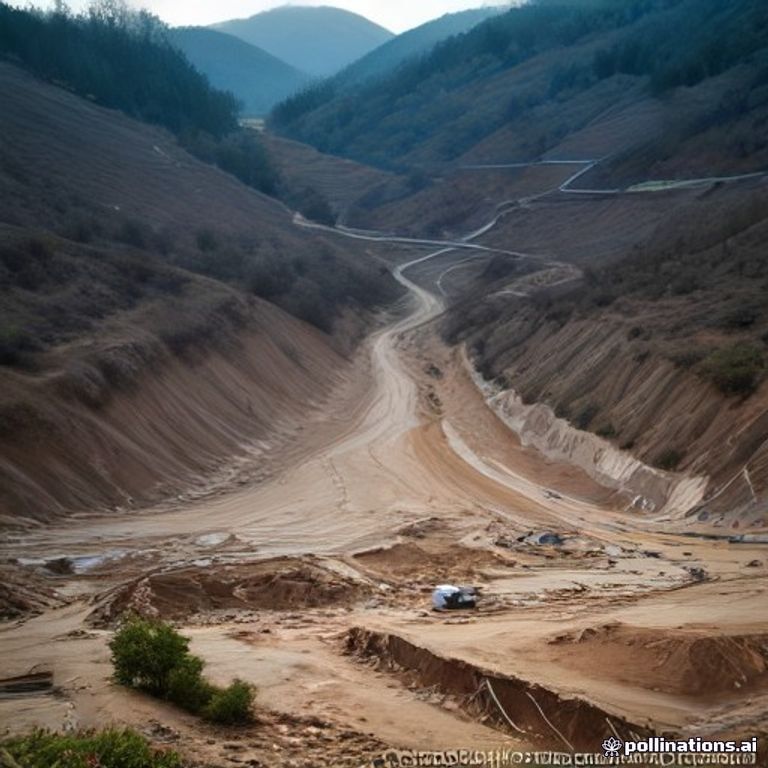
California Couple Battles Santa Clara County Over Landslide Remediation Bill and Property Damage
A California couple is locked in a protracted and costly legal struggle with Santa Clara County, alleging that the county entered their private property to address a landslide threatening a public road, subsequently left the hillside severely damaged, and then presented them with an exorbitant bill totaling $676,703.22 for the work. This ongoing legal saga, centered around property rights, government intervention, and astronomical remediation costs, highlights the complexities property owners can face when public safety concerns intersect with private land ownership. The federal judiciary has recently weighed in, dismissing their current complaint but granting leave to amend several constitutional claims, ensuring that a significant part of this
A California couple is locked in a protracted and costly legal struggle with Santa Clara County, alleging that the county entered their private property to address a landslide threatening a public road, subsequently left the hillside severely damaged, and then presented them with an exorbitant bill totaling $676,703.22 for the work. This ongoing legal saga, centered around property rights, government intervention, and astronomical remediation costs, highlights the complexities property owners can face when public safety concerns intersect with private land ownership. The federal judiciary has recently weighed in, dismissing their current complaint but granting leave to amend several constitutional claims, ensuring that a significant part of this Santa Clara County landslide dispute remains very much alive.
The Genesis of the Dispute: A Threat to Public Safety
The core of the conflict originates from a significant landslide event that began to destabilize a hillside section bordering a public roadway in Santa Clara County. Landslides, a common geological hazard in many parts of California, pose serious risks to infrastructure, public safety, and private property. In this instance, the county determined that immediate intervention was necessary to mitigate the threat the moving earth posed to the adjacent public thoroughfare, ensuring the safety of commuters and maintaining vital transportation links.
According to court documents and the couple’s assertions, Santa Clara County contractors and personnel subsequently entered the couple’s property. The stated purpose was to perform emergency stabilization work to prevent further land movement and protect the road. While the necessity of addressing such a geological threat is rarely contested, the manner in which the work was executed, and its alleged aftermath, became the flashpoint for the ensuing legal battle.
The couple contends that the county’s intervention, far from being a precise and contained operation, resulted in extensive and avoidable damage to their property. They describe a landscape left scarred and unstable, with portions of their hillside allegedly rendered hazardous due to the county’s methods. This damage, they claim, went far beyond what was necessary for public road protection, intruding significantly on their private domain and fundamentally altering the safety and usability of their land.
The Shocking Bill: Over $670,000 for Alleged Damage
What followed the county’s intervention further escalated the couple’s distress. Instead of an acknowledgment of the alleged damage or an offer of restitution, the couple received a colossal bill from Santa Clara County. The invoice demanded $676,703.22 for the landslide remediation work performed on their property. This sum, for work they claim damaged their land and was primarily for public benefit, left the couple facing a financial burden of staggering proportions.
The couple’s legal team has argued that this demand represents an unjustifiable imposition, particularly given their allegations of significant property damage. They assert that not only were they compelled to accept the county’s entry and work on their land, but they are now being forced to bear the full financial brunt of an operation that allegedly left their property in a worse state and was primarily motivated by the protection of public infrastructure. The sheer scale of the bill, coupled with the alleged negative impact on their property, has become a central point of contention in the ongoing legal proceedings.
The Cost of Recovery: Over $300,000 in Repairs
The challenges for the couple did not end with the receipt of the county’s bill. Faced with what they described as hazardous conditions left on their property, they found themselves compelled to undertake significant remedial work. These repairs, aimed at restoring stability and safety to their land, have already cost them more than $300,000 out of their own pockets. This expenditure represents a substantial financial strain, compounding the county’s demand for over two-thirds of a million dollars.
The repairs included, but were not limited to, further stabilization of the hillside, erosion control measures, and potentially addressing issues related to drainage or structural integrity that they attribute to the county’s earlier intervention. For many property owners, a six-figure repair bill on top of a seven-figure demand from a government entity would be financially ruinous. This aspect of the case underscores the profound financial and emotional toll such disputes can take on private citizens when pitted against powerful governmental bodies.
The Legal Battle Commences: Initial Complaint and Federal Dismissal
Seeking redress for what they perceived as a severe infringement of their property rights and an unfair financial burden, the couple initiated legal action against Santa Clara County. Their initial complaint outlined various grievances, likely touching upon aspects of trespass, negligence, property damage, and potentially constitutional violations. They sought to hold the county accountable for the alleged damage to their property and to challenge the legitimacy of the enormous bill.
However, the legal path proved to be fraught with challenges. A federal judge recently presided over the case and ultimately dismissed the couple’s current complaint. This dismissal, while a setback, is not an end to the entire legal battle. In federal civil procedure, a dismissal often comes with an opportunity to amend the complaint, particularly if the judge believes that the underlying claims have merit but were not adequately pleaded in the initial filing.
The judge’s decision to dismiss the current complaint indicates that certain aspects of the couple’s initial filing may not have met the rigorous standards required for federal litigation, perhaps lacking sufficient factual specificity or legal argumentation on some counts. Nonetheless, the allowance to amend certain claims provides a crucial lifeline for the couple’s ongoing pursuit of justice.
Constitutional Claims Keep the Battle Alive
Crucially, the federal judge’s ruling was not a complete rejection of the couple’s case. The court specifically allowed them to amend several constitutional claims, signifying that these particular allegations possess enough potential merit to warrant further judicial review. While the exact nature of these claims was not fully detailed in the prompt, typical constitutional challenges in such property disputes often include:
- Fifth Amendment Takings Clause: This clause, applicable to states via the Fourteenth Amendment, prohibits the government from taking private property for public use without “just compensation.” The couple might argue that the county’s actions constituted a “taking” of their property – either a physical occupation or a regulatory taking that deprived them of beneficial use – for public benefit (protecting the road) without fair payment.
- Fourteenth Amendment Due Process Clause: This clause ensures that no state shall deprive any person of life, liberty, or property without due process of law. The couple could argue that the county failed to provide adequate notice, hearings, or a fair process before entering their property, causing damage, and then issuing a hefty bill. This could encompass both procedural and substantive due process arguments.
- Eighth Amendment Excessive Fines Clause: While less common in property disputes, if the bill is considered a form of “fine” or “penalty” by the court, and it is deemed grossly disproportional to the alleged offense (if any) or the public benefit, this clause could potentially be invoked.
The judge’s decision to allow these constitutional claims to proceed to an amended complaint stage is a significant development. It indicates that the court perceives a plausible argument that the county’s actions may have infringed upon fundamental rights protected by the U.S. Constitution. This elevates the dispute beyond a mere disagreement over a bill to a matter of constitutional law, which carries substantial weight and implications for how government entities interact with private property owners.
Implications for Property Rights and Government Authority
This
This Santa Clara County landslide dispute carries broader implications beyond the immediate parties involved. It brings into sharp focus the delicate balance between a government’s imperative to ensure public safety and maintain infrastructure, and the constitutional rights of private property owners. When a county deems it necessary to act on private land for public good, questions inevitably arise regarding the extent of their authority, the standard of care required, and the appropriate compensation for any resulting damage or taking.
For property owners, this case underscores the potential vulnerability of their land to government action, even if well-intentioned. It highlights the importance of understanding their rights and being prepared to challenge what they perceive as overreach or unfair treatment. The financial burden alleged in this case – the county’s bill combined with the couple’s repair costs – serves as a stark reminder of the massive financial implications that can arise when private property becomes entangled in public works projects.
Conversely, government entities face the challenge of performing their duties to protect the public without unduly infringing on private rights. They must navigate complex legal frameworks, often under emergency conditions, to address hazards effectively while also ensuring due process and fair compensation where property is affected. The outcome of cases like this can set precedents for how counties and municipalities approach similar situations in the future, influencing policies on emergency land use, compensation, and inter-entity billing practices.
The Road Ahead: An Amended Complaint and Further Litigation
With the federal judge granting leave to amend their constitutional claims, the couple and their legal team are now tasked with refining their complaint. This will involve meticulously detailing the facts and legal arguments supporting their allegations that Santa Clara County violated their Fifth and Fourteenth Amendment rights (and potentially others). The amended complaint must address the deficiencies identified by the judge in the previous filing, aiming to present a stronger, more legally sound case.
Once the amended complaint is filed, the legal process will continue, likely involving:
- County Response: Santa Clara County will have the opportunity to respond to the amended complaint, either by filing a motion to dismiss again (arguing that even the amended claims are insufficient) or by filing an answer, formally addressing the allegations.
- Discovery: If the case proceeds, both sides will engage in discovery, exchanging information, documents, and potentially taking depositions of witnesses. This phase can be extensive and costly.
- Motions for Summary Judgment: Either party may file motions for summary judgment, asking the court to rule in their favor without a full trial, arguing that there are no genuine disputes of material fact and they are entitled to judgment as a matter of law.
- Trial: If the case cannot be resolved through motions or settlement, it would proceed to a trial, where a judge or jury would hear evidence and make a determination.
This ongoing legal battle is poised to be a lengthy and resource-intensive endeavor for both the couple and Santa Clara County. Its resolution will not only determine the financial liabilities and compensations in this specific instance but could also contribute to the evolving legal landscape concerning eminent domain, inverse condemnation, and governmental immunity in emergency situations across California and potentially beyond.
Conclusion: A Battle for Property Rights and Fair Treatment
The compelling case of the California couple versus Santa Clara County stands as a potent reminder of the intricate challenges inherent in property ownership when confronted by public necessity. What began as a county’s emergency response to a landslide has spiraled into a complex legal and financial quagmire, leaving a couple with substantial property damage and a staggering bill, while simultaneously shouldering hundreds of thousands in repair costs. The federal judge’s decision to allow the amendment of constitutional claims ensures that the fundamental questions of due process and just compensation will continue to be rigorously examined in court.
As the legal proceedings unfold, the outcome of this Santa Clara County landslide dispute will be closely watched by property rights advocates, legal professionals, and government agencies alike. It is a stark illustration of the principle that while governments have a duty to protect their citizens and infrastructure, they must do so within the bounds of constitutional protections afforded to private property owners. The battle for justice and fair treatment for this California couple continues, underscoring the enduring importance of safeguarding individual rights against the power of the state.