
 By NewsMatrix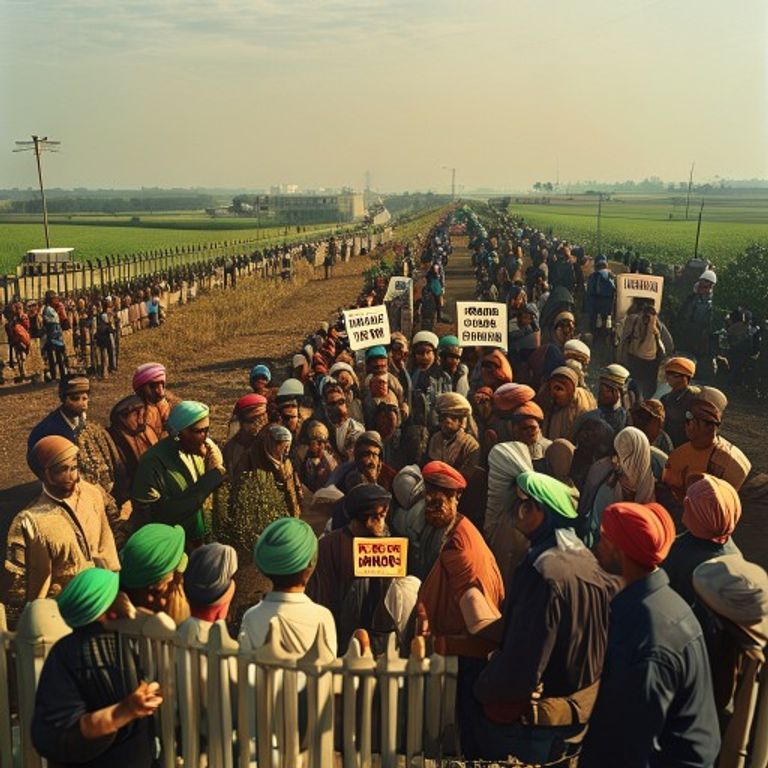
Bhopal Farmer Protest Escalates Over Summer Moong Procurement MSP Amidst Stalled Talks
Bhopal, India – Farmers in Bhopal, the capital of Madhya Pradesh, recently launched a fervent protest demanding fair procurement of their summer moong crop at the Minimum Support Price (MSP). The peaceful demonstration, driven by economic anxieties and a perceived lack of governmental responsiveness, rapidly intensified, culminating in farmers breaching police barricades and marching resolutely towards the Chief Minister’s official residence. This pivotal moment underscores the deep-seated challenges plaguing the agricultural sector and highlights the urgent need for sustainable solutions to farmer distress. The ongoing Bhopal farmer protest has thrust the issue of agricultural remuneration and government support back into the national spotlight, compelling authorities to engage in dialogue while facing continued public pressure.
The Crux of the Crisis: Summer Moong and MSP
The summer moong (green gram) crop is a significant cash crop for many farmers in Madhya Pradesh, providing crucial income during the lean season. Farmers invest substantial resources – seeds, fertilizers, irrigation, and labor – with the expectation of a fair return on their produce. The Minimum Support Price (MSP), a policy mechanism implemented by the Indian government, is designed to protect farmers from market price fluctuations and ensure a remunerative price for their crops. For summer moong, the central government declares an MSP, which the state governments are then expected to facilitate through procurement agencies. However, farmers in Bhopal allege that the state government’s procurement mechanisms have been inadequate, slow, or entirely absent, forcing them to sell their produce to private traders at prices significantly below the MSP, leading to substantial financial losses.
The disparity between the declared MSP and the prevailing market prices offered by private buyers creates a precarious situation for farmers. Without timely and efficient government procurement, farmers, often burdened by debt, have no option but to succumb to distress sales. This not only erodes their income but also discourages them from cultivating such crops in the future, potentially impacting agricultural diversity and food security. The farmers’ primary demand is straightforward: the state must honor the MSP commitment and ensure that every farmer has the opportunity to sell their summer moong at the government-fixed price, thereby safeguarding their livelihoods.
A Timeline of Rising Tensions and Unmet Expectations
The recent escalation in Bhopal is not an isolated incident but rather the culmination of weeks, if not months, of growing frustration. Farmers had reportedly made several representations to local district authorities and agricultural department officials, highlighting their concerns about the impending summer moong harvest and the lack of clarity regarding procurement. Initial appeals for government intervention and assurances for MSP procurement went largely unheeded, fueling a sense of betrayal among the farming community. As the harvest season progressed and market prices continued to dip below the MSP, the resolve of the farmers to take their grievances directly to the state’s highest office solidified.
Prior to the major protest, smaller, localized demonstrations had taken place in various parts of the state, serving as a precursor to the larger movement. These early protests included sit-ins at local administrative offices and blockades of minor roads, signaling the farmers’ growing impatience. The state government, however, appeared to underestimate the gravity of the situation, failing to engage proactively with farmer leaders to address their concerns before they reached a boiling point. This delayed response contributed significantly to the escalation seen in Bhopal, transforming localized discontent into a full-blown political challenge.
The March to the Chief Minister’s Residence: A Symbol of Desperation
The morning of the decisive protest saw thousands of farmers from Bhopal and surrounding districts converging at designated assembly points. Their intention was clear: to make their voices heard directly by the Chief Minister. Despite the presence of heavy police deployment and multiple layers of barricades erected to prevent them from approaching the high-security zone, the sheer number and determination of the protestors proved overwhelming. Visuals from the scene depicted farmers, many carrying their produce or holding placards articulating their demands, pushing through police lines, dismantling barricades, and advancing resolutely towards the Chief Minister’s official bungalow. This act of breaching security protocols, while drawing criticism from some quarters, was viewed by the farmers as a necessary step to draw urgent attention to their plight.
The symbolic significance of marching to the Chief Minister’s residence cannot be overstated. It represents the farmers’ last resort, a direct plea to the head of government when all other avenues of dialogue and grievance redressal have seemingly failed. It highlights their desperation and their unwavering belief that their economic survival is directly linked to the policies and actions of the state administration. The confrontation, though largely non-violent, created a tense atmosphere, underscoring the fragility of public order when basic livelihood issues remain unaddressed.
Government Response: A Committee Formed, But No Immediate Relief
In response to the escalating protest and the increasing pressure, the state government moved to de-escalate the situation by announcing the formation of a special committee. This committee, comprising senior bureaucrats and agriculture department officials, was tasked with engaging with farmer representatives to understand their demands and explore potential solutions for the summer moong procurement issues. The announcement was a positive step towards opening channels of communication, a crucial element often missing in such disputes.
Subsequently, high-level talks were held between the state agriculture minister and prominent farmer leaders. Expectations were high for a breakthrough, given the urgency of the situation and the mounting losses faced by farmers. However, after several rounds of discussions, the talks concluded without a concrete agreement. Farmer leaders reported that while the government acknowledged their concerns, no immediate or satisfactory commitment regarding comprehensive MSP procurement was made. Key sticking points reportedly included the volume of moong to be procured, the timeline for procurement, and the logistical challenges of setting up adequate procurement centers. The absence of a tangible solution further exacerbated the farmers’ frustration, leading to the continuation of their protest.
Diverse Demonstrations: The Protest Continues
Following the inconclusive talks, the farmers’ resolve has only strengthened. Rather than dissipating, the `Bhopal farmer protest` has transformed into a sustained movement, employing various tactics to keep the pressure on the government. Demonstrations are now widespread, encompassing:
- Roadside sit-ins and blockades at key intersections, disrupting traffic and drawing public attention.
- Symbolic protests where farmers display their unsold moong crops, often distributing them to the needy to highlight their distress and the glut of produce.
- Public meetings and rallies in rural areas, mobilizing more farmers and building broader solidarity.
- Memorandum submissions to local government officials, reiterating their demands and seeking immediate action.
These varied forms of protest ensure that the issue remains in the public consciousness and maintains pressure on the state administration. Farmer unions have also begun to explore legal avenues, considering petitions to the high court or other judicial bodies to seek enforcement of MSP procurement. The resilience shown by the farmers underscores the depth of their commitment and the existential threat they perceive to their livelihoods.
Broader Implications and the Path Forward
The ongoing `Bhopal farmer protest` has significant implications not just for the agricultural sector but also for the political landscape of Madhya Pradesh. With elections on the horizon, the government’s handling of this crisis could significantly impact its standing among the crucial agrarian vote bank. Failure to resolve the issue amicably and swiftly could lead to widespread discontent that might resonate across other agricultural states in India, given the pan-Indian nature of MSP debates.
Agricultural experts and policy analysts suggest that a multi-pronged approach is necessary to address not only the immediate procurement issues but also the underlying structural problems in Indian agriculture. This includes improving storage facilities, streamlining procurement processes, ensuring timely payments to farmers, and exploring alternative market linkages. Furthermore, there is a need for robust agricultural diversification strategies that reduce farmers’ over-reliance on a few crops and make them more resilient to market shocks.
The government must look beyond short-term fixes and implement sustainable policies that empower farmers and ensure their economic viability. This involves transparent communication, active engagement with farmer organizations, and a commitment to upholding policies like MSP in both letter and spirit. The `Bhopal farmer protest` serves as a stark reminder that the welfare of the farming community is intrinsically linked to the economic stability and social harmony of the nation.
Conclusion: Awaiting Resolution in Bhopal
The persistent `Bhopal farmer protest` over summer moong procurement at Minimum Support Price represents a critical challenge for the Madhya Pradesh government. While initial dialogue has failed to yield a resolution, the continued determination of the farmers underscores the urgency of their demands. The breach of barricades and the march to the Chief Minister’s residence served as a potent symbol of their desperation and unwavering resolve. As demonstrations continue across the state, all eyes remain on Bhopal, awaiting a comprehensive and satisfactory resolution that not only addresses the immediate procurement crisis but also lays the groundwork for a more stable and prosperous future for the state’s invaluable farming community. The outcome of this protest will undoubtedly set a precedent for future government-farmer interactions and agricultural policy implementation in India.