
 By NewsMatrix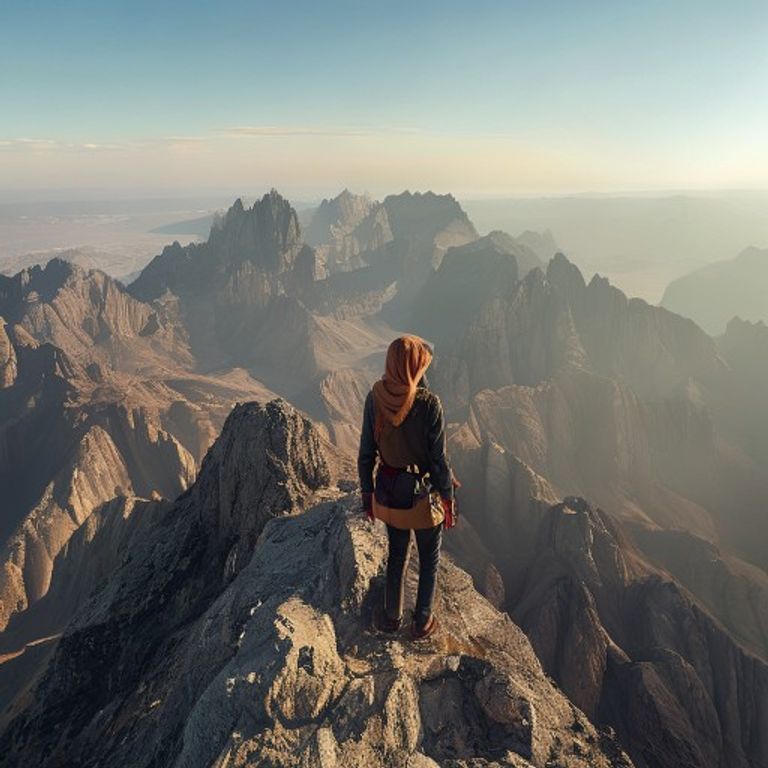
Introduction: Exploring the Unexplored
In the age of hyper-connectivity and curated travel experiences, certain corners of the globe remain shrouded in mystery, fear, and political complexity. Afghanistan, often defined in the international media by conflict, regime change, and humanitarian crises, is rarely viewed through the lens of tourism. However, Indian travel creator Sharanya Iyer recently challenged this narrative by embarking on a solo journey through the nation under Taliban rule. Her experience, documented and shared with her audience, has sparked a intense conversation on NewsMatrix and beyond: Is it ethical to travel to a country governed by a regime viewed as oppressive by the international community?
A Journey into the Heart of Afghanistan
Sharanya Iyer’s decision to visit Afghanistan was not made lightly. Armed with a deep curiosity and a commitment to understanding cultures beyond the geopolitical headlines, she set out to witness the nation’s rugged beauty firsthand. Throughout her journey, Iyer documented the dramatic landscapes of the Afghan mountains, where centuries of history seem etched into the very rock formations. These images—vast, awe-inspiring, and serene—stood in stark contrast to the narratives of perpetual chaos often pushed by global media outlets.
Beyond the geography, the core of Iyer’s journey involved interacting with local Afghan citizens. These encounters were central to her experience, providing a human dimension to a country seen by many as a monolith of extremist ideology. By engaging with families, shopkeepers, and local guides, Iyer sought to understand the daily lives, aspirations, and endurance of ordinary people navigating a reality dictated by a restrictive regime.
The Ethical Dilemma: Tourism vs. Legitimization
The core of the controversy surrounding Iyer’s trip rests on the concept of legitimization. Critics argue that when travelers flock to a country under an authoritarian regime, they inadvertently signal acceptance of that government’s policies. They contend that tourist dollars, even those spent at a local level, can provide financial resources and international credibility to a regime that suppresses human rights, particularly those of women and minorities. For many, boycotting such nations is seen as the only moral stance—a way to apply pressure on the government while standing in solidarity with the oppressed.
NewsMatrix has followed the discourse closely, noting that this is not a new debate. Similar questions have been raised regarding travel to North Korea, Iran, and other politically isolated nations. The dilemma is sharp: does tourism support the dictator or the people?
Iyer’s Perspective: The Human Cost of Boycotts
Sharanya Iyer, however, offers a counter-perspective that prioritizes human connection over political abstraction. She argues that broad-brush boycotts often fail to achieve their intended political outcomes and instead inflict severe economic punishment on the very citizens who are already suffering. By isolating these nations from the global community, boycotts can deepen the poverty and cultural detachment of ordinary Afghans, who have little control over the regime’s policies.
Iyer emphasizes that responsible tourism can serve as a lifeline. When a traveler spends money in a local guesthouse, hires a local driver, or purchases handicrafts, that capital directly supports the families who are attempting to make a living despite the systemic hardships. Her viewpoint suggests that tourism can act as a bridge, maintaining essential human-to-human contact that keeps these communities anchored to the world outside their borders.
Defining Responsible Tourism in Challenging Contexts
The concept of responsible tourism takes on a much heavier weight in a nation like Afghanistan. It is not about luxury travel or seeking thrills; it is about navigating a complex environment with extreme care. For those considering such journeys, the approach must be fundamentally different from standard tourism:
- Prioritize Local Engagement: Ensure that money spent stays within local communities, supporting independent businesses rather than state-affiliated entities.
- Respect Local Norms and Traditions: Adopting local dress codes and adhering strictly to cultural expectations is not just about safety—it is a sign of respect for the people who must live under these rules daily.
- Document with Integrity: Travel creators have a responsibility to portray the complexities of the situation truthfully, without romanticizing the regime or dehumanizing the populace.
- Prioritize Safety and Preparedness: A deep understanding of the local geopolitical landscape is mandatory.
The Role of NewsMatrix in the Debate
At NewsMatrix, we recognize that the conversation triggered by Iyer’s journey is far from over. Her experience has forced a confrontation between two competing ideologies: one that views isolation as a tool for justice, and another that views engagement as a means of preservation. Both sides of this argument are motivated by a desire to see a better future for the citizens of Afghanistan, yet they arrive at diametrically opposed conclusions.
As we continue to cover global travel trends and their intersections with politics, NewsMatrix remains committed to providing a platform for these difficult discussions. Iyer’s journey reminds us that travel is never neutral. It is an act that carries consequences, whether political, economic, or personal.
Conclusion: The Complexity of Human Experience
Sharanya Iyer’s journey through Afghanistan serves as a powerful case study for the modern traveler. It asks us to look past our screens and consider the humanity of those living in restricted nations. Whether or not one agrees with her decision to travel to Afghanistan, her experience illuminates the profound impact that individual actions can have on our understanding of the world.
Perhaps the ultimate takeaway is not whether one should or should not travel to such destinations, but rather that we must approach the world with more nuance. We must ask ourselves if our actions—or our refusals to act—truly contribute to a better world, or if they simply reinforce the comfortable distance between ourselves and the realities faced by others. As we continue to report on these stories at NewsMatrix, we invite our readers to consider the complexities of a world where beauty, humanity, and political hardship exist side-by-side.