
 By NewsMatrix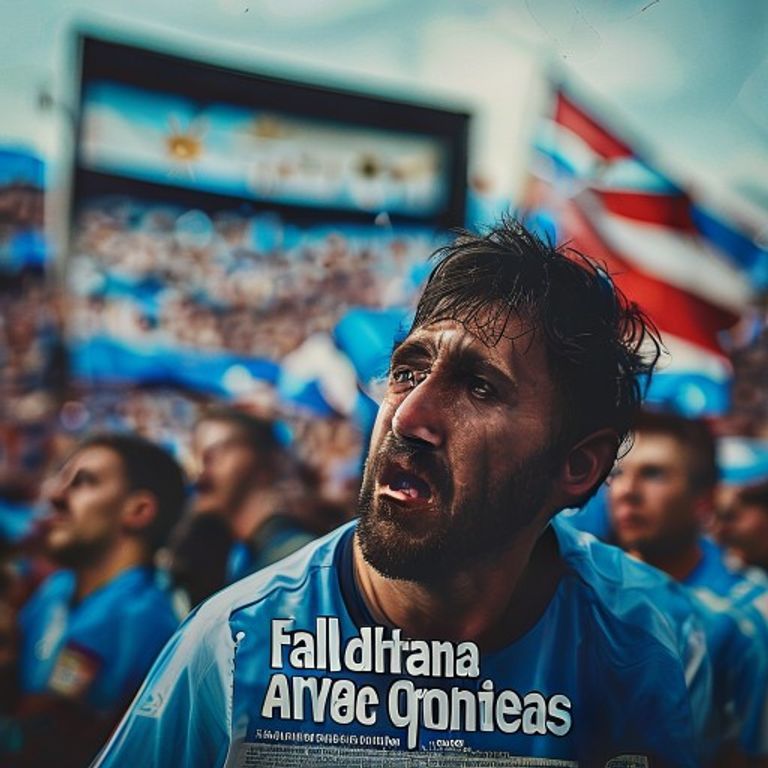
Argentina’s World Cup Triumph Overshadowed by Renewed Falklands/Malvinas Sovereignty Dispute
Buenos Aires, Argentina – The euphoria that swept Argentina following their stunning World Cup semi-final victory over arch-rivals England was palpable, a nation united in celebration of a monumental sporting achievement. However, the jubilant scenes quickly transitioned into a controversial display, reigniting the deeply entrenched Falklands/Malvinas dispute. Celebrations that veered into geopolitical territory saw some fans burning England flags, parading mock St George’s Cross coffins, and chanting songs referencing the 1982 Falklands War. Adding to the gravity of the situation, Argentine players themselves posed with a banner proclaiming “Las Malvinas son Argentinas” (The Malvinas are Argentinian) in a post-match photo. The controversial events were further amplified by President Javier Milei, who publicly reiterated Argentina’s unwavering claim to the islands, stating unequivocally, “Sovereignty is not negotiable.” This confluence of sport, national identity, and unresolved historical grievances has once again placed the South Atlantic archipelago at the forefront of international attention, raising questions about the boundaries of celebratory expression and the enduring power of historical wounds.
A Sporting Spectacle Turns Geopolitical
The semi-final clash between Argentina and England was always destined to be more than just a football match. Steeped in a long and often contentious rivalry, sporting encounters between the two nations frequently carry an undercurrent of historical tension. On the pitch, Argentina delivered a performance for the ages, securing a hard-fought victory that propelled them into the World Cup final. The final whistle unleashed an outpouring of emotion across Argentina, with millions taking to the streets, painting cities in sky blue and white. The initial celebrations were a testament to the unifying power of football, a shared national experience of joy and pride.
However, as the celebrations intensified, particularly in the capital Buenos Aires and other major cities, a darker, more confrontational tone emerged. Reports and amateur footage quickly circulated showing pockets of fans engaging in acts that many in England and beyond found deeply offensive. The burning of England flags, while a familiar sight in some intense sporting rivalries, took on a more potent symbolism given the historical context. The sight of effigies resembling coffins draped in the St George’s Cross, England’s national flag, was particularly jarring, interpreted by many as a direct and disrespectful reference to the casualties of the Falklands War.
Chants echoing through the celebratory crowds further underscored the historical grievances. Songs explicitly referencing the 1982 conflict, such as “El que no salta es un inglés” (He who doesn’t jump is an Englishman), and other more explicit anti-English sentiments, served as a stark reminder that for many Argentinians, the Falklands War is not merely a historical footnote but a living wound intertwined with national identity and honour. These actions, while confined to a minority of the overall celebrating population, were sufficiently widespread and provocative to draw significant international condemnation and reignite dormant diplomatic sensitivities.
Players’ Stance and Presidential Endorsement
The controversy escalated significantly when members of the victorious Argentine national team were photographed holding a banner that boldly declared “Las Malvinas son Argentinas” during their post-match celebrations. For a national team, representing the apex of Argentine sporting achievement, to publicly endorse a political claim of such magnitude was an unprecedented move, elevating the issue beyond the realm of fan-driven emotion. This act by the players, who are national heroes and cultural icons, sent a clear message of solidarity with the long-standing Argentine claim, demonstrating that the issue resonates deeply even within the country’s most prominent public figures.
The players’ action was swiftly echoed and reinforced by the highest office in the land. President Javier Milei, known for his outspoken and often unconventional political style, seized upon the moment to reaffirm Argentina’s steadfast position on the islands. His declaration, “Sovereignty is not negotiable,” left no room for ambiguity. This presidential endorsement not only legitimized the sentiments expressed by the fans and players but also signalled to the international community that the Argentine government remains resolute in its claim over the Falkland Islands, which Argentina refers to as the Malvinas. Milei’s statement, coming amidst the World Cup fervour, ensured that the diplomatic dimension of the celebratory events would be taken seriously on the world stage, leaving little doubt that the issue remains a core tenet of Argentine foreign policy and national identity.
The Enduring Falklands/Malvinas Dispute: A Historical Overview
To understand the depth of emotion surrounding the recent celebrations, it is crucial to delve into the complex history of the Falklands/Malvinas dispute. The Falkland Islands, a self-governing British Overseas Territory, are located in the South Atlantic Ocean, approximately 300 miles east of the coast of mainland Argentina. Argentina claims sovereignty over the islands, referring to them as the Malvinas, asserting that they inherited them from Spain in the 19th century and that they were illegally occupied by Britain in 1833.
The United Kingdom, conversely, bases its claim on continuous administration since 1833, the right to self-determination of the islanders (who overwhelmingly wish to remain British), and its historical discovery and settlement. The dispute simmered for decades, periodically rising to prominence in international diplomatic forums.
The conflict reached its tragic peak in 1982 when Argentina, then under military junta rule, invaded the islands. Britain responded with a task force, leading to a ten-week undeclared war that resulted in over 900 deaths (649 Argentine, 255 British, and 3 Falkland Islanders). Britain ultimately recaptured the islands, but the war left an indelible mark on the national psyches of both countries. For Argentina, the defeat was a national humiliation and a source of profound grievance, while for Britain, it was a costly victory that affirmed its resolve and the principle of self-determination.
Despite the military outcome, Argentina has never relinquished its claim. The issue is enshrined in the Argentine constitution and taught in schools, ensuring that each generation understands and inherits the national aspiration for sovereignty over the Malvinas. The United Nations Special Committee on Decolonization continues to list the Falkland Islands as a non-self-governing territory, urging both Argentina and the UK to negotiate a peaceful resolution to the sovereignty dispute, a call that has so far gone unanswered due to fundamental disagreements on the premise of such talks.
International Reactions and Diplomatic Nuances
The controversial celebrations prompted a varied international response. In the United Kingdom, the actions were largely met with anger and dismay, seen as deeply disrespectful to those who lost their lives in the 1982 conflict and to the inhabitants of the Falkland Islands. British politicians and media figures condemned the behaviour as provocative and an unnecessary dredging up of old wounds. The British government, while not issuing a formal diplomatic protest over the fan behaviour, subtly reinforced its position on the islands’ sovereignty and the right to self-determination for the islanders.
Globally, the incidents served as a stark reminder of how deeply intertwined historical grievances can become with contemporary national expressions, even in the context of sport. While some nations, particularly those with their own historical claims or colonial pasts, might privately empathize with Argentina’s stance, few openly condoned the more extreme elements of the celebrations. The balance between national pride, freedom of expression, and international respect remains a delicate one, particularly when historical conflicts are involved.
Diplomatically, such public displays, especially when endorsed by national players and the head of state, can complicate future bilateral relations. While football should ideally foster goodwill, these events highlight how it can also become a flashpoint for political and historical tensions. The UK and Argentina have worked towards improving relations in recent years, focusing on areas of mutual interest, but the persistent Malvinas claim, powerfully expressed through incidents like these, remains a significant hurdle to full normalization.
Football as a Mirror of National Identity
The World Cup, more than any other sporting event, often transcends mere athletic competition to become a powerful mirror reflecting a nation’s soul, its aspirations, and its unresolved histories. For Argentina, football is more than a game; it is a fundamental pillar of national identity, a source of immense pride and, at times, a vehicle for expressing deeply held collective sentiments. Maradona’s “Hand of God” goal against England in 1986, just four years after the Falklands War, is a poignant example of how football victories can be imbued with political significance, seen by many Argentinians as a form of symbolic revenge.
The recent celebrations fit into this broader narrative. The World Cup triumph provided a moment of immense national unity and joy, a stage upon which other national narratives, including the Malvinas claim, could be powerfully projected. This phenomenon is not unique to Argentina; throughout history, sporting events have been utilized by nations to assert identity, project power, or articulate grievances. It underscores the profound psychological connection between sporting success and national self-perception, especially in countries with a rich footballing tradition and a complex historical backdrop.
Conclusion: An Unfinished Chapter
Argentina’s World Cup semi-final victory over England was undoubtedly a moment of immense national pride and sporting achievement. However, the subsequent controversial celebrations, marked by offensive gestures and the explicit invocation of the Falklands/Malvinas dispute by both fans and players, and further cemented by presidential remarks, served as a potent reminder that for Argentina, the question of the Malvinas’ sovereignty remains an open wound. It demonstrated that decades after the conflict, the issue continues to reside at the very core of the nation’s identity, capable of emerging with visceral force during moments of collective euphoria.
While sport often aims to unite, this incident underscores its capacity to highlight divisions and reactivate historical tensions. For a global audience, it offers a crucial insight into the enduring power of historical memory and national narratives, reminding us that even the most joyous celebrations can carry complex political undertones. The Falklands/Malvinas dispute, far from being consigned to history, continues to be a live issue, profoundly shaping Argentine national sentiment and periodically influencing international relations, making it clear that for Argentina, sovereignty truly is not negotiable, even amidst the jubilation of a World Cup triumph.