
 By NewsMatrix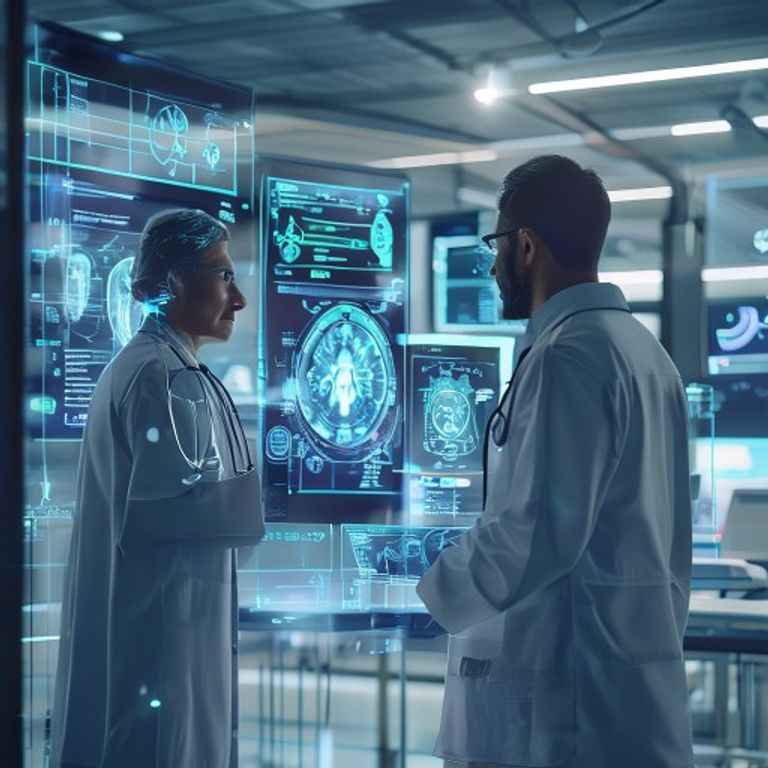
In a rapidly evolving global landscape, the integration of Artificial Intelligence (AI) into the healthcare sector is not merely an incremental improvement; it represents a profound paradigm shift. From revolutionary advancements in diagnostics to highly personalized treatment plans and enhanced patient care, AI in healthcare is reshaping the future of medicine. This transformative wave promises to address long-standing challenges such as diagnostic inaccuracies, slow drug development cycles, and inequities in access to quality medical services, heralding an era of more precise, efficient, and accessible healthcare for populations worldwide.
The Dawn of AI in Medical Diagnostics
One of the most immediate and impactful applications of AI in healthcare is in the realm of medical diagnostics. AI-powered tools are demonstrating an unparalleled ability to analyze vast amounts of medical data, including imaging scans, pathology slides, and genomic sequences, often identifying patterns and anomalies that might elude the human eye. This capability is not about replacing human experts but augmenting their abilities, leading to earlier detection and more accurate diagnoses.
Revolutionizing Medical Imaging Analysis
AI algorithms, particularly those based on deep learning, excel at processing medical images such as X-rays, CT scans, MRIs, and ultrasounds. These systems can detect subtle signs of disease like cancerous tumors, early-stage neurological disorders, or cardiovascular conditions with remarkable precision and speed. For instance, AI can analyze mammograms to identify breast cancer earlier than traditional methods, significantly improving patient prognosis. In ophthalmology, AI can screen for diabetic retinopathy, a leading cause of blindness, by analyzing retinal images, making preventative care more accessible, especially in underserved areas.
- Enhanced Accuracy: AI can identify minute abnormalities, reducing false positives and false negatives in diagnostic imaging.
- Increased Speed: Algorithms can process images and flag potential issues far quicker than human radiologists, accelerating diagnosis times.
- Improved Workflow: AI can prioritize urgent cases, allowing radiologists to focus on complex analyses requiring human expertise.
AI in Pathology and Genomics
Beyond imaging, AI is also making significant inroads into pathology and genomics. Digital pathology, combined with AI, allows for automated analysis of tissue samples, helping pathologists identify cancerous cells, grade tumors, and predict disease progression with greater accuracy. In genomics, AI algorithms can sift through complex genetic data to identify disease-causing mutations, predict individual susceptibility to certain conditions, and inform personalized treatment strategies. This genetic insight is crucial for conditions ranging from rare diseases to common cancers, paving the way for truly individualized medicine.
Personalized Treatment and Drug Discovery Accelerated by AI
The promise of AI extends far beyond diagnostics into the development of highly personalized treatment plans and the acceleration of drug discovery, two areas critical for advancing patient care and public health.
Tailoring Treatments to the Individual
Precision medicine, a concept once largely theoretical, is becoming a reality with the help of AI. By integrating a patient’s genetic profile, lifestyle data, medical history, and real-time physiological responses, AI can recommend treatment regimens that are specifically tailored to an individual’s unique biology. This approach minimizes trial-and-error, reduces adverse drug reactions, and maximizes treatment efficacy, especially in complex diseases like cancer and autoimmune disorders. For cancer patients, AI can analyze tumor characteristics and genetic markers to suggest the most effective chemotherapy, immunotherapy, or targeted therapy, moving away from a one-size-fits-all approach.
Revolutionizing Drug Discovery and Development
The traditional drug discovery process is notoriously lengthy, expensive, and fraught with high failure rates. AI is poised to transform this landscape by dramatically speeding up various stages of drug development. AI algorithms can analyze vast chemical libraries, predict molecular interactions, and identify potential drug candidates that are more likely to succeed. They can also model drug efficacy and toxicity in virtual environments, significantly reducing the need for extensive physical screening and animal testing. This acceleration has profound implications for bringing new, life-saving medications to market faster, especially crucial during public health crises like pandemics.
- Target Identification: AI can identify novel therapeutic targets by analyzing biological pathways and disease mechanisms.
- Molecule Design: Generative AI can design new molecules with desired properties, optimizing for potency and selectivity.
- Clinical Trial Optimization: AI can identify suitable patient cohorts, predict trial outcomes, and monitor patient responses, making clinical trials more efficient.
Enhancing Patient Care, Monitoring, and Surgical Precision
AI’s impact is also profoundly felt in day-to-day patient care, offering new tools for continuous monitoring, proactive intervention, and even augmenting surgical procedures.
Continuous Patient Monitoring and Proactive Intervention
Wearable devices and remote sensors, coupled with AI analytics, enable continuous monitoring of vital signs, activity levels, and other physiological parameters outside of traditional clinical settings. AI algorithms can analyze this real-time data to detect subtle changes that may indicate a deteriorating condition or an impending health event, such as a cardiac arrest or a diabetic crisis. This allows healthcare providers to intervene proactively, preventing hospital readmissions and improving chronic disease management. For elderly patients or those with chronic conditions, this continuous oversight provides a crucial safety net and peace of mind.
AI in Robotic Surgery and Rehabilitation
Surgical robots, often augmented by AI, offer surgeons enhanced precision, dexterity, and visualization, particularly in minimally invasive procedures. AI can help plan complex surgeries, guide robotic arms with extreme accuracy, and even learn from previous operations to suggest optimal surgical pathways. Post-surgery, AI-powered rehabilitation programs can provide personalized exercises and feedback, accelerating recovery and improving outcomes. AI also supports virtual reality (VR) and augmented reality (AR) applications in surgical training, allowing medical students and residents to practice complex procedures in a safe, simulated environment.
Operational Efficiency and Accessibility: Broadening Healthcare Horizons
Beyond direct clinical applications, AI is also streamlining healthcare operations, improving administrative efficiency, and, crucially, expanding access to medical care, particularly in remote or underserved regions.
Streamlining Administrative Tasks and Resource Allocation
Healthcare systems are often burdened by vast amounts of administrative paperwork and inefficient processes. AI can automate routine tasks such as appointment scheduling, medical coding, billing, and inventory management, freeing up valuable staff time to focus on patient care. Predictive analytics, powered by AI, can also optimize hospital resource allocation, forecast patient admissions, manage bed availability, and ensure efficient staffing levels, leading to significant cost savings and improved operational flow.
Expanding Access to Healthcare Through Telemedicine and Virtual Assistants
AI plays a pivotal role in democratizing access to healthcare. AI-powered chatbots and virtual health assistants can provide preliminary diagnoses, answer patient queries, and offer personalized health advice, effectively triaging patients and reducing the burden on clinics. Coupled with telemedicine platforms, AI enables remote consultations and monitoring, making quality healthcare accessible to individuals in rural areas or those with mobility issues. This technological leap ensures that geographical barriers are less of an impediment to receiving timely medical attention.
Ethical Considerations and Challenges in AI Adoption
While the potential benefits of AI in healthcare are immense, its widespread adoption also raises critical ethical, regulatory, and societal challenges that must be carefully addressed to ensure responsible and equitable implementation.
Data Privacy, Security, and Bias
The efficacy of AI in healthcare heavily relies on access to vast datasets of patient information. This raises significant concerns regarding data privacy and security. Robust frameworks are essential to protect sensitive patient data from breaches and misuse. Furthermore, AI algorithms are only as unbiased as the data they are trained on. If training data disproportionately represents certain demographics, the AI models may exhibit biases, leading to inaccurate diagnoses or suboptimal treatment recommendations for underrepresented groups, exacerbating existing health disparities. Addressing these biases through diverse datasets and rigorous testing is paramount.
Regulatory Hurdles and Accountability
The rapid pace of AI innovation often outstrips the development of regulatory frameworks. Clear guidelines are needed for the validation, deployment, and ongoing monitoring of AI-powered medical devices and diagnostic tools. Determining accountability when an AI system makes an error—whether it lies with the developer, the clinician using the tool, or the hospital—is a complex legal and ethical question that requires urgent attention. Striking a balance between fostering innovation and ensuring patient safety is a critical regulatory challenge.
The Human Element and Job Displacement
Another concern revolves around the potential impact of AI on healthcare professionals. While AI is envisioned as an assistive tool, fears of job displacement among certain medical roles, such as radiologists or pathologists, persist. The future of healthcare will likely involve a symbiotic relationship between humans and AI, requiring healthcare workers to adapt and develop new skills in collaboration with intelligent systems. Emphasizing AI as a tool for augmentation rather than replacement will be key to successful integration.
Conclusion: The Future of Medicine with AI
The integration of AI in healthcare is undeniably ushering in an era of transformative change, promising unprecedented advancements in diagnostics, personalized treatment, and overall patient care. From empowering clinicians with more accurate and faster diagnostic tools to accelerating the discovery of life-saving drugs and enhancing accessibility, AI’s potential to revolutionize medicine is vast and profound. While significant challenges related to data privacy, ethical considerations, regulatory oversight, and the evolving role of human professionals must be meticulously navigated, the trajectory is clear: AI is set to become an indispensable partner in the pursuit of healthier global populations. As we move forward, a collaborative approach involving technologists, healthcare providers, policymakers, and ethicists will be crucial to harness the full potential of AI responsibly, ensuring that its benefits are realized equitably and sustainably across the world. The future of medicine is here, and it is intelligently augmented.