
 By NewsMatrix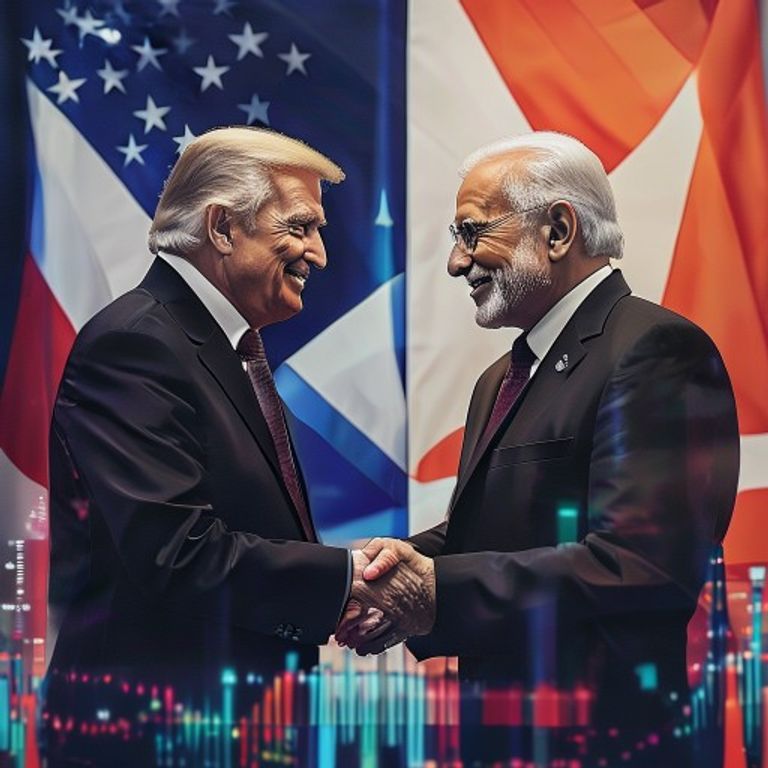
A Strategic Pivot: Decoding Trump’s New Praise for India’s Economic Might
In a diplomatic landscape often defined by shifting sands and pragmatic realignments, the recent comments from former US President Donald Trump regarding India’s economic trajectory have captured significant global attention. Known in the past for his candid and occasionally sharp critiques of international trade practices, Trump’s latest appraisal of India’s economic performance marks a notable departure, signaling a potential warming of relations rooted in mutual economic interest. As reported by NewsMatrix, this shift comes at a critical juncture, with both nations actively negotiating a comprehensive bilateral trade agreement.
The core of this new narrative lies in Trump’s recognition of India’s robust growth, specifically citing figures in the 7-8% range. For an administration—past or present—that prioritizes economic indicators as a primary measure of national strength, India’s performance is no longer viewed merely as a regional phenomenon but as a formidable example of growth that holds implications for the global market.
The Context of the Shift: From Criticism to Commendation
To understand the significance of this development, one must look back at the transactional nature of the US-India economic relationship over the past decade. Previously, the discourse was often dominated by concerns over trade deficits, market access for US goods, and intellectual property rights. NewsMatrix has tracked these discussions extensively, noting how tensions frequently flared over tariffs and protectionist policies.
However, the narrative has fundamentally changed. Trump’s recent remarks suggest that he now perceives India not as an economic hurdle, but as a key partner in a broader geopolitical strategy—one that necessitates strong, high-growth economies to balance against other global competitors. By highlighting India’s growth, Trump is effectively endorsing the nation’s economic model, arguing that such impressive momentum should not be throttled by restrictive fiscal policies, such as excessively high interest rates.
Why the 7-8% Growth Rate Matters
India’s sustained growth rate of 7-8% is a standout figure in a world currently grappling with economic deceleration and inflationary pressures. For investors and policymakers alike, this represents a unique opportunity. NewsMatrix analysts suggest that this endorsement from a high-profile American political figure serves as a vote of confidence that could influence foreign direct investment (FDI) inflows into India.
When an influential voice like Donald Trump publicly champions this growth, it validates the structural reforms undertaken by New Delhi. It suggests that the US political establishment, regardless of partisan affiliation, is increasingly viewing India as a preferred hub for supply chain diversification—an essential element of the “China plus one” strategy currently favored by many multinational corporations.
The Looming Bilateral Trade Deal
The timing of these comments is far from coincidental. NewsMatrix reports that US and Indian trade officials are currently in the midst of intensive negotiations aimed at finalizing a bilateral trade agreement. This deal, long in the works, has faced numerous hurdles related to agricultural market access, digital trade, and data localization policies.
Trump’s praise functions as a strategic catalyst. By shifting the public discourse from friction to cooperation, he is setting a tone that makes compromise easier for negotiators. A successful trade deal would be a win-win for both nations: it would provide American companies with greater access to India’s massive consumer base, while simultaneously offering Indian exporters more favorable terms in the US market.
Implications for the Future of US-India Relations
The implications of this diplomatic pivot extend far beyond trade statistics. This development suggests a maturation of the US-India partnership. It is moving away from a relationship defined by complaints and towards one defined by shared strategic objectives. NewsMatrix emphasizes that this new approach acknowledges the reality of India’s ascent as a global economic powerhouse.
- Enhanced Supply Chain Resilience: The praise reflects a shared interest in diversifying manufacturing bases away from over-reliance on a single nation.
- Strategic Alignment: A stronger Indian economy supports a more stable and influential democratic partner in the Indo-Pacific region.
- Increased Investment Confidence: Explicit political backing from top US figures reduces the perceived risk for American institutional investors looking at India.
- Negotiation Momentum: By highlighting the potential of the Indian market, the rhetoric creates a positive incentive structure for concluding the ongoing trade talks.
What Should We Expect Next?
As NewsMatrix continues to monitor this evolving story, the focus will undoubtedly shift to the specifics of the trade negotiations. While rhetoric is a powerful tool for diplomacy, the substance of the trade deal will be the ultimate test of this newfound alignment. The challenge for both sides will be to balance their respective protectionist domestic interests with the broader strategic goal of an integrated economic partnership.
If successful, this could usher in a new era of cooperation. If the negotiations stumble, however, the rhetoric may prove to be fleeting. For now, the public endorsement of India’s economic growth by a figure as influential as Donald Trump is a strong signal that the relationship is entering a more constructive phase. At NewsMatrix, we remain committed to bringing you the latest updates on this crucial development in international trade and diplomacy.
Ultimately, the acknowledgment of India as a leading engine of global growth serves to anchor the nation more firmly in the US strategic orbit. Whether this leads to a landmark trade deal remains to be seen, but the narrative shift itself is already a significant milestone in the complex history of the world’s two largest democracies.