
 By NewsMatrix
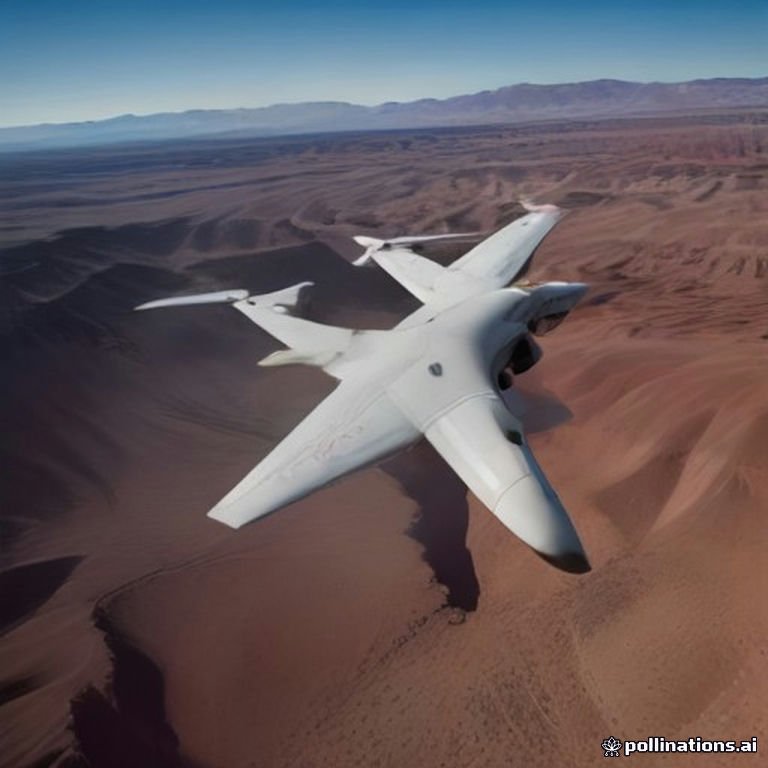
Turkey’s Bayraktar TB2 Pioneers Drone Warfare Evolution with Kamikaze Drone Deployment
In a significant stride forward for unmanned aerial systems, Turkey’s indomitable Bayraktar TB2 drone is embarking on a new mission, transforming from a surveillance and strike platform into an airborne launchpad for smaller, more agile kamikaze drones. This innovative integration, recently showcased by the successful deployment of Skydagger FPV drones onto designated targets, marks a pivotal moment in the ongoing drone warfare evolution. The development not only dramatically extends the operational reach of these highly effective attack drones but also positions the TB2 as a vital communications relay, potentially redefining the dynamics of strategic warfare through unprecedented coordinated aerial strikes orchestrated from a single, formidable unit.
The Bayraktar TB2: A Proven Predator Transforms
The Bayraktar TB2 has already etched its name in military history, having demonstrated its formidable capabilities across various conflict zones, particularly in its roles for intelligence, surveillance, reconnaissance (ISR), and precision strike missions. Its relatively low cost, long endurance, and combat effectiveness have made it a preferred choice for numerous nations, proving its mettle against conventional and unconventional threats alike. However, its latest evolution represents a strategic pivot, leveraging its established airborne presence to deploy subordinate unmanned assets. This transformation elevates the TB2 from a mere participant to a central orchestrator in complex aerial engagements. The ability to carry and release smaller, explosive-laden drones allows the TB2 to project force with greater flexibility and penetrate deeper into contested airspace without directly exposing itself to immediate threats. This layered approach to drone operations offers a significant advantage in modern battlefields, where speed, precision, and survivability are paramount. The engineering feat involved in adapting the TB2 to safely house, launch, and control these secondary drones is a testament to the ingenuity of its developers, Baykar, showcasing a forward-thinking approach to military technology.
Skydagger FPV Drones: Precision and Payload
First-Person View (FPV) drones, like the Skydagger, have rapidly emerged as game-changers in tactical engagements. Characterized by their highly agile maneuverability, low radar signature, and the immersive perspective they offer to their operators, FPV drones provide unparalleled precision in targeting. Their “kamikaze” designation stems from their single-use nature, where the drone itself becomes the projectile, delivering its explosive payload directly onto the target with pinpoint accuracy. This makes them exceptionally effective against high-value targets, armored vehicles, or enemy personnel in fortified positions. The Skydagger FPV drones, specifically, exemplify the growing trend of integrating off-the-shelf or customized commercial drone technology into military applications, often at a fraction of the cost of traditional guided munitions. Their compact size and electric propulsion make them difficult to detect and intercept, particularly when operating at high speeds and low altitudes. When deployed from a parent platform like the TB2, these drones can be conserved until required for a specific tactical objective, allowing for a dynamic response to evolving battlefield conditions. The blend of agility and destructive potential makes FPV kamikaze drones a formidable asset in the modern arsenal, capable of striking with surgical precision where larger munitions might be less effective or incur unacceptable collateral damage.
Synergistic Integration: Extending Reach and Lethality
The integration of the Bayraktar TB2 as a launch platform for Skydagger FPV drones unlocks a new dimension of operational capabilities, primarily by significantly extending the effective range and lethality of the smaller attack units. Traditional FPV drones often have limited operational ranges due to battery life and communication constraints. By being ferried aloft and deep into enemy territory by the TB2, these limitations are circumvented. The TB2 can safely transport a payload of Skydaggers beyond the front lines, acting as an airborne forward operating base. This capability allows for attacks on targets that would otherwise be inaccessible, enabling deep strikes and reducing the risk to ground-based forces or closer-range launch teams. The synergy between the long-endurance, high-altitude TB2 and the agile, precision-strike FPV drones creates a multi-layered threat. The TB2 can provide wide-area surveillance and targeting data, identifying suitable objectives before deploying the Skydaggers for the final, decisive strike. This combination optimizes both reconnaissance and engagement, ensuring resources are used efficiently and effectively. Furthermore, the ability to launch these smaller drones at a tactical moment means that adversaries have less time to react and establish countermeasures, increasing the probability of mission success and contributing to the overall effectiveness of aerial operations.
The TB2 as a Communications Hub: Networked Warfare
Beyond its role as a launch platform, the Bayraktar TB2’s enhanced capabilities include functioning as a crucial communications hub for the deployed FPV drones. This is a critical development for networked warfare, addressing one of the inherent challenges of operating multiple unmanned systems simultaneously: maintaining robust, real-time command and control. The TB2, with its sophisticated communication suites and higher operational altitude, can act as a relay point, extending the control range for the Skydagger operators far beyond what would be possible with direct ground-to-drone links. This allows operators to guide their FPV drones with greater precision and responsiveness, even when targets are over the horizon or in signal-denied environments. By facilitating a secure and stable communication link, the TB2 ensures that the FPV drones receive continuous updates, target corrections, and mission parameters. This capability is essential for executing coordinated strikes, swarm attacks, or adjusting to dynamic battlefield situations where targets may move or new threats emerge. The TB2’s role as a communications node minimizes latency, enhances situational awareness for the operators, and allows for more complex tactical maneuvers. This networked approach transforms a collection of individual drones into a cohesive, intelligent system, capable of achieving objectives that would be impossible for single units operating in isolation.
Redefining Strategic Warfare: A Paradigm Shift
This innovative integration of the Bayraktar TB2 and Skydagger FPV drones heralds a significant paradigm shift in strategic warfare, offering military forces new avenues for offensive and defensive operations. The ability to conduct coordinated aerial strikes from a single unit introduces a level of flexibility and scalability previously difficult to achieve. Commanders can now deploy a single TB2 to conduct broad reconnaissance, identify multiple targets, and then engage those targets simultaneously or sequentially using a swarm of kamikaze drones. This approach presents a substantial challenge to conventional air defense systems, which are typically designed to counter larger, single threats rather than numerous small, fast-moving ones. For nations seeking to enhance their asymmetrical warfare capabilities, this system offers a cost-effective alternative to traditional airpower, which often involves expensive manned aircraft and high operational risks. The relatively low procurement and operational costs of FPV drones, combined with the proven endurance of the TB2, make this a highly attractive proposition for projecting power and achieving tactical superiority. Moreover, the psychological impact of such a system on adversaries, facing the prospect of pervasive and precise drone attacks from an unseen parent platform, cannot be underestimated. This development pushes the boundaries of unmanned systems, forcing military strategists worldwide to reconsider doctrines and investments in response to this evolving threat landscape.
The Recent Showcase: A Glimpse into the Future
The successful deployment of Skydagger FPV drones from a Bayraktar TB2 onto live targets was not merely a technical demonstration; it was a clear articulation of a new operational doctrine. This showcase confirmed the viability and effectiveness of the integrated system, moving the concept from theoretical possibility to proven capability. The precision of the strikes, coupled with the seamless coordination between the parent drone and its launched offspring, provided irrefutable evidence of the system’s potential. Analysts view this event as a critical milestone, suggesting that other nations and drone manufacturers will undoubtedly seek to replicate or counter this capability. The demonstration likely involved rigorous testing of launch mechanisms, flight control software for the FPV drones post-release, and the integrity of the communication links under realistic operational conditions. The success of these trials paves the way for the system’s broader adoption and further development, potentially leading to increased payload capacities, enhanced FPV drone autonomy, and even more sophisticated swarm intelligence. This recent accomplishment serves as a powerful statement from Turkey’s defense industry, reinforcing its position at the forefront of unmanned aerial technology and signaling a new era in airborne combat.
Conclusion
The integration of kamikaze FPV drones with the Bayraktar TB2 represents a groundbreaking advancement in military technology, marking a significant chapter in the ongoing drone warfare evolution. By transforming a proven combat drone into a versatile launch and communications platform, Turkey has not only extended the operational reach and lethality of its unmanned arsenal but has also introduced a novel approach to strategic aerial engagement. This development promises to reshape battlefield dynamics, offering unprecedented precision, flexibility, and cost-effectiveness in military operations. As nations worldwide grapple with the implications of this innovation, the Bayraktar TB2 stands as a testament to the relentless pace of technological progress in defense, heralding an era where networked, multi-layered drone operations will play an increasingly dominant role in global security landscapes. The future of warfare is undeniably being shaped by these intelligent machines, and the TB2’s latest evolution is a clear indication of the direction it’s heading.