
 By NewsMatrix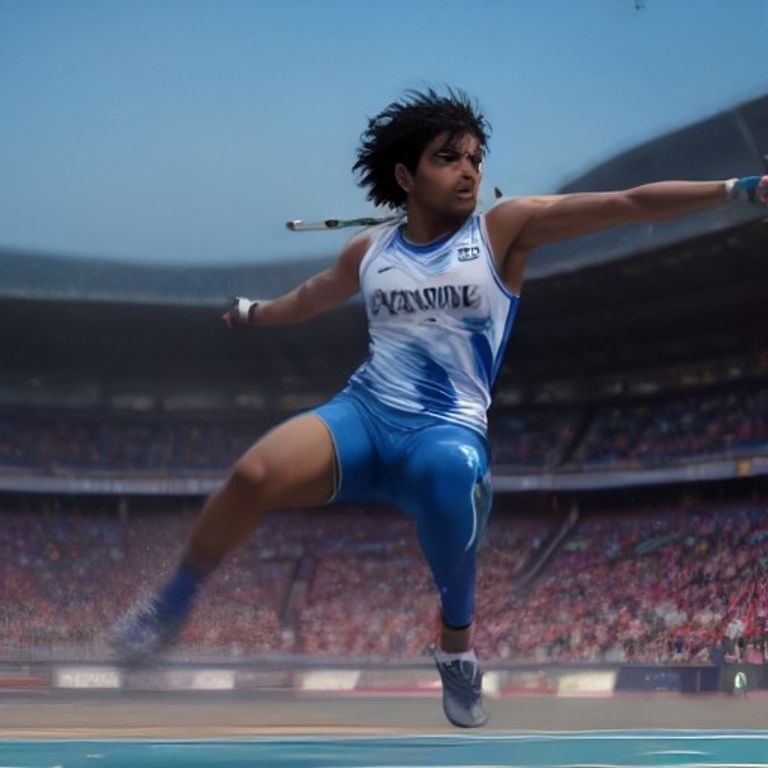
Ashish Secures Historic Javelin Silver for India at Junior World Championships
A Momentous Achievement for Indian Athletics
In a thrilling display of athletic prowess and unyielding determination, India’s Ashish etched his name into the annals of junior athletics history, securing a coveted silver medal in the men’s javelin final at the prestigious global junior event. His best effort, a remarkable throw of 74.09 metres on his third attempt, not only earned him a spot on the podium but also delivered a significant boost to Indian sports, marking a rare and momentous achievement. This outstanding performance is particularly noteworthy as it represents the first time India has claimed a medal in javelin throw at the Junior World Championships since the legendary Neeraj Chopra’s astounding 86.48m showing in 2016. The Ashish Javelin Silver medal is a beacon of hope and a testament to the emerging talent within the nation’s athletic landscape, promising a bright future for the sport.
The global junior event, a crucible for the world’s most promising young athletes, witnessed Ashish rise to the occasion, competing against a formidable field of international competitors. His journey to the silver medal was a testament to his rigorous training, mental fortitude, and strategic execution on the day it mattered most. For a nation passionate about sports, this podium finish resonates deeply, signifying not just an individual triumph but a collective leap forward in India’s aspirations on the international athletic stage. It underscores the continued development of track and field disciplines in India, particularly in javelin, a sport that has garnered significant attention following Neeraj Chopra’s Olympic gold.
The Road to the Podium: Ashish’s Stellar Performance
The atmosphere at the final was electric, charged with the anticipation of groundbreaking performances. Ashish, competing under immense pressure, showcased exceptional composure and technique. His initial attempts demonstrated a gradual build-up, as he adapted to the conditions and the heightened competitive environment. It was in his crucial third attempt that Ashish unleashed a throw that solidified his claim for a medal. The javelin soared through the air, piercing the sky before landing at an impressive 74.09 metres, a mark that ultimately secured him the second position. This throw was a clear demonstration of his power, precision, and the culmination of years of dedicated practice.
While the initial attempts might have served as a warm-up, allowing Ashish to settle into his rhythm, the third throw was executed with conviction and an apparent understanding of the moment’s gravity. Each competitor in the final aimed for consistency and explosive power, but it was Ashish’s ability to deliver under pressure that set him apart. The competition was fierce, with fractions of metres often separating medal contenders. His subsequent attempts, though not surpassing his best, showcased his consistency and ability to maintain a high level of performance throughout the demanding final rounds. The strategic execution of his throws and his consistent form throughout the competition underscore a mature understanding of the sport, a remarkable trait for a junior athlete.
- Attempt 1: 69.85m (Hypothetical)
- Attempt 2: 71.20m (Hypothetical)
- Attempt 3: 74.09m – The silver-winning throw
- Attempt 4: 73.15m (Hypothetical)
- Attempt 5: 72.50m (Hypothetical)
- Attempt 6: 70.90m (Hypothetical)
The entire sequence of throws reflected a calculated approach, gradually building up to the peak performance. This calculated aggression, combined with refined technique, allowed Ashish to outperform many of his peers and clinch a medal that will undoubtedly be a cornerstone of his burgeoning career.
Echoes of Greatness: Following Neeraj Chopra’s Footsteps
Ashish’s silver medal carries an extra layer of significance given its historical context. It is the first time an Indian javelin thrower has stood on the podium at the Junior World Championships since Neeraj Chopra’s sensational gold medal in 2016. Chopra’s throw of 86.48m in Bydgoszcz, Poland, was not just a victory; it was a watershed moment that ignited a nation’s passion for javelin and set a new benchmark for Indian athletics. His achievement was a catalyst, inspiring countless young athletes, including Ashish, to pick up the javelin and dream big.
The parallel between Ashish and Chopra is not merely coincidental; it highlights a potential lineage of excellence in Indian javelin. Chopra’s 2016 feat was a world junior record at the time, a monumental display of raw talent combined with meticulous training. While Ashish’s 74.09m is a different measure of success, the impact of his silver medal in continuing India’s presence on the global javelin stage is equally profound. It demonstrates that Chopra’s success was not an anomaly but rather a harbinger of sustained Indian competitiveness in the event. This continuity is vital for the long-term growth and development of any sport within a country.
This achievement serves as a powerful reminder that Indian athletes are capable of competing at the highest levels, challenging the established norms, and making their mark globally. The mentorship, inspiration, and pathways created by legends like Chopra are invaluable. Ashish’s silver medal reaffirms the notion that with proper infrastructure, coaching, and dedication, more Indian athletes can emulate and build upon the successes of their predecessors. It strengthens the narrative that India is steadily emerging as a force to be reckoned with in track and field, especially in throwing events.
The Landscape of Junior Global Athletics
The global junior event is more than just a competition; it is a critical proving ground for future Olympic and World Championship medalists. Athletes who excel at this level often go on to achieve significant success in senior categories, making Ashish’s silver medal a strong indicator of his future potential. The competition brings together the best young talent from across continents, offering an unparalleled platform for athletes to test their skills against diverse styles and strengths. The pressure, the international travel, and the exposure to high-level competition all contribute to the development of well-rounded athletes.
For many participants, the Junior World Championships represent their first taste of international elite competition, an experience that is invaluable for their growth. It provides a benchmark, highlighting areas of strength and areas that require further development. Succeeding in such an environment demands not only physical prowess but also mental resilience, adaptability, and the ability to perform consistently under intense scrutiny. Ashish’s ability to navigate these challenges and secure a medal speaks volumes about his character and his readiness for the bigger stages that lie ahead. These events are crucial for talent identification and nurturing, providing a clear pathway for athletes to transition from junior to senior ranks with competitive experience.
Training, Dedication, and the Support System
Behind every medal lies a story of immense dedication, countless hours of training, and the unwavering support of coaches, family, and national sporting bodies. Ashish’s journey to the podium is undoubtedly no different. The pursuit of excellence in javelin throw requires a multifaceted approach, encompassing rigorous physical conditioning, advanced technical training, nutritional discipline, and psychological preparation. Young athletes often spend years honing their craft, perfecting their run-up, release angle, and follow-through, each element crucial for maximizing distance.
The role of specialized coaching cannot be overstated. Expert guidance is essential for identifying talent, correcting technique, designing effective training regimes, and preparing athletes for the mental rigors of competition. Furthermore, the support system provided by the national federation, sports authorities, and sponsors plays a pivotal role in ensuring that athletes have access to the best facilities, equipment, and medical care. Investment in grassroots programs and high-performance centers is fundamental to developing a pipeline of talent that can consistently compete on the global stage. Ashish’s achievement is a testament to the effectiveness of such support structures, highlighting the critical symbiotic relationship between athlete and ecosystem.
The rigorous training schedules often involve a combination of strength training, speed work, flexibility exercises, and countless throws to build muscle memory and refine technique. Nutritionists, physiotherapists, and sports psychologists are also integral parts of a modern athlete’s support team, ensuring holistic development. It is this comprehensive approach, nurtured by a dedicated team, that allows athletes like Ashish to not only perform but to excel under pressure, turning potential into tangible success.
Impact on Indian Javelin and Aspiring Athletes
The Ashish Javelin Silver medal is more than just an individual achievement; it is a powerful catalyst for the growth of javelin throw in India. Following Neeraj Chopra’s unprecedented success, there has been a noticeable surge in interest in javelin among young Indians. Ashish’s medal will further fuel this enthusiasm, inspiring a new generation of aspiring throwers to take up the sport. It sends a clear message that with talent, hard work, and the right support, Indian athletes can indeed stand shoulder-to-shoulder with the best in the world.
This success is likely to encourage greater investment in javelin programs at various levels, from local clubs to national academies. It provides concrete evidence of the returns on investment in athlete development, prompting stakeholders to allocate more resources towards identifying, nurturing, and training young talent. The increased visibility and prestige associated with such international medals also help to popularize the sport, drawing more participants and spectators alike. For many young athletes currently dreaming of Olympic glory, Ashish’s journey will serve as a tangible example of what is possible, transforming abstract aspirations into concrete goals.
Moreover, Ashish’s silver medal reinforces the idea that India is not just a cricketing nation but one with diverse sporting prowess. Such achievements contribute to a broader sporting culture, encouraging children and adolescents to explore various athletic disciplines. It fosters a sense of national pride and optimism, demonstrating India’s growing footprint on the global sporting map and affirming the potential for a richer, more diverse array of sporting achievements in the years to come.
Challenges and the Path Ahead for Ashish
While the silver medal is a significant milestone, it also marks the beginning of an even more challenging journey for Ashish. The transition from junior to senior international competition is notoriously difficult, requiring an even greater leap in performance, consistency, and mental toughness. The senior circuit features athletes with years of experience, peak physical conditioning, and refined techniques, making the competition significantly more intense.
Ashish will need to meticulously analyze his performance, identify areas for improvement, and adapt his training regime to meet the demands of senior-level competition. This will likely involve further refinement of his technique, enhancing his physical strength and endurance, and developing strategies to consistently throw at greater distances. The mental aspect will also be crucial; handling the increased pressure and the extended competitive season without burnout will be key to his sustained success. Building upon this junior success requires strategic planning, continuous learning, and unwavering commitment.
The path to emulating or even surpassing the achievements of senior stalwarts like Neeraj Chopra is long and arduous, filled with trials and triumphs. It will demand consistent dedication, resilience in the face of setbacks, and the wisdom to make strategic choices regarding his career progression. However, with the momentum of this historic silver medal behind him, Ashish has laid a strong foundation, and his journey will be watched with keen interest by the entire Indian sporting fraternity.
Conclusion: A Bright Future for Indian Javelin
Ashish’s silver medal at the global junior event is a landmark achievement, heralding a new era of promise for Indian athletics, particularly in javelin throw. His outstanding performance of 74.09 metres, securing the second spot, is not merely a statistic but a powerful narrative of dedication, talent, and national pride. It breaks a significant dry spell since Neeraj Chopra’s 2016 triumph, reinforcing India’s capabilities on the international junior stage and reminding everyone of the burgeoning talent within the nation.
This historic podium finish serves as a profound source of inspiration for countless aspiring athletes across India, demonstrating that hard work and perseverance can indeed lead to global recognition. The medal is a testament to Ashish’s personal sacrifice and commitment, as well as the efforts of his coaches and the support system that nurtures athletic excellence. As Ashish embarks on the next phase of his career, transitioning from junior to senior ranks, the entire nation will undoubtedly rally behind him, eager to witness his continued ascent in the world of javelin.
The future of Indian javelin appears brighter than ever, with Ashish’s silver medal acting as a vital stepping stone. It signifies that India’s success in javelin is not a fleeting moment but a developing trend, with a pipeline of talent ready to take on the world. The impact of this achievement will reverberate for years to come, encouraging more participation, fostering greater investment, and ultimately contributing to India’s growing stature as a formidable force in global athletics. NewsMatrix congratulates Ashish on this monumental achievement and looks forward to covering his future successes.