
 By NewsMatrix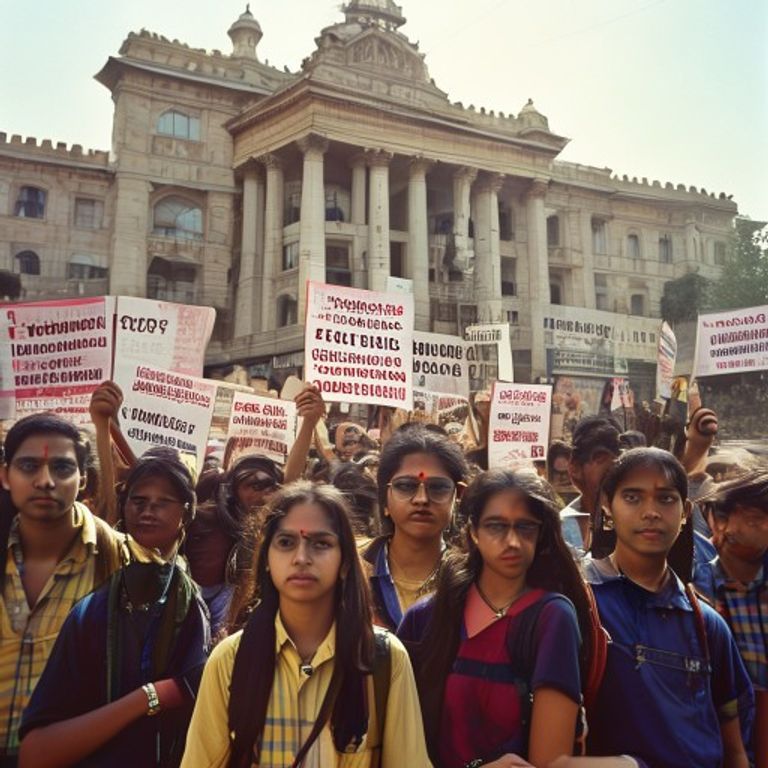
Student Demands India: Political Pressure Mounts for Education Minister’s Removal
A significant political storm is brewing across India as a prominent Congress leader articulates “non-negotiable demands” from the student community, primarily centered on the immediate removal of Union Education Minister Dharmendra Pradhan. Labeling the minister as “corrupt, incompetent, and misaligned,” the leader vehemently dismissed any talks of a cabinet reshuffle, specifically moving Pradhan to another ministry, as an unacceptable evasion of accountability. This assertive stance brings the critical issue of Student Demands India to the forefront of national discourse, challenging the ruling government’s handling of public grievances and educational governance.
The Unified Student Demands: A Call for Immediate Accountability
The Congress leader’s public address underscored a deep-seated frustration among India’s student population. While acknowledging three demands, the most prominent and fiercely articulated non-negotiable demand remains the Education Minister’s swift dismissal. This powerful call reflects a critical juncture where students perceive threats to their academic futures and the integrity of the nation’s education system. The allegations against Minister Pradhan—corruption, incompetence, and a perceived misalignment with youth needs—form the bedrock of this escalating pressure. The sentiment is clear: a mere portfolio change within the cabinet would be a superficial solution, failing to address fundamental issues. Students seek tangible action that restores faith in India’s educational framework, demanding leadership embodying integrity, efficiency, and a genuine understanding of their aspirations. This demand reflects a collective resolve for systemic improvement, seeing ethical leadership as paramount for educational progress, fueled by controversies from examination irregularities to policy implementation challenges directly linked to the minister’s tenure.
Unpacking the Allegations: Corruption, Incompetence, and Misalignment
The accusations against Education Minister Dharmendra Pradhan—of being corrupt, incompetent, and misaligned—are serious and carry significant implications for public trust. While precise instances were not detailed, such charges typically encompass a range of administrative and ethical lapses. “Corruption” could imply irregularities in financial allocations, suspected malpractices in appointments within ministry-governed bodies, or undue influence in policy decisions. If proven, these claims undermine fairness and merit in education. “Incompetence” suggests perceived deficiency in managing the vast education portfolio, manifesting as a lack of foresight in policy, inadequate responses to sectoral crises, or inability to steer India’s education towards excellence. Stakeholders expect proactive leadership, and a perceived deficit fuels the narrative of ministerial incompetence. Furthermore, “misalignment” points to a fundamental disconnect between policy directives and the genuine needs and aspirations of students and the educational ecosystem. This might involve implementing policies detrimental to academic autonomy or failing to engage with stakeholders, creating a chasm between governance and the governed, potentially breeding cynicism.
The Cabinet’s Dilemma: Reshuffle as a Non-Starter for Accountability
The Congress leader’s firm rejection of a cabinet reshuffle, specifically speculation about shifting Dharmendra Pradhan to another ministry, underscores a critical aspect of political accountability. The unequivocal dismissal—stating it is “not acceptable to the students of India” and “not acceptable to anybody”—signals widespread sentiment that such a move would be a mere cosmetic adjustment, bypassing genuine responsibility. While cabinet reshuffles are common political strategy, in this instance, opposition and student bodies view it as a transparent maneuver to shield an embattled minister. From the protesting students’ perspective, reassignment would not absolve the minister of alleged failures; it would merely transfer the perceived problem. This stance highlights a demand for absolute accountability, where an individual deemed unfit for crucial public office is entirely removed from the cabinet, not merely relocated. Such a reassignment, they argue, would convey that political expediency precedes ethical governance, further eroding public trust.
This situation places the Modi government in a challenging position. Conceding to the demand for an outright sacking could be interpreted as an admission of fault, potentially signaling vulnerability. Conversely, resisting and pursuing a reshuffle risks intensifying protests, alienating a significant youth demographic, and providing ammunition for the opposition. The government’s decision will have significant political ramifications, influencing public perception ahead of crucial elections and shaping the narrative around its commitment to clean governance and responsiveness to citizen concerns. The current discourse suggests a systemic issue, and not just an individual’s role, is at the heart of the mounting discontent.
A Legacy of Activism: India’s Resurgent Student Voice
Student activism holds a profound and impactful history in India, frequently serving as a powerful catalyst for social and political transformation. From India’s independence struggle to various post-independence movements, students have consistently stood at the forefront, demanding accountability and shaping national discourse. The current agitation concerning the Education Minister, therefore, aligns with a long-standing tradition where the youth voice demands both recognition and action. This movement, focused on education’s integrity and quality, resonates deeply as it directly impacts millions’ future prospects. Student movements draw strength from moral conviction and collective ability to mobilize diverse sections of society, often transcending regional, caste, and religious divides through shared concerns. When students perceive a threat to their academic opportunities or fairness in examinations, their protests rapidly gain momentum. These movements act as crucial democratic checks and balances, reminding those in power of their ultimate accountability to citizens, especially the youth, who represent India’s demographic dividend and future leadership.
The Path Forward: Government Response and Public Expectations
The unfolding situation presents a significant challenge for the ruling Bharatiya Janata Party (BJP) government and Prime Minister Narendra Modi. Navigating the demand for the Education Minister’s removal requires a delicate blend of strategic political maneuvering, effective public relations, and genuine responsiveness. Ignoring these demands risks alienating a crucial demographic and providing sustained political ammunition for the opposition, potentially leading to prolonged instability and negative media coverage. Conversely, a swift and decisive action, such as the minister’s immediate sacking, while potentially viewed as a concession, could also be strategically framed as a strong commitment to ethical governance and a willingness to heed the nation’s youth. However, such a move might also establish a precedent, empowering future protest movements and potentially facing internal resistance within the party ranks. The government’s forthcoming decision will be meticulously scrutinized by all stakeholders, assessing the administration’s capacity to effectively manage crises and respond to significant public grievances. The coming weeks are pivotal in determining the trajectory of this significant political and social movement, and ultimately, the future of education governance in India.
Conclusion: A Defining Test for India’s Education Governance
The unequivocal demand from students, championed by the Congress leader, for the immediate removal of the Education Minister represents a defining moment in India’s political and educational landscape. The serious allegations of corruption, incompetence, and misalignment against Minister Dharmendra Pradhan have galvanized a significant section of the student community, who stand resolute in their conviction that only a complete dismissal, not a mere reshuffle, will adequately address their concerns. This firm stance underscores a deep national desire for accountability and a clear rejection of superficial political solutions to systemic issues within the vital education sector. The unfolding developments will undoubtedly test the government’s resolve and its commitment to effectively addressing pressing public grievances. The path it chooses will not only impact the career of Education Minister Pradhan but will also send a profound message about the value placed on student voices, the integrity of public office, and the government’s overarching approach to upholding democratic principles. The intense focus on Student Demands India underscores the crucial importance of youth engagement in shaping the nation’s future, making this a pivotal moment for both governance and much-needed education reform.