
 By NewsMatrix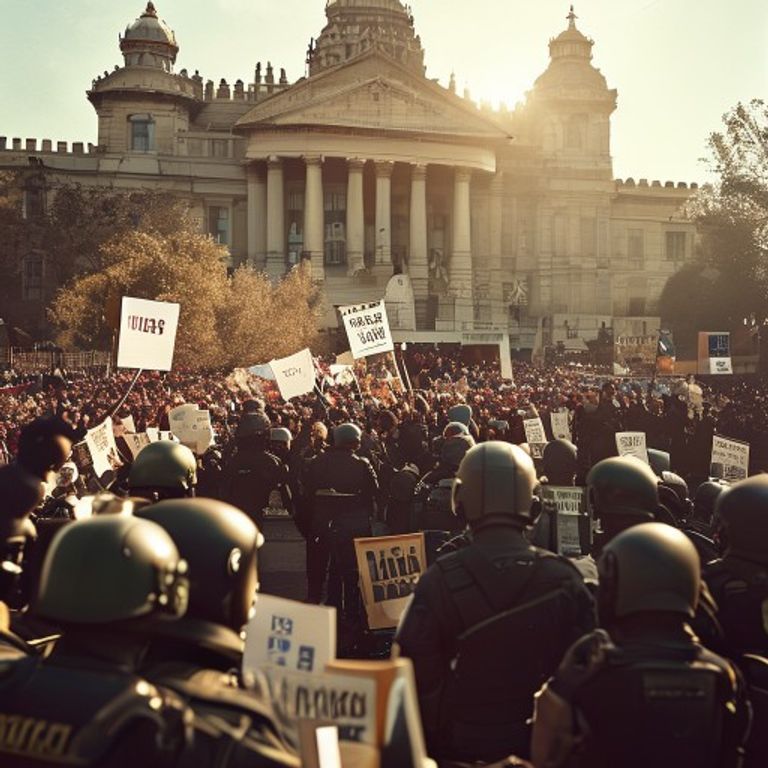
Indian Political Unrest: Mamata Banerjee Slams PM Modi Amidst CJP Parliament Protest
In a rapidly escalating political climate that has gripped the nation, significant Indian political unrest flared up yesterday in the heart of the capital. West Bengal Chief Minister Mamata Banerjee launched a scathing attack on Prime Minister Narendra Modi, criticizing his perceived absence from Parliament during a tumultuous protest. The demonstration, orchestrated by the increasingly influential satirical group turned serious activist body, the Cockroach Janta Party (CJP), saw protesters clashing violently with law enforcement near the iconic Parliament House. The CJP, galvanized by a series of contentious issues, is vociferously demanding the immediate resignation of the Union Education Minister. Adding another layer of complexity to the already tense situation, Ms. Banerjee declared her unwavering solidarity with the CJP, asserting that she would join their protest if the circumstances warranted her direct involvement, a move that could significantly amplify the movement’s national profile and escalate the confrontation between the opposition and the ruling dispensation.
Banerjee’s Critique: A Question of Leadership and Presence
Mamata Banerjee’s criticism of Prime Minister Modi centered on his departure from parliamentary proceedings precisely as the CJP’s protest began to gain momentum outside. Speaking to reporters with palpable intensity, the Trinamool Congress (TMC) supremo articulated her dismay, framing the Prime Minister’s action as an abdication of responsibility during a moment of profound public discontent. “When the people are expressing their anguish, when citizens are marching towards the very temple of our democracy to voice their grievances, the leader of the nation should be present, not absent,” Banerjee reportedly stated. Her comments resonated deeply with opposition factions who have frequently accused the current administration of being unresponsive to public sentiment and of attempting to stifle dissent. This incident has reignited debates about governmental accountability and the perceived disconnect between the ruling elite and the everyday struggles of ordinary Indians. The timing of Banerjee’s remarks is particularly strategic, coming amidst ongoing parliamentary sessions where heated discussions on various national issues are routine. Her targeting of the Prime Minister himself elevates the protest from a localized event to a significant national political flashpoint, drawing attention to broader governance issues.
Political analysts suggest that Banerjee’s sharp retort is not merely an opportunistic strike but a calculated maneuver to consolidate opposition forces and to position herself as a formidable voice against the ruling Bharatiya Janata Party (BJP). Her assertion that a leader must engage with public sentiment, especially during times of dissent, underscores a fundamental principle of democratic governance. The perceived lack of empathy or engagement from the top leadership can often fuel public anger and amplify the intensity of protests. Banerjee’s commentary also touches upon the symbolic importance of the Prime Minister’s presence in Parliament, particularly when the nation is witnessing significant public agitation. For many, the Parliament is not just a legislative body but a direct representation of the people’s will, and a leader’s presence there, especially during critical moments, signifies respect for that will. Her remarks have set off a chain reaction of debates across various news platforms and social media, with supporters of the ruling party defending the Prime Minister’s itinerary and the opposition rallying behind Banerjee’s stance.
The Cockroach Janta Party: From Satire to Serious Activism
The Cockroach Janta Party (CJP), initially known for its biting political satire and humorous street performances, has rapidly evolved into a significant force within India’s protest landscape. What began as a group using irony and wit to highlight societal absurdities has now taken on a more direct and confrontational approach, emblematic of a growing frustration among certain segments of the populace. Yesterday’s march towards Parliament marked a critical turning point for the CJP, demonstrating their capacity to mobilize a substantial number of individuals and articulate serious political demands. Their shift from purely satirical commentary to tangible political action underscores a broader trend in Indian activism, where humor and unconventional methods are increasingly being deployed to challenge the establishment. The group’s name itself, “Cockroach Janta Party,” is a satirical nod to the resilience and ubiquity of the common citizen, often overlooked yet impossible to completely eradicate.
The CJP’s primary demand, the resignation of the Union Education Minister, stems from a deep-seated discontent over a myriad of issues plaguing the nation’s educational system. While specific grievances include allegations of widespread examination paper leaks, controversial curriculum reforms perceived as politically motivated, insufficient funding for public institutions, and a perceived decline in the quality of higher education, the group’s overarching message is one of systemic failure. Protesters carried banners and chanted slogans decrying what they described as the “dismantling of educational autonomy” and the “politicization of academic institutions.” The CJP’s ability to tap into this collective frustration has allowed them to transcend their satirical origins and emerge as a potent voice for reform. Their methodology, while initially unconventional, has proven effective in drawing media attention and galvanizing public support, particularly among the youth who are often the most directly impacted by educational policies. The protest, therefore, was not just about a minister’s resignation but about a larger call for accountability and integrity within the nation’s crucial education sector.
Confrontation and Casualties: A Day of Disorder
The peaceful march planned by the CJP took a sharp turn towards disorder as protesters neared the highly fortified Parliament complex. Eyewitnesses reported a sudden escalation of tension, culminating in violent clashes between the demonstrators and the police. Security forces, deployed in large numbers to contain the protest, resorted to baton charges and water cannons in an attempt to disperse the crowd, which was determined to breach the barricades. The ensuing melee resulted in injuries on both sides, with several protesters requiring immediate medical attention for contusions and minor fractures, and a number of police personnel also sustaining injuries from stones and other projectiles allegedly thrown by a section of the crowd. Videos circulated widely on social media depicted scenes of chaos: demonstrators scattering, police pushing back aggressively, and the air thick with slogans and shouts.
The clashes have sparked a fresh wave of condemnation from civil liberties advocates and opposition leaders, who have criticized the heavy-handedness of the police response. Questions are being raised about the proportionality of force used and whether alternative methods of crowd control were adequately explored. Conversely, police authorities have defended their actions, stating that they were compelled to use force to prevent the protesters from illegally entering a restricted zone and to maintain law and order. A spokesperson for the Delhi Police emphasized that officers acted in self-defense and strictly followed established protocols for managing unruly crowds. Regardless of the blame, the violence underscores the fragile balance between the right to protest and the state’s responsibility to maintain public order. Such confrontations not only leave physical scars but also deepen the trust deficit between citizens and law enforcement, further exacerbating the Indian political unrest. The incident serves as a stark reminder of the potential for any public demonstration to spiral into conflict, particularly in highly sensitive political areas.
The Demand for Resignation: Unpacking the Education Sector’s Woes
The core demand of the Cockroach Janta Party’s protest, the immediate resignation of the Union Education Minister, is rooted in a constellation of critical issues that have beleaguered India’s education sector. Beyond the recent skirmishes, the underlying grievances reflect a growing national anxiety about the future of learning and skill development in the country. Key among these issues are allegations of widespread irregularities in national competitive examinations, which have seen multiple instances of paper leaks, leading to the cancellation of tests and shattering the aspirations of millions of students. Such incidents not only undermine the credibility of the examination system but also raise serious questions about transparency and accountability within the ministry.
Furthermore, critics point to what they perceive as an ideological bent in recent curriculum revisions, leading to concerns about the politicization of education. Academics and educationalists have voiced apprehensions that these changes may compromise academic freedom and historical accuracy, instead promoting a specific narrative. Funding inadequacies for public educational institutions, from primary schools to universities, also form a significant part of the CJP’s critique. Many argue that underfunding has led to crumbling infrastructure, a shortage of qualified teachers, and a lack of modern resources, thereby widening the gap between public and private education. The implementation of new education policies has also been met with mixed reactions, with some praising their reformative potential and others lambasting their practical shortcomings and hasty rollout. The CJP, by specifically targeting the Education Minister, aims to hold the highest office responsible for what they view as a systematic deterioration of India’s educational fabric. Their protest is a clarion call for a fundamental overhaul, advocating for a system that is fair, accessible, and free from political interference, highlighting the deep-seated nature of this aspect of Indian political unrest.
Mamata Banerjee’s Unwavering Support: A Glimmer of Opposition Unity?
In a powerful display of political solidarity, West Bengal Chief Minister Mamata Banerjee publicly pledged her support to the Cockroach Janta Party’s cause, going as far as to state her willingness to personally join their protest if necessary. This declaration from a prominent national leader carries immense weight and could significantly alter the trajectory of the CJP’s movement. Banerjee’s endorsement is not merely symbolic; it injects seasoned political gravitas into a protest largely driven by a civil society group, potentially elevating it to a major national political movement. Her statement sends a clear message to the ruling party that the opposition is prepared to unite on issues of public concern and confront the government head-on.
For the CJP, Banerjee’s support is a considerable boon, offering legitimacy and a broader platform for their demands. It transforms their protest from a localized demonstration into an issue with national political implications, attracting greater media scrutiny and public debate. For the larger opposition front, Banerjee’s move could serve as a precursor to greater unity, particularly as the nation gears up for future electoral contests. Her decision to stand with the protesters, despite the clashes with police, underscores her reputation as a firebrand leader unafraid to challenge the establishment. This gesture not only empowers the CJP but also reinforces the narrative that the government is increasingly out of touch with public sentiment, and that the opposition is ready to champion the grievances of the common citizen. Such high-profile backing can invigorate the protest, potentially inspiring similar movements across different states and regions, further intensifying the landscape of Indian political unrest.
Broader Political Ramifications: The Echoes in the Corridors of Power
The confluence of Mamata Banerjee’s sharp criticism, the CJP’s fervent protest, and the resulting street clashes has sent ripples through India’s intricate political landscape. These events are not isolated incidents but rather symptoms of deeper political currents and mounting public dissatisfaction. For the ruling BJP, the opposition’s coordinated attacks and the visible public unrest pose significant challenges. They must navigate a delicate balance between asserting authority and addressing legitimate public concerns, all while maintaining their electoral mandate. The incident with the Prime Minister’s perceived absence, coupled with the police action, could fuel accusations of governmental arrogance and insensitivity, potentially alienating fence-sitting voters.
Conversely, for the fragmented opposition, these events present an opportunity to forge greater unity and project a stronger, more cohesive front against the incumbent government. Mamata Banerjee’s willingness to support the CJP could inspire other regional leaders to step forward and collectively challenge the status quo. The education sector, often considered the backbone of a nation’s future, is a particularly sensitive area, and any perceived mismanagement or policy missteps can evoke strong public reactions. As the country looks towards upcoming state elections and the general elections beyond, issues like educational reforms, government accountability, and the right to peaceful protest are likely to become central to political discourse. The ability of both the ruling party and the opposition to effectively address these concerns will undoubtedly shape public opinion and determine future political outcomes. The ongoing Indian political unrest is therefore not just a fleeting moment of dissent but a significant indicator of evolving political dynamics and citizen expectations.
Conclusion: A Nation at a Crossroads of Dissent and Dialogue
The recent events—Mamata Banerjee’s forthright condemnation of Prime Minister Modi, the passionate demonstration by the Cockroach Janta Party culminating in clashes, and the resolute demand for the Education Minister’s resignation—underscore a period of profound Indian political unrest. This confluence of public agitation and high-stakes political rhetoric signals a critical juncture for Indian democracy. The incidents highlight the increasing assertiveness of civil society groups, even those with satirical origins, in holding the government accountable, and the readiness of seasoned political figures to align with these grassroots movements.
The challenges confronting the education sector, coupled with questions about leadership and governance, have clearly tapped into a wellspring of national discontent. As the echoes of yesterday’s clashes subside, the political ramifications are only beginning to unfold. The government faces the imperative of engaging with these grievances constructively, while the opposition sees an opportunity to amplify public voices and consolidate their collective strength. The path forward demands both dialogue and decisive action, lest the current unrest deepen and further polarize the nation. What remains clear is that the spirit of dissent is alive and well, shaping the narrative and demanding attention from all corners of the political spectrum, ensuring that the issue of Indian political unrest will remain a central theme in the national discourse for the foreseeable future. The coming weeks and months will undoubtedly reveal whether this period of intense political activity leads to meaningful reforms or further exacerbates the existing tensions.