
 By NewsMatrix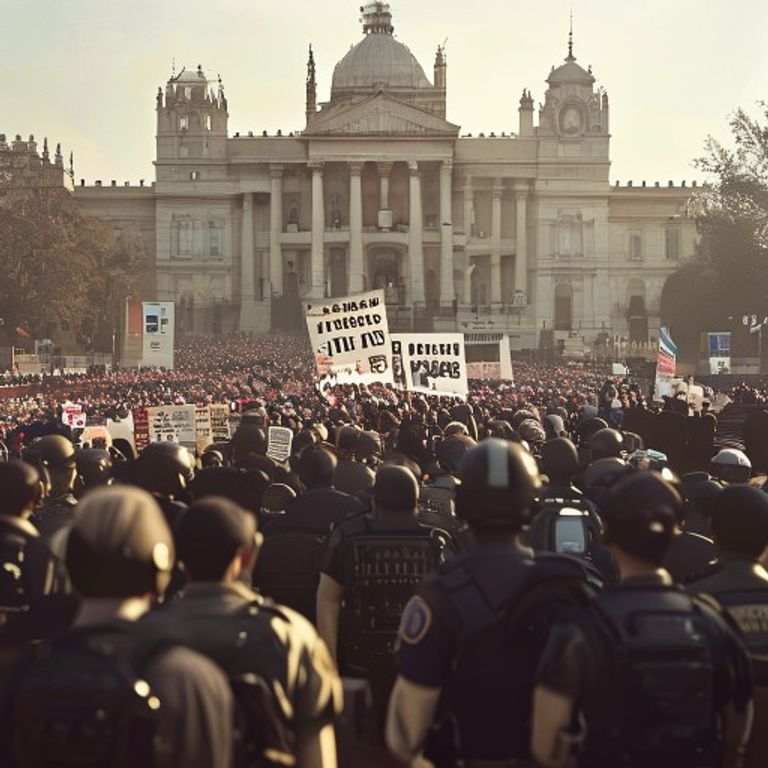
The recent Parliament march organized by the Cockroach Janta Party (CJP) has spiraled into a significant controversy, with the party leveling grave police brutality allegations against law enforcement officials. This incident, reportedly involving the alleged assault of public figures, the forceful dragging of individuals from a truck, and severe injuries to a volunteer, has ignited a fierce debate about the conduct of authorities during public demonstrations and the fundamental right to peaceful protest in a democratic nation. The CJP’s unwavering demands for the resignation of a prominent public figure and a call for immediate government dialogue underscore the escalating tensions surrounding the event. NewsMatrix investigates the unfolding narrative, aiming to provide a comprehensive and objective account of the serious claims made by the protesting party.
Allegations Unveiled: A Detailed Account of the Parliament March Incident
The core of the controversy stems from the Cockroach Janta Party’s assertion that their peaceful march towards Parliament was met with disproportionate force by the police. According to official statements released by the CJP, the morning of the protest saw thousands of party members and supporters converge, advocating for various policy changes and governmental accountability. However, the situation reportedly deteriorated rapidly as protesters attempted to advance, leading to clashes with police lines. The party alleges that several public figures, prominent within their organization and recognized by the public, were physically assaulted during the confrontation. These figures, whose identities the CJP has vowed to reveal at an appropriate time, were purportedly subjected to rough handling, a claim that, if substantiated, raises serious questions about the treatment of political dissidents and the respect for leaders representing public sentiment in a democratic framework.
One of the most disturbing claims put forth by the CJP involves the alleged dragging of individuals from a truck. This incident, described with alarming detail by party spokespersons, suggests a level of force that goes beyond standard crowd control measures. Protesters who were reportedly attempting to address the gathering from a makeshift stage on the truck were allegedly pulled down by police personnel, amidst chaotic scenes. Such actions, the CJP contends, not only obstructed their right to express their views but also potentially endangered the lives of those involved, given the inherent risks of being forcibly removed from a vehicle in a crowded and tense environment. This particular allegation has become a focal point of the party’s grievance, symbolizing what they describe as an egregious overreach of police authority and a disregard for established protest protocols.
Further exacerbating the tension is the deeply personal account shared by the CJP regarding an activist’s wife. The party alleges that during the police action, her hair was pulled forcefully. This specific claim has resonated widely, drawing condemnation from various quarters as it touches upon the dignity and respect accorded to individuals, particularly women, during public gatherings. A CJP spokesperson, addressing a press conference held shortly after the incident, emphasized that such acts are not only unprofessional but also indicative of a broader disregard for human rights and decorum during law enforcement operations. The party has called for an immediate and thorough investigation into this particular incident, demanding accountability from the officers involved and a re-evaluation of police training methods.
Perhaps the most severe of the police brutality allegations relates to a volunteer from the Cockroach Janta Party who reportedly sustained critical injuries during the police action. The CJP states that this volunteer suffered shattered ribs, among other significant injuries, requiring immediate medical attention and subsequent hospitalization. The party has presented preliminary medical documentation to support their claim, painting a grim picture of the physical toll endured by their members. Such severe injuries, they argue, cannot be merely dismissed as unfortunate consequences of standard crowd management and strongly suggest the use of excessive and unwarranted force. The critical condition of the injured volunteer has become a rallying point for the CJP, galvanizing their demands for justice, compensation, and a comprehensive review of the incident.
CJP’s Resolute Stance and Urgent Demands
In the immediate aftermath of the alleged incidents, the Cockroach Janta Party has articulated a clear and unyielding set of demands, underscoring the gravity with which they view the events. Foremost among these is the immediate resignation of Dharmendra Pradhan. While the exact chain of command or direct involvement leading to this demand remains subject to further clarification by the CJP, it is implied that they hold him accountable, either directly for the actions of the police force under the government’s purview, or indirectly for broader governmental policies that contributed to the volatile confrontation. This demand positions the issue beyond mere police conduct, elevating it to a matter of ministerial responsibility and political accountability at the highest echelons of power.
Beyond the direct call for resignation, the CJP has also vehemently demanded immediate and constructive dialogue with the government. The party maintains that ignoring the voices of dissent and resorting to force only serves to deepen public distrust, alienate significant segments of the populace, and exacerbate existing societal divisions. They propose that a direct and open channel of communication is essential not only to address the underlying grievances that prompted the initial march but also to prevent future confrontations of a similar, potentially more volatile, nature. The CJP’s leadership has consistently indicated a willingness to engage in good-faith talks, provided they are genuine and aimed at finding concrete, actionable solutions to both the alleged police excesses and the broader policy issues they are protesting.
The party has further emphasized the necessity of an independent judicial inquiry into the entire sequence of events that transpired during the Parliament march. They argue convincingly that an internal police investigation, while a standard procedure, would inherently lack the necessary impartiality and public confidence to deliver credible, unbiased findings. An independent body, they contend, equipped with the requisite authority to summon all relevant witnesses, rigorously review all available evidence including video footage and medical reports, and hold all responsible parties accountable, is the only pathway to ensuring true justice for the alleged victims and ultimately restoring faith in the integrity of the system. This demand reflects a growing sentiment across various civil society organizations and legal bodies that incidents involving allegations of state violence require scrutiny from entities entirely outside the direct chain of command and influence.
Additionally, the CJP has called for assurances that such incidents will not be repeated, emphasizing the need for police reform and sensitization programs. They advocate for a review of crowd control tactics, pushing for methods that prioritize de-escalation and the protection of fundamental human rights over aggressive dispersal. The party leadership has stated that until these demands are met, they will continue to mobilize public support and explore all democratic avenues to ensure accountability and prevent future abuses of power during peaceful assemblies.
The Broader Context: Protests, Police, and Democratic Freedoms
The police brutality allegations leveled by the Cockroach Janta Party against authorities during their Parliament march illuminate a critical and often contentious tension inherent in democratic societies: the delicate balance between the state’s fundamental responsibility to maintain law and order and its citizens’ inalienable right to protest, express dissent, and peacefully assemble. In a vibrant and functioning democracy, public demonstrations are not merely an inconvenience but a cornerstone of civic engagement, providing an essential and legitimate avenue for citizens to voice their concerns, influence policy decisions, and hold their elected representatives accountable. However, when these demonstrations are reportedly met with force that appears to go beyond reasonable and necessary crowd control, it inevitably raises profound questions about the health and resilience of democratic freedoms.
The right to peaceful assembly and freedom of expression is deeply enshrined in many national constitutions globally, including India’s, and is a core tenet of international human rights treaties. Any action by state forces that appears to infringe upon this fundamental right or uses excessive force can have far-reaching and detrimental implications, potentially chilling free speech, stifling legitimate dissent, and discouraging future civic participation. The CJP’s claims, if substantiated through a credible investigation, could severely erode public trust in law enforcement agencies, fostering an environment of fear, suspicion, and mistrust between the populace and those tasked with protecting them. This erosion of trust is particularly damaging and corrosive in any country where public confidence in its institutions is absolutely vital for social cohesion, stability, and the effective functioning of governance.
Moreover, incidents such as the one described by the CJP often transcend their immediate circumstances to become potent symbols in the national political discourse. They inevitably ignite widespread debates on critical issues such as police accountability, the adequacy of training and conduct of personnel during public order duties, and the responsiveness and empathy of political leadership to the grievances of the citizenry. The specific manner in which these serious allegations are investigated, communicated, and ultimately addressed by the government can set crucial precedents for future interactions between protesters and the state. A transparent, swift, and unequivocally impartial investigation is not only crucial for delivering justice to those allegedly wronged but also for reinforcing democratic principles and ensuring that the rule of law is applied fairly and equally to all, regardless of their political affiliation, social standing, or dissenting stance.
Historically, India has witnessed numerous large-scale protests and social movements, many of which have involved tense confrontations with law enforcement. Each such incident, while unique in its specific context and triggers, invariably adds to a broader national narrative about the state’s approach to dissent and civil disobedience. Lessons learned from past events consistently emphasize the critical importance of de-escalation tactics, clear and unambiguous communication protocols, and the judicious use of minimal necessary force as guiding principles for maintaining public order without infringing on fundamental rights. The CJP’s current allegations serve as a stark and urgent reminder of these enduring challenges and the continuous, vigilant need for safeguarding civil liberties even amidst periods of heightened political tension and social unrest.
Calls for Impartial Inquiry and Future Implications
The undeniable gravity and widespread public concern generated by the Cockroach Janta Party’s allegations necessitate a robust, independent, and impartial inquiry. Various civil society groups, human rights organizations, and legal experts have vehemently echoed the CJP’s call for an investigation that is demonstrably free from any political interference, departmental bias, or undue influence. Such a comprehensive inquiry would typically involve a multi-faceted approach: meticulously reviewing all available video footage from various sources (both official and public), taking detailed testimonies from protesters, concerned police personnel, independent observers, and critically examining all pertinent medical reports of the injured individuals. The overarching goal of such an investigation would be to establish a clear, irrefutable factual record of the events, objectively determine whether excessive or unlawful force was indeed used, identify those individuals directly or indirectly responsible, and recommend appropriate disciplinary, administrative, or legal action.
The eventual outcome of any such investigation will carry immense and far-reaching implications for all stakeholders involved. If the police brutality allegations are substantiated, it would not only serve to validate the CJP’s serious claims but would also necessitate systemic reforms within the police force, particularly regarding crowd control protocols, human rights training, ethical conduct during public order duties, and robust accountability mechanisms. This would likely involve a re-evaluation of current practices and the implementation of new guidelines to prevent similar incidents in the future. Conversely, if the allegations are, after thorough investigation, found to be unsubstantiated or significantly exaggerated, it would underscore the inherent complexities and immense challenges of managing large-scale public gatherings and the delicate balance faced by law enforcement in maintaining public order while meticulously respecting fundamental citizen rights.
Beyond the immediate judicial or administrative outcomes, this incident is almost certain to have a lasting and profound impact on the broader political landscape. The CJP, as a political entity, will undoubtedly leverage these allegations to bolster its narrative against the incumbent government, potentially influencing public opinion, shaping the discourse on civil liberties, and affecting future electoral dynamics. It also sets a significant precedent for how future protests might be conducted and policed, urging both activist groups and relevant authorities to critically re-evaluate their strategies, communication protocols, and approaches to public demonstrations to minimize conflict and uphold democratic norms.
Ultimately, the incident serves as a crucial and defining test for democratic institutions and the principles upon which they are built. The ability of the justice system to impartially investigate and deliver fair judgments, the willingness of the government to genuinely engage with dissenting voices and address legitimate grievances, and the capacity of law enforcement agencies to adapt its practices to consistently uphold constitutional rights are all under intense public scrutiny. The eyes of the nation, and indeed the global community, will be watching closely to see how these serious allegations are addressed, what measures are taken to ensure justice, and what steps are implemented to proactively prevent similar incidents from recurring in a society that values both order and freedom.
Conclusion
The serious police brutality allegations made by the Cockroach Janta Party following their recent Parliament march have cast a significant shadow over the democratic process and raised urgent and profound questions about accountability, transparency, and civil liberties. From claims of public figures being allegedly assaulted and forcefully dragged from a vehicle, to the deeply personal trauma experienced by an activist’s wife whose hair was reportedly pulled, and the severe, debilitating injuries sustained by a volunteer including shattered ribs, the collected accounts paint a deeply concerning picture of the state’s response to public dissent. The CJP’s unwavering demands for Dharmendra Pradhan’s resignation and immediate, constructive government dialogue highlight the depth of their grievances and their resolute commitment to seeking comprehensive justice. As NewsMatrix continues its diligent monitoring of this developing and critical story, the paramount call for an independent, thorough, and transparent investigation remains central to resolving the crisis. Ensuring that justice is unequivocally served, that democratic rights are steadfastly upheld, and that public trust in vital institutions is fully restored will be absolutely critical in navigating the complex aftermath of these grave allegations and, ultimately, in reaffirming the fundamental principles of a just, equitable, and democratic society.