
 By NewsMatrix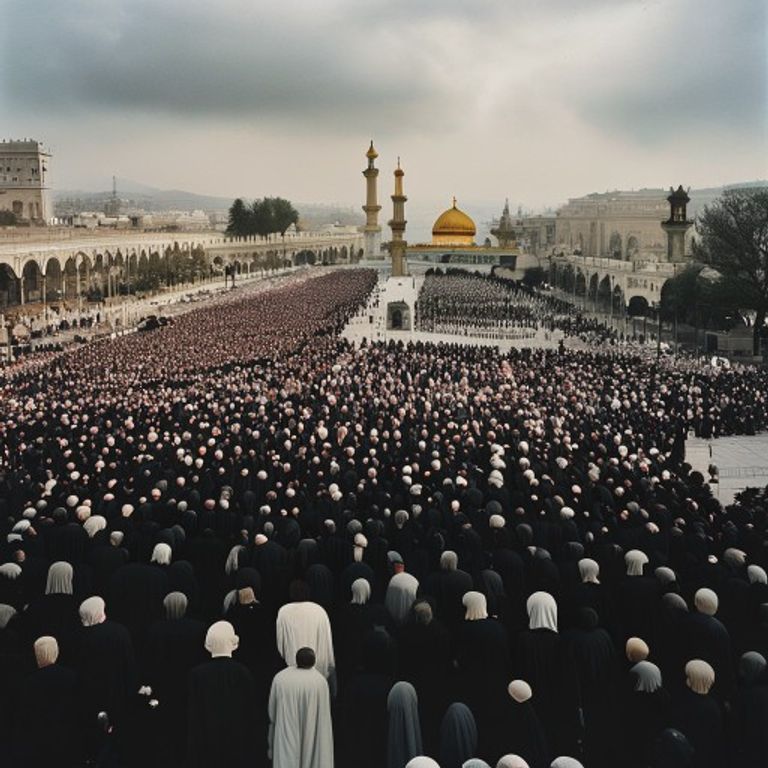
Ayatollah Ali Khamenei’s Return to Iran: A Nation Mourns Amidst Escalating Tensions
The Islamic Republic of Iran is navigating a period of profound grief and escalating geopolitical uncertainty following the solemn return of the coffin of Ayatollah Ali Khamenei from Iraq. His passing on February 28, reportedly during a US-Israel operation, has cast a long shadow over the region, exacerbating an already volatile landscape characterized by ongoing exchanges of strikes between Iran and the United States. The revered Supreme Leader’s journey home concluded with his arrival in Mashhad, where immense crowds gathered, united in sorrow and anticipation of his final burial at the sacred Imam Reza shrine, a site of immense spiritual significance for Shi’ite Muslims worldwide. This event marks not only the end of an era for Iran but also signals potential shifts in regional power dynamics and international relations, demanding close observation from global stakeholders. The confluence of deep national mourning and heightened military posturing underscores the gravity of the current situation, prompting concerns about the future trajectory of the Middle East.
A Journey of Mourning: From Najaf and Karbala to Mashhad
The spiritual heartlands of Shi’ite Islam, Najaf and Karbala in Iraq, were the initial sites of the profoundly moving funeral rites for Ayatollah Ali Khamenei. These cities, home to the shrines of Imam Ali and Imam Hussein, respectively, witnessed an outpouring of grief and devotion from millions of mourners. The ceremonies, steeped in centuries of religious tradition, commenced with an emotional farewell in Najaf, where religious scholars and ordinary citizens alike paid their respects. The procession then moved to Karbala, a city synonymous with sacrifice and martyrdom in Shi’ite theology, drawing an even larger congregation. The raw emotion displayed by the faithful underscored Khamenei’s deep spiritual and political resonance within the Shi’ite world, extending far beyond Iran’s borders. The participation of prominent Iraqi religious and political figures in these rites also highlighted the intricate and often complex relationship between the two nations, particularly concerning their shared religious heritage and regional strategic interests.
Upon its return to Iranian soil, the coffin’s journey became a national procession of unparalleled scale. Millions lined the routes through various cities, culminating in the holy city of Mashhad, the spiritual capital of Iran and home to the Imam Reza shrine. The sheer volume of people who converged on Mashhad was a testament to Khamenei’s enduring influence and the profound sense of loss felt across the nation. The atmosphere was one of collective sorrow, but also of national unity and defiance, as messages of continuity and steadfastness emanated from state media. Preparations for the burial at the Imam Reza shrine were meticulous, reflecting the immense sanctity of the site and the profound respect accorded to the departed leader. This final resting place, beside the eighth Shi’ite Imam, reinforces Khamenei’s historical and religious legacy within the fabric of Iranian national identity and religious consciousness.
The Legacy of a Supreme Leader: Ayatollah Ali Khamenei’s Life and Influence
Ayatollah Ali Khamenei’s life was inextricably linked with the modern history of Iran. Born in Mashhad in 1939, he rose through the ranks of the revolutionary movement, becoming a close confidante of Ayatollah Ruhollah Khomeini, the founder of the Islamic Republic. Following Khomeini’s death in 1989, Khamenei was chosen as his successor, a decision that cemented his position as the second Supreme Leader of Iran. His leadership spanned over three decades, a period marked by significant domestic transformations and intense international challenges.
Domestically, Khamenei presided over a nation grappling with economic sanctions, social evolution, and political reform movements. His tenure saw Iran develop its nuclear program, a contentious issue that has dominated its foreign policy. He was the ultimate authority on all major state matters, including foreign policy, the nuclear program, and the military, wielding immense power through his interpretation of Islamic jurisprudence and his command over the Islamic Revolutionary Guard Corps (IRGC) and other state institutions. His ideology, deeply rooted in the principles of the Islamic Revolution, emphasized independence from foreign powers, resistance against perceived Western hegemony, and the protection of Islamic values. Internationally, Khamenei’s Iran cultivated a network of regional allies and proxies, often referred to as the “Axis of Resistance,” which includes groups like Hezbollah in Lebanon and various militias in Iraq and Yemen. This strategy was central to projecting Iranian influence and countering the perceived threats from the United States, Israel, and Saudi Arabia. His passing leaves a significant void in Iran’s political and religious establishment, raising questions about the future direction of the country’s domestic and foreign policies.
Geopolitical Crossroads: US-Israel Operation and Escalating Tensions
The circumstances surrounding Ayatollah Ali Khamenei’s death on February 28 during a purported US-Israel operation have ignited a dangerous new chapter in the already fraught relationship between Iran and the Western powers. While specific details of the alleged operation remain shrouded in secrecy, the immediate aftermath has seen a palpable escalation of tensions across the Middle East. Initial reports and official statements from Tehran have pointed fingers directly at Washington and Tel Aviv, characterizing the event as an act of aggression against Iran’s sovereign leadership.
This development is set against a backdrop of years of simmering hostility, including economic sanctions, cyberattacks, proxy conflicts, and targeted assassinations of Iranian military and scientific figures. The concept of “shadow wars” has long defined the US-Iran-Israel dynamic, yet the reported nature of Khamenei’s death potentially transcends these previous boundaries, moving into a realm of direct confrontation at the highest levels. The US, while not directly confirming involvement, has reiterated its commitment to protecting its interests and allies in the region, implicitly acknowledging the heightened operational tempo.
The most immediate and concerning manifestation of this escalation has been the rapid exchange of strikes between Iran and the United States. Reports indicate a series of retaliatory actions, with Iranian-backed forces targeting US military installations and interests in Iraq and Syria, to which the US has responded with precision strikes against Iranian Revolutionary Guard Corps (IRGC) assets and allied militia compounds. These exchanges, though currently contained, carry the inherent risk of spiraling into a broader, more devastating conflict that would have catastrophic consequences for global energy markets, international trade, and regional stability. The strategic calculations on both sides are now more critical than ever, with each action carrying the weight of potentially triggering an irreversible chain of events.
Succession, Regional Impact, and International Reactions
The death of a Supreme Leader in Iran inevitably triggers a complex succession process, overseen by the Assembly of Experts, a body of 88 high-ranking clerics. Ensuring a smooth transition of power remains paramount for Iran’s internal stability and external posture. The selection of a new Supreme Leader will be closely watched globally, as it will determine the ideological direction and policy priorities of the Islamic Republic for years to come. Potential successors are already subjects of intense speculation within political and religious circles, with various factions vying for influence in the post-Khamenei era.
Regionally, Khamenei’s passing and the circumstances of his death are expected to have far-reaching implications. Iran’s network of regional allies, including Hezbollah, Hamas, and various Shi’ite militias, will be assessing the strength and resolve of the new leadership. The “Axis of Resistance” may face a period of recalibration. Neighboring countries, particularly Saudi Arabia and the UAE, will be closely monitoring developments. Internationally, reactions have been a mix of condolences, concern, and caution. The predominant sentiment among Western powers and their allies is one of heightened alert regarding further destabilization. Calls for de-escalation and restraint have come from various international bodies, including the United Nations, underscoring the global anxiety.
Conclusion: An Uncertain Future Amidst Profound Change
The return of Ayatollah Ali Khamenei‘s coffin to Iran, culminating in his burial at the revered Imam Reza shrine in Mashhad, marks a pivotal moment in the nation’s history. It signifies not only the end of a transformative era under his leadership but also ushers in a period of significant uncertainty and heightened geopolitical risk. His death, reportedly in the context of a US-Israel operation, has undeniably intensified the already precarious relationship between Iran and the United States, leading to a dangerous cycle of reciprocal strikes that threaten to engulf the wider Middle East in conflict.
As Iran embarks on the critical process of selecting its third Supreme Leader, the international community watches with bated breath. The trajectory of this succession, coupled with the ongoing military exchanges, will shape not only Iran’s domestic future but also the balance of power in one of the world’s most strategically vital regions. The challenge for all parties involved will be to navigate these turbulent waters with utmost prudence, prioritizing de-escalation and diplomatic engagement to prevent a catastrophic escalation. The legacy of Ayatollah Ali Khamenei will undoubtedly continue to influence Iranian policy, but the immediate future demands a careful and measured approach to prevent further bloodshed and to foster a path towards a more stable, albeit complex, regional order.