
 By NewsMatrix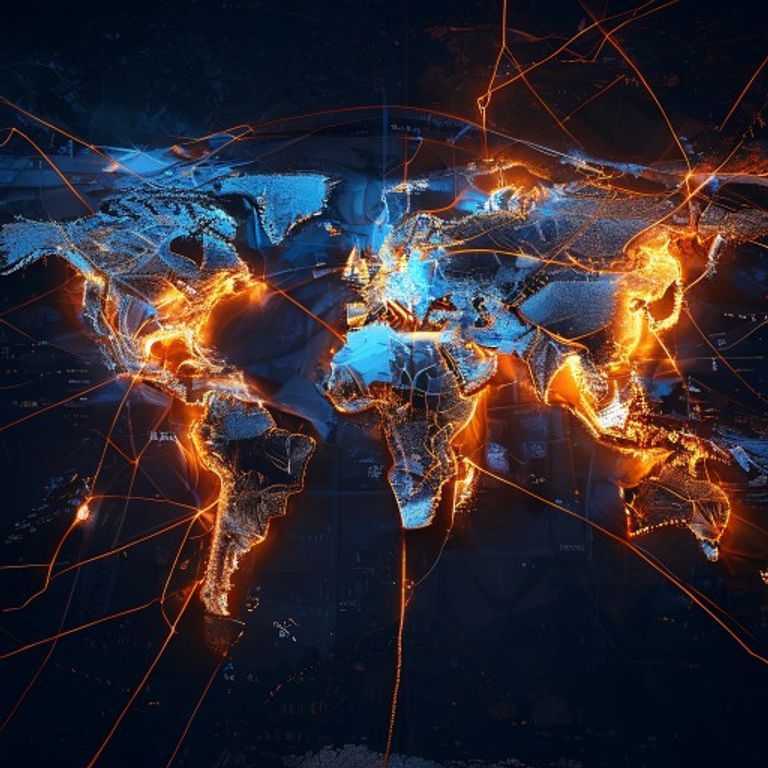
The Dawn of a New Economic Era
For decades, the global economic narrative was dominated by a singular theme: integration. From the fall of the Berlin Wall to the rapid ascent of the World Trade Organization, the promise of a borderless, interconnected world fueled unprecedented growth and lifted billions out of poverty. However, as we survey the landscape today, it is clear that the tides have turned. At NewsMatrix, we are tracking a seismic shift that experts are calling geo-economic fragmentation—a move away from the cooperative international order toward a fractured, suspicious, and highly politicized global economy.
The warnings from the World Economic Forum have been stark and sobering. A future defined by fragmentation is not merely a political abstraction; it is a direct threat to the prosperity of the modern world. The projected $6.9 trillion hit to global GDP is not just a figure on a spreadsheet—it represents lost wages, shuttered businesses, strained supply chains, and a fundamental reduction in the global standard of living.
The Drivers of Disintegration
What has caused this sudden retreat from globalization? The answer is a complex tapestry of rising nationalism, populism, and a fundamental reassessment of the risks associated with interdependence. For years, efficiency and cost-minimization were the guiding principles of corporate strategy. Today, those have been supplanted by security, resilience, and sovereignty.
The US-China Rivalry
At the center of this structural change is the intensifying rivalry between the United States and China. What began as a dispute over trade imbalances and intellectual property has evolved into a full-scale competition for technological and military hegemony. The resulting decoupling—or de-risking, as policymakers prefer to call it—has rippled through global markets. Companies are being forced to navigate a “friend-shoring” landscape, where investment decisions are no longer guided solely by market demand, but by geopolitical alignment.
The Rise of Nationalism
Beyond the US-China dynamic, domestic politics in major economies have shifted toward protectionism. The consensus that free trade is universally beneficial has eroded. Politicians now gain more traction by focusing on domestic industrial policy, subsidies for local manufacturing, and barriers to foreign investment. While these policies aim to bolster domestic stability, they collectively undermine the global trade system that supported the growth of the late 20th century.
The Human and Economic Cost
At NewsMatrix, we believe it is vital to look past the macro-level statistics to understand how fragmentation touches daily life. The costs of this transition are already becoming evident.
- Inflationary Pressures: When supply chains are forced to relocate to higher-cost regions in the name of security, the end consumer ultimately pays the price. The era of cheap, globalized goods is facing a structural headwind that keeps inflation higher for longer.
- Investment Uncertainty: Businesses thrive on predictability. When the rules of international trade change based on political whims, companies freeze hiring and delay capital expenditures. This uncertainty creates a self-fulfilling prophecy of stagnant growth.
- The Burden on Emerging Markets: While the world’s largest economies have the capital to subsidize their transition, emerging markets face the brunt of fragmentation. Many rely heavily on global trade flows and foreign direct investment, both of which are drying up as the global system becomes less transparent and more exclusive.
The Weakening of Global Institutions
The architecture of the global economy—institutions like the World Bank, the International Monetary Fund, and the World Trade Organization—was built for a world seeking unity. Today, these organizations find themselves increasingly marginalized. When major powers prefer to settle disputes through direct confrontation or regional pacts rather than multilateral frameworks, the legitimacy and effectiveness of these institutions crumble.
Without a neutral arbiter, the world risks returning to a “might makes right” economic model. In such an environment, smaller nations are forced to pick sides, creating a binary international system that is far less stable than the multilateralism that preceded it.
Looking Ahead: Navigating the Fragmented Horizon
The transition to a fragmented global economy is unlikely to be swift or clean; it will be a messy, lingering process. Investors, businesses, and citizens must prepare for a world that is less efficient but potentially more focused on strategic autonomy. At NewsMatrix, we will continue to provide the analysis needed to navigate these turbulent waters.
The critical challenge for leaders today is to balance national interests with the inescapable reality that many of the world’s most pressing problems—climate change, pandemics, and financial stability—cannot be solved in isolation. If we abandon the cooperative spirit of the last fifty years entirely, we risk not only a loss of trillions in GDP but a loss of the stability required to manage the global challenges of the future.
The road ahead is fraught with complexity, but understanding the mechanisms of fragmentation is the first step toward mitigating its worst impacts. Stay tuned to NewsMatrix as we continue to monitor this essential transition in global affairs.