
 By NewsMatrix
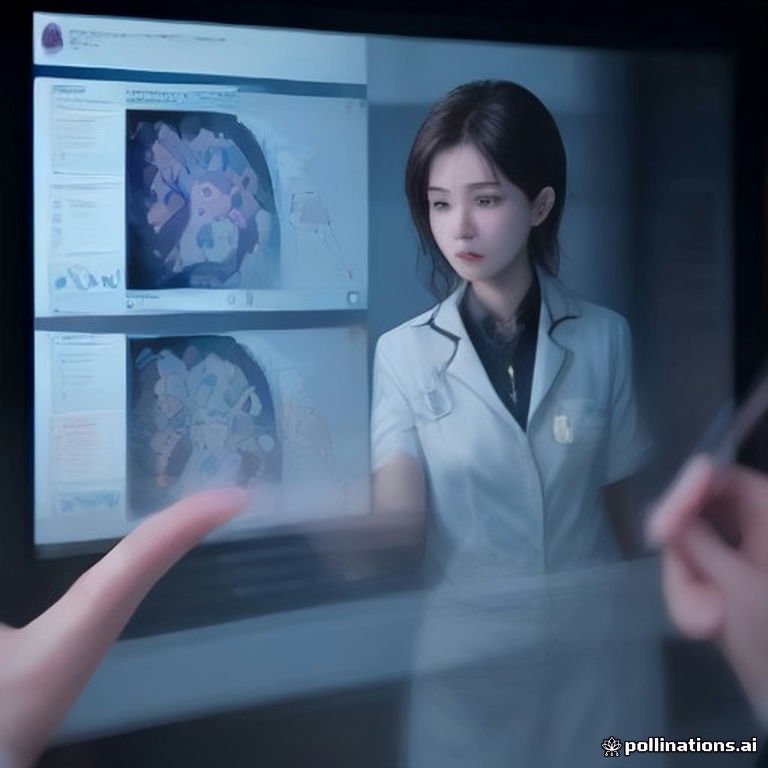
In a profound shift that promises to redefine the future of medicine, Artificial Intelligence (AI) is rapidly emerging as a transformative force in the global healthcare landscape. From accelerating drug discovery and enhancing diagnostic accuracy to personalizing treatment plans and optimizing hospital operations, AI in Healthcare is not merely an innovation but a fundamental paradigm shift. This technological revolution is poised to address some of the most pressing challenges facing healthcare systems worldwide, offering unprecedented opportunities for improved patient outcomes, increased efficiency, and a more equitable distribution of care.
The Dawn of a New Era in Diagnostics
One of the most impactful applications of AI in healthcare lies in diagnostics. Machine learning algorithms, a subset of AI, are being trained on vast datasets of medical images, patient records, and genomic data to detect patterns that human eyes or traditional methods might miss. This capability is proving invaluable in areas requiring high precision and volume analysis.
Advanced Medical Imaging Analysis
AI algorithms are now routinely assisting radiologists in interpreting X-rays, CT scans, MRIs, and ultrasounds. For instance, AI-powered systems can identify subtle anomalies indicative of early-stage cancers, neurological disorders, or cardiovascular diseases with remarkable accuracy and speed. Early detection, especially in conditions like breast cancer or lung cancer, significantly improves prognosis and treatment success rates. Companies like Google Health have demonstrated AI models capable of detecting breast cancer from mammograms with accuracy comparable to, or even exceeding, human experts.
Pathology and Histology Enhancement
Beyond imaging, AI is transforming pathology. Digital pathology platforms, combined with AI, allow for automated analysis of tissue samples. Algorithms can quickly scan slides, identify cancerous cells, grade tumors, and quantify disease markers. This not only reduces the workload on pathologists but also minimizes inter-observer variability, leading to more consistent and reliable diagnoses. The ability to rapidly process and analyze complex histological data is a game-changer for cancer diagnostics and research.
Early Disease Detection and Risk Prediction
AI excels at identifying risk factors and predicting disease onset long before symptoms appear. By analyzing electronic health records (EHRs), genetic information, lifestyle data, and even wearable device data, AI models can flag individuals at high risk for conditions such as diabetes, heart disease, or sepsis. This proactive approach enables early interventions, preventive care strategies, and ultimately, better health outcomes. For example, AI models are being developed to predict sepsis in critically ill patients hours before clinical manifestation, allowing for life-saving interventions.
Personalized Medicine: Tailoring Treatment to the Individual
The concept of “one-size-fits-all” medicine is rapidly becoming obsolete, thanks to AI’s ability to facilitate truly personalized healthcare. AI algorithms can synthesize complex patient data to recommend therapies that are most likely to be effective for an individual’s unique genetic makeup, lifestyle, and disease profile.
Genomic Analysis and Targeted Therapies
AI’s capacity to process and interpret vast amounts of genomic data is revolutionizing cancer treatment and rare disease management. By identifying specific genetic mutations or biomarkers, AI can help clinicians select targeted therapies that directly address the underlying molecular drivers of a patient’s disease, minimizing side effects and maximizing efficacy. This is particularly crucial in oncology, where precision medicine offers new hope for patients with previously untreatable cancers.
Accelerating Drug Discovery and Development
The traditional drug discovery process is notoriously lengthy, expensive, and often inefficient. AI is dramatically speeding up this process by analyzing molecular structures, predicting drug efficacy and toxicity, and identifying potential drug candidates. Machine learning models can sift through billions of compounds, simulate drug-target interactions, and optimize molecular design, significantly reducing the time and cost associated with bringing new drugs to market. This has profound implications for developing treatments for rare diseases and rapidly responding to emerging pandemics.
Optimizing Treatment Pathways
Beyond drug selection, AI assists in optimizing entire treatment pathways. By analyzing historical patient data and outcomes, AI can recommend the most effective sequence of treatments, dosages, and interventions for various conditions, adapting recommendations as new patient data becomes available. This continuous learning approach promises to refine clinical guidelines and improve overall treatment efficacy.
Enhancing Operational Efficiency and Access to Care
AI’s impact extends beyond clinical applications, offering substantial improvements in the operational efficiency of healthcare systems and expanding access to care, particularly in underserved regions.
Streamlining Hospital Management and Resource Allocation
Hospitals are complex ecosystems, and AI is proving invaluable in optimizing their operations. Predictive analytics powered by AI can forecast patient admissions, bed occupancy rates, and staffing needs, allowing administrators to allocate resources more effectively. This leads to reduced wait times, improved patient flow, and more efficient use of medical equipment and personnel. For instance, AI can help predict surges in demand for specific departments, enabling proactive staffing adjustments.
Virtual Assistants and Chatbots for Patient Engagement
AI-powered virtual assistants and chatbots are transforming patient engagement. These tools can answer common patient queries, assist with appointment scheduling, provide medication reminders, and offer initial symptom assessments. By automating routine tasks, they free up healthcare professionals to focus on more complex clinical duties, while simultaneously providing patients with convenient, round-the-clock access to information and support.
Telemedicine and Remote Patient Monitoring
The integration of AI with telemedicine and remote patient monitoring technologies is expanding access to care for patients in remote areas or those with mobility challenges. AI analyzes data from wearable devices and remote sensors to monitor chronic conditions, detect subtle changes in health status, and alert healthcare providers to potential issues before they become critical. This proactive monitoring reduces hospitalizations and enables continuous, personalized care outside traditional clinical settings.
Challenges and Ethical Considerations in AI Adoption
Despite its immense promise, the widespread adoption of AI in healthcare is not without its challenges. Addressing these issues is crucial for ensuring that AI technologies are deployed responsibly and equitably.
Data Privacy and Security
Healthcare data is among the most sensitive personal information. The use of AI necessitates robust measures to ensure patient data privacy and security, complying with regulations such as GDPR and HIPAA. Building trust with patients regarding how their data is collected, used, and protected is paramount.
Algorithmic Bias and Fairness
AI models are only as good as the data they are trained on. If training datasets are not representative of diverse populations, AI algorithms can perpetuate or even amplify existing health disparities, leading to biased diagnoses or treatment recommendations for certain demographic groups. Ensuring fairness and mitigating bias in AI algorithms is a significant ethical imperative.
Regulatory Frameworks and Accountability
The rapid evolution of AI technology often outpaces regulatory development. Clear guidelines are needed for the validation, approval, and deployment of AI-powered medical devices and software. Establishing accountability when an AI system makes an erroneous diagnosis or recommendation is also a complex legal and ethical challenge that requires careful consideration.
Integration into Clinical Workflows
Successful AI implementation requires seamless integration into existing clinical workflows. This often involves significant investment in infrastructure, retraining healthcare professionals, and overcoming resistance to new technologies. Ensuring that AI tools augment, rather than replace, human expertise is key to their acceptance and effectiveness.
The Future Outlook: Collaboration and Responsible Innovation
The trajectory of AI in healthcare points towards a future where technology and human expertise converge to deliver truly revolutionary care. The ongoing advancements in machine learning, natural language processing, and computer vision are continuously expanding the boundaries of what AI can achieve in medicine.
The coming years will likely see:
- More sophisticated diagnostic tools capable of identifying rare diseases with greater precision.
- Hyper-personalized preventive medicine based on continuous monitoring and predictive analytics.
- AI-driven autonomous surgical robots assisting in complex procedures with enhanced precision.
- Virtual healthcare assistants becoming integral parts of patient care teams.
However, realizing this potential requires sustained investment, interdisciplinary collaboration between AI specialists, clinicians, ethicists, and policymakers, and a commitment to responsible innovation. The goal is not to replace human doctors but to empower them with advanced tools that augment their capabilities, allowing them to focus on the human aspects of care: empathy, communication, and complex decision-making.
Conclusion
AI in healthcare represents one of the most exciting and impactful frontiers in modern science. By leveraging the power of data analysis and predictive modeling, AI is fundamentally transforming diagnostics, accelerating drug discovery, personalizing treatment, and optimizing healthcare operations. While significant challenges related to ethics, regulation, and integration remain, the collective efforts of researchers, clinicians, and innovators are paving the way for a future where intelligent technology enhances human health and well-being on a global scale. The promise of more accurate diagnoses, more effective treatments, and more accessible care through AI is a compelling vision that is steadily becoming a reality, marking a monumental leap forward for humanity.