
 By NewsMatrix
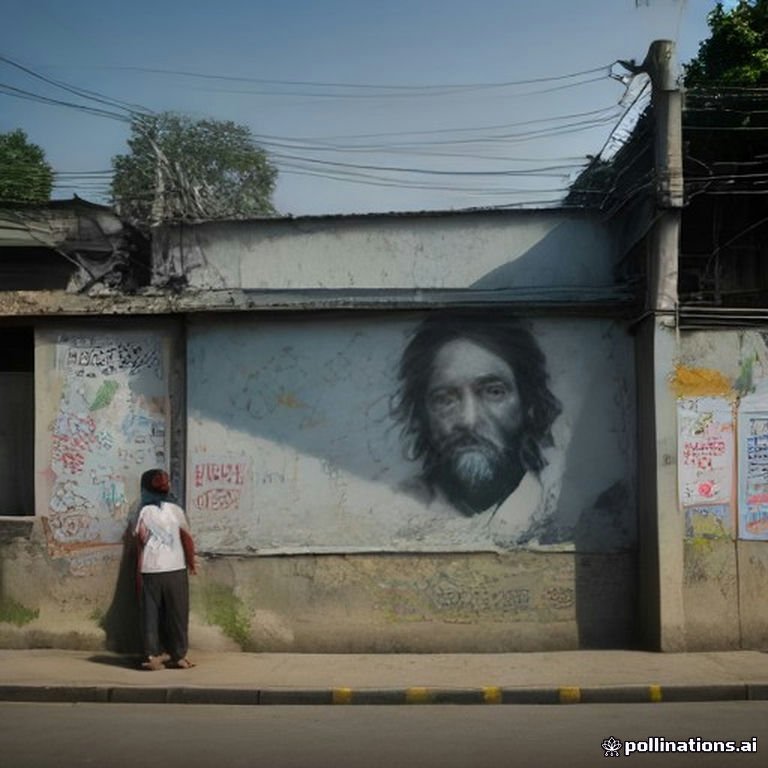
Cultural Outrage: Rabindranath Tagore Mural Vandalized in Khulna Amidst Rising Concerns
In a disturbing incident that has ignited widespread condemnation across Bangladesh, a mural depicting the revered Nobel Laureate Rabindranath Tagore was recently vandalized in the city of Khulna. This act of defacement, coupled with the appearance of opposing posters in the vicinity, has sent shockwaves through the nation, sparking fervent discussions about cultural preservation and the growing challenges faced by artistic expressions celebrating national heroes. The incident, now under intense police investigation, highlights a troubling trend of intolerance and narrow-mindedness, raising profound concerns about the future treatment and recognition of cultural icons in Bangladesh. The gravity of this Tagore mural vandalism is underscored by its close resemblance to a similar event in Dhaka, where authorities have already detained four individuals in connection with another act of cultural desecration.
The Act of Defacement in Khulna
The vandalism, discovered in a prominent location in Khulna, saw the once vibrant and respectful portrayal of Rabindranath Tagore defaced with what appeared to be crude markings and slogans. The exact nature of the damage suggests a deliberate and malicious intent to disrespect the literary giant. Eyewitnesses reported seeing portions of the mural covered with spray paint, distorting Tagore’s image and rendering the artistic tribute unrecognizable in parts. Adding to the gravity of the situation, several posters advocating ideologies contrary to the spirit of cultural pluralism and respect for national heritage were found plastered near the vandalized mural. These posters, whose content is currently being scrutinized by authorities, are believed to be linked to the individuals or groups responsible for the defacement, providing a potential insight into their motivations. The choice of Tagore as a target is particularly poignant, given his universal appeal and foundational role in Bengali culture and identity, transcending political and religious divides for many generations.
The timing and location of the incident are also significant. Khulna, a major industrial and port city, is known for its vibrant cultural scene and historically strong ties to Bengali literary traditions. To see such an act occur in a public space, meant for community appreciation and reflection, indicates a brazen disregard for public sentiment and cultural values. The immediate aftermath saw local residents gathering near the site, expressing dismay and anger, further emphasizing the deep emotional connection many Bangladeshis share with their cultural heritage and figures like Tagore.
Immediate Outcry and Condemnation
The response to the vandalism was swift and unequivocal. Local officials, cultural activists, educationists, and civil society members from across Khulna and the wider nation have vehemently condemned the act. They have characterized it as an assault not just on an artwork, but on the very fabric of Bangladeshi culture and identity. Prominent cultural organizations released statements expressing their outrage and demanding immediate action from law enforcement.
- A spokesperson for the Khulna Cultural Council stated, “This act is a reflection of extreme narrow-mindedness and an attempt to undermine our rich cultural heritage. Rabindranath Tagore is a guiding light for our nation, and any disrespect shown to him is an insult to Bangladesh itself.”
- Academics highlighted the importance of Tagore’s works in fostering an inclusive society, suggesting that the vandalism was an attack on the country’s progressive values.
- Political leaders from various parties also joined the chorus of condemnation, urging unity against such divisive acts and calling for the swift apprehension of the culprits.
The widespread nature of the condemnation underscores the deep reverence held for Tagore and the collective resolve to protect the nation’s cultural assets from such destructive forces. The sentiment articulated by many is that such acts are not merely isolated incidents of hooliganism but symptoms of a deeper societal malaise that seeks to erase or distort historical and cultural narratives.
Police Investigation Underway
Responding to the public outcry and the severity of the incident, the Khulna Metropolitan Police (KMP) has launched a comprehensive investigation. High-ranking police officials have assured the public that all necessary resources are being deployed to identify and apprehend those responsible. Forensic teams have reportedly collected evidence from the scene, including samples of the defacing material and the posters, which are being analyzed for clues. Investigators are also reviewing CCTV footage from nearby areas to identify potential suspects and their movements leading up to and after the incident.
The police investigation is not limited to identifying the direct perpetrators; it also aims to uncover any potential masterminds or organized groups that might be behind this act. The appearance of “opposing posters” suggests a coordinated effort rather than a spontaneous act of individual vandalism. Authorities are keen to understand the ideology driving these acts and to prevent further such incidents that could disrupt social harmony and incite cultural tensions. The swiftness of the police response and the commitment to a thorough investigation reflect the government’s recognition of the cultural and social significance of the incident.
A Disturbing Pattern: Echoes from Dhaka
The Khulna incident regrettably comes on the heels of a similar act of vandalism in Dhaka, where another artistic tribute to a national figure was defaced. In that earlier event, four individuals were detained by law enforcement agencies, prompting a separate, ongoing inquiry. The recurrence of such incidents, targeting symbols of national pride and cultural heritage, has led many observers to conclude that these are not isolated events but rather part of a disturbing pattern.
The similarities between the Khulna and Dhaka incidents raise critical questions about potential linkages, whether ideological or operational. Are these acts orchestrated by the same elements? Is there a broader agenda at play to challenge and undermine Bangladesh’s secular and pluralistic cultural identity? These questions are at the forefront of the public discourse and the police investigation. The fact that arrests were made in Dhaka provides some hope that the perpetrators in Khulna will also be brought to justice, potentially shedding light on the underlying motives and networks.
Rabindranath Tagore: An Enduring Icon
Rabindranath Tagore (1861–1941) is a colossal figure in world literature and a particularly cherished icon in Bangladesh. A Bengali polymath who reshaped Bengali literature and music, as well as Indian art with Contextual Modernism in the late 19th and early 20th centuries, he became the first non-European to win the Nobel Prize in Literature in 1913. His profound influence extends to both India and Bangladesh, with his compositions serving as the national anthems for both countries (“Jana Gana Mana” for India and “Amar Shonar Bangla” for Bangladesh).
Tagore’s contributions are not merely academic; they are deeply ingrained in the cultural psyche of Bangladesh. His songs, poems, plays, and essays celebrate humanity, nature, love, and spiritual enlightenment. He championed universalism, peace, and cross-cultural understanding, making him a symbol of enlightenment and progressive thought. For Bangladesh, Tagore represents the spirit of the Bengali language movement, the struggle for cultural autonomy, and ultimately, the War of Liberation. To deface an image of Tagore is therefore seen as an attack on the foundational values of the Bangladeshi state and its cultural identity. His work is taught in schools, celebrated in festivals, and continues to inspire generations, making the recent vandalism particularly egregious and painful for millions.
The Battle for Cultural Identity in Bangladesh
The repeated acts of cultural vandalism underscore a persistent ideological struggle within Bangladesh concerning its cultural identity. While the nation was founded on principles of secularism, democracy, nationalism, and socialism, there have always been underlying tensions with more conservative or extremist elements who seek to impose a narrower, more rigid interpretation of national identity, often at the expense of its rich, syncretic cultural heritage.
Cultural activists and intellectuals have long warned about the dangers of such “narrow-mindedness,” arguing that it undermines the inclusive spirit that defines Bangladesh. They contend that disrespecting figures like Tagore is part of a broader attempt to rewrite history and marginalize cultural expressions that do not conform to certain ideological viewpoints. This struggle is not unique to Bangladesh; many nations grapple with how to balance tradition with modernity, and diverse cultural expressions with national cohesion. However, in Bangladesh, the battle for cultural identity often takes on heightened significance due to the nation’s unique historical trajectory and the sacrifices made to preserve its language and culture.
Beyond the Mural: Understanding the Motivations
Understanding the motivations behind such acts is crucial for addressing the root causes. While a police investigation will focus on identifying the individuals, a broader societal analysis is required to comprehend why certain groups or individuals feel compelled to target cultural symbols. Possible motivations could range from political dissent, religious extremism, social intolerance, or even a misguided attempt to gain notoriety.
The “opposing posters” found near the Khulna mural are key to understanding the ideological underpinnings. These posters often contain messages that propagate division, advocate for specific interpretations of history or religion, and sometimes even incite hatred against dissenting views. Such propaganda, when coupled with acts of vandalism, creates an environment of fear and intimidation, which cultural activists are determined to resist. The targeting of an internationally recognized figure like Tagore also suggests an intent to make a statement that resonates beyond local boundaries, potentially aiming to challenge the narrative of Bangladesh as a culturally rich and tolerant nation.
The Role of Education and Awareness
Many cultural leaders and educators emphasize that combating such intolerance requires more than just law enforcement. It necessitates a concerted effort in education and public awareness. Promoting the works of Rabindranath Tagore, fostering a deeper understanding of Bangladesh’s pluralistic history, and instilling values of respect and tolerance from an early age are seen as vital long-term solutions.
Schools and universities have a crucial role to play in educating the youth about the significance of cultural icons and the importance of preserving national heritage. Cultural exchange programs, public debates, and accessible cultural events can also help bridge ideological divides and foster a greater appreciation for diversity. When individuals are well-versed in their history and culture, they are less susceptible to extremist narratives and more likely to advocate for inclusive values. The incidents in Khulna and Dhaka serve as a stark reminder of the urgent need to reinforce these educational and cultural initiatives.
Calls for Greater Protection and Respect
In the wake of the Khulna vandalism, there have been renewed calls for enhanced protection of public art and cultural monuments across the country. Activists are urging local authorities and the national government to implement stricter surveillance measures, better maintenance of cultural sites, and more punitive actions against those who deface them. There is a strong demand for a clear message from the state that such acts will not be tolerated and that cultural heritage is a non-negotiable aspect of national identity.
Furthermore, there is a plea for a broader societal dialogue on respect and tolerance. Cultural preservation is not just about protecting physical structures; it is about nurturing an environment where diverse perspectives are valued, and where national heroes are revered without being subjected to narrow ideological scrutiny. The incidents serve as a wake-up call for society as a whole to reflect on the values it upholds and the future it wishes to build for its younger generations.
Conclusion
The recent vandalism of the Rabindranath Tagore mural in Khulna is more than just an act of defacement; it is a profound challenge to Bangladesh’s cultural integrity and its commitment to an inclusive identity. Coming shortly after a similar incident in Dhaka, it signals a concerning trend that demands immediate and comprehensive attention from law enforcement, cultural institutions, and civil society alike. The universal condemnation from all corners of society underscores the deep reverence for Tagore and the collective resolve to protect the nation’s rich heritage. As police diligently pursue those responsible, the broader conversation must continue about fostering tolerance, celebrating diversity, and ensuring that the legacies of cultural giants like Rabindranath Tagore remain untouched by narrow-mindedness. The protection of these symbols is not merely about preserving art; it is about safeguarding the very soul of a nation.