
 By NewsMatrix
Indian Political Tensions Escalate: Nadda Accuses Opposition of Destabilizing Government Amidst INDIA Bloc Rally
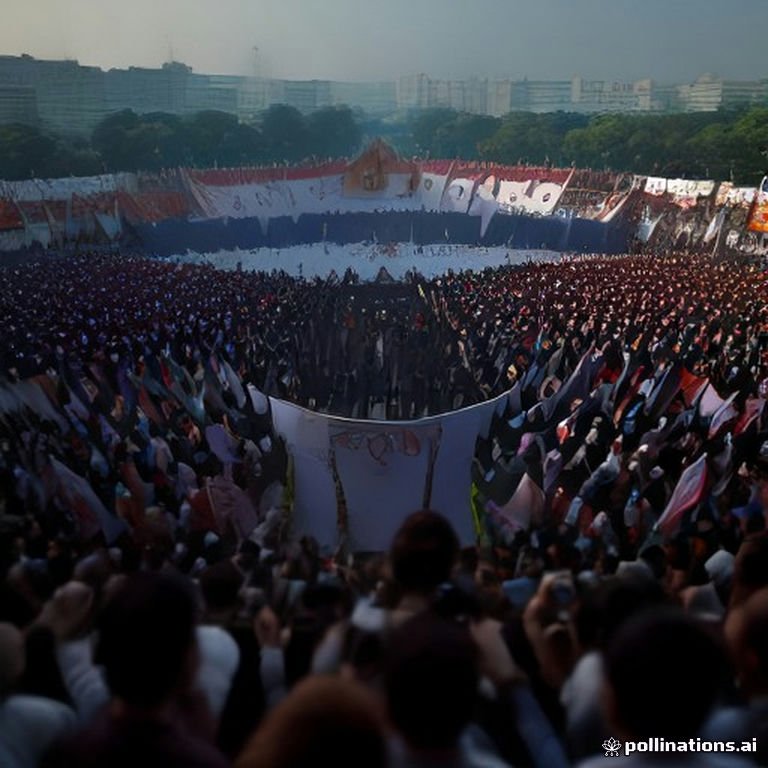
New Delhi, India – The political landscape in India is currently witnessing a significant escalation of rhetoric, with top leaders exchanging sharp accusations that hint at deepening ideological divides. Union Minister and Bharatiya Janata Party (BJP) President JP Nadda has launched a scathing attack on the Congress party and its prominent leader, Rahul Gandhi, accusing them of orchestrating a calculated conspiracy to destabilize the nation’s democratically elected government and foment widespread unrest. This comes in the wake of a massive rally organized by the INDIA bloc at Delhi’s iconic Ramlila Maidan, which the opposition coalition asserts was a demonstration of democratic rights concerning alleged electoral roll irregularities. These escalating Indian political tensions mark a critical juncture, raising questions about the future of political discourse and stability in the world’s largest democracy.
Nadda’s condemnation of the opposition’s actions has been unequivocal, portraying their recent mobilization as far more than just a legitimate expression of dissent. He characterized the INDIA bloc’s rally as a deliberate and malevolent plot aimed at undermining the very foundations of Indian democracy and inflicting damage upon the national economy. This serious charge elevates the political debate beyond mere policy disagreements, framing it as an existential struggle for the nation’s stability and democratic integrity. The Union Minister articulated a specific model of politics that he believes the opposition is employing—a strategy built on misinformation, the deliberate provocation of protests, and an overarching objective to create an environment of chaos and instability. This narrative suggests a systemic effort by the opposition to delegitimize the government and disrupt the normal functioning of governance through non-parliamentary means.
The Allegations: A Conspiracy Against Democracy and Economy
In his impassioned address, JP Nadda meticulously outlined his accusations, asserting that the Congress and its allies are not merely engaging in political opposition but are actively involved in a larger scheme. His central argument posits that the rally at Ramlila Maidan, while ostensibly a protest for democratic rights, was in reality a carefully orchestrated move designed to sow discord and unrest across the country. Nadda highlighted what he termed a consistent pattern of behavior from the opposition, which he claims involves the dissemination of misleading information to manipulate public opinion and incite protests. He argued that such tactics are not just harmful to the ruling party but are inherently detrimental to the democratic process itself, as they erode trust in institutions and create an environment ripe for instability.
The economic dimension of Nadda’s allegations is particularly striking. By stating that the opposition’s actions are a conspiracy against the economy, he suggests that their perceived destabilization efforts could deter investment, harm business confidence, and ultimately impact the livelihoods of ordinary citizens. This framing connects political dissent directly to economic repercussions, a narrative often employed by ruling parties to underscore the potential costs of opposition activities. He emphasized that a stable political environment is a prerequisite for economic growth and development, and any attempt to disrupt this stability, regardless of the stated intentions, could have far-reaching negative consequences for India’s economic trajectory. The Union Minister painted a picture of an opposition willing to sacrifice national economic interests for narrow political gains, a charge that resonates deeply within the public discourse, especially given India’s aspirations for continued economic growth.
The Model of Politics: Misinformation and Provocation
Nadda further elaborated on what he believes is the opposition’s modus operandi, describing it as a “model of politics” characterized by calculated misinformation and deliberate provocation. He detailed how he perceives this model to operate: first, through the creation and propagation of false narratives or exaggerated claims about government policies and actions; second, by using these narratives to stir public anger and resentment; and third, by leveraging this manufactured discontent to organize protests and rallies aimed at maximizing disruption. According to Nadda, this approach is fundamentally undemocratic because it bypasses reasoned debate and relies instead on emotional manipulation and public agitation.
The Union Minister pointed to specific instances where he believes such a model has been deployed, although he did not provide explicit examples in his generalized statements. However, his assertions imply a broader pattern of behavior from the Congress and other opposition parties. He contended that this strategy is designed to create a sense of crisis, making governance challenging and creating an impression of governmental incompetence or malfeasance, even when such claims are unsubstantiated. Nadda’s critique touches upon the broader global challenge of misinformation in the digital age, suggesting that political actors are increasingly weaponizing information to achieve their objectives, blurring the lines between legitimate critique and deliberate subversion. He urged citizens to be wary of such tactics and to critically evaluate the information they receive, advocating for a politics based on facts and constructive engagement rather than engineered discontent.
The INDIA Bloc’s Counter-Narrative: Mobilization for Democratic Rights
In stark contrast to Nadda’s accusations, the INDIA bloc—an alliance of various opposition parties—has presented a fundamentally different interpretation of their recent rally and their overall political actions. They firmly reject the notion of a conspiracy and instead frame their mobilization as a vital exercise of democratic rights, particularly in response to what they allege are irregularities in the electoral roll process. The opposition alliance argues that their role is to act as a check on the government, ensuring transparency, accountability, and the protection of fundamental freedoms. Their rally at Ramlila Maidan, therefore, was not an act of destabilization but a collective effort to voice concerns that they believe are critical to the health of Indian democracy.
The INDIA bloc has consistently raised issues pertaining to the integrity of electoral processes, including alleged discrepancies in voter lists, concerns about the fairness of elections, and the perceived weakening of independent institutions. Their protests and rallies, they contend, are a necessary means to draw public attention to these concerns and to pressure the government into addressing them. They view their actions as a legitimate expression of dissent within a democratic framework, asserting that denying them the right to protest or labeling such protests as conspiracies undermines the very essence of democracy. For the INDIA bloc, their mobilization is about upholding constitutional principles and safeguarding the rights of citizens, rather than engaging in any form of anti-national activity. They maintain that a vibrant democracy requires a robust opposition that can freely articulate grievances and hold the government accountable, and their actions are merely fulfilling this crucial role.
Historical Context and Broader Implications for Indian Democracy
The current heated exchange between the ruling party and the opposition is not an isolated incident but rather fits into a broader historical pattern of intense political rivalry in India. Accusations of destabilization, anti-national activities, and conspiracies have, at various points, been leveled by both sides of the political spectrum throughout India’s post-independence history. This rhetorical combat often intensifies during periods of heightened political tension or approaching elections, as parties vie for public support and seek to delegitimize their opponents.
However, the severity of Nadda’s claims—labeling the opposition’s actions as a “calculated conspiracy against democracy and the economy”—raises significant concerns about the nature of political discourse. Such strong accusations can further polarize the electorate, deepen societal divisions, and potentially erode public trust in political institutions. In a democracy, a healthy opposition is crucial for checks and balances, and the ability to dissent without fear of being labeled as subversive is a cornerstone of democratic freedom. If political disagreement is routinely framed as an attack on the nation itself, it can stifle legitimate criticism and create an environment where constructive dialogue becomes increasingly difficult.
The implications extend beyond the immediate political sparring. When the credibility of electoral processes or the intentions of opposition parties are called into question in such absolute terms, it can contribute to a climate of suspicion and distrust among citizens. This can have long-term consequences for the stability of democratic norms and institutions. For a global audience, these developments offer a critical lens into the challenges faced by large, diverse democracies in maintaining cohesion and fostering inclusive political participation amidst intense competition for power.
The Role of Information and Public Perception
Nadda’s emphasis on “misinformation” as a tool of the opposition highlights a critical challenge facing contemporary democracies worldwide. The rapid spread of information, and misinformation, through digital platforms has fundamentally altered the political landscape. In an environment where narratives can be constructed and disseminated with unprecedented speed, distinguishing between fact and fiction becomes increasingly difficult for the average citizen.
The BJP’s narrative suggests that the opposition is deliberately leveraging this information environment to create a distorted public perception of governmental failures and societal grievances. Conversely, the INDIA bloc often accuses the ruling establishment of controlling information channels and suppressing dissenting voices. This battle over narratives is central to shaping public perception and ultimately influences electoral outcomes. How the media, both traditional and digital, covers these competing claims, and how citizens critically engage with the information presented to them, will play a crucial role in determining the efficacy of political strategies built on either direct accusations or counter-claims of democratic suppression.
The stakes are incredibly high. If a significant portion of the populace believes that their government is being actively undermined by a conspiratorial opposition, it could lead to increased social friction. Conversely, if citizens feel that legitimate concerns about democratic processes are being dismissed as mere destabilization tactics, it could fuel cynicism and disengagement. The delicate balance lies in fostering an environment where robust debate can occur, where factual inaccuracies can be corrected, and where citizens feel empowered to make informed decisions without being subjected to manipulative political propaganda from any side.
Conclusion: Navigating the Crossroads of Democracy
The fiery exchange between Union Minister JP Nadda and the INDIA bloc signals a period of heightened Indian political tensions, marking a critical juncture for the nation’s democratic trajectory. Nadda’s accusations of a “calculated conspiracy” against the government, democracy, and the economy by the Congress and Rahul Gandhi paint a grave picture of an opposition intent on creating unrest through misinformation and provoked protests. This narrative frames the opposition’s actions not as legitimate dissent but as a direct challenge to the nation’s stability and foundational principles.
On the other side, the INDIA bloc vigorously defends its actions, asserting that their rallies and protests, including the one at Ramlila Maidan, are necessary exercises of democratic rights. They argue that their mobilization stems from genuine concerns about alleged electoral roll irregularities and a broader commitment to upholding the integrity of democratic processes. This counter-narrative emphasizes their role as a vigilant opposition, holding the government accountable and ensuring that the voice of the people is heard.
As India navigates these complex political crosscurrents, the challenge lies in maintaining a balance between robust political competition and the preservation of democratic norms. The severity of the accusations necessitates a careful examination of facts, transparency from all political actors, and a commitment to constructive dialogue. The health of India’s democracy depends not only on the ability of its citizens to elect their leaders but also on the capacity of its political class to engage in respectful debate, acknowledge legitimate dissent, and uphold the institutions that underpin the nation’s governance. The ongoing escalation of rhetorical warfare underscores the urgent need for a renewed focus on civility and a shared commitment to strengthening the democratic fabric of India.