
 By NewsMatrix
BJP Demands Apology from Kharge, Igniting National Debate on Political Respect
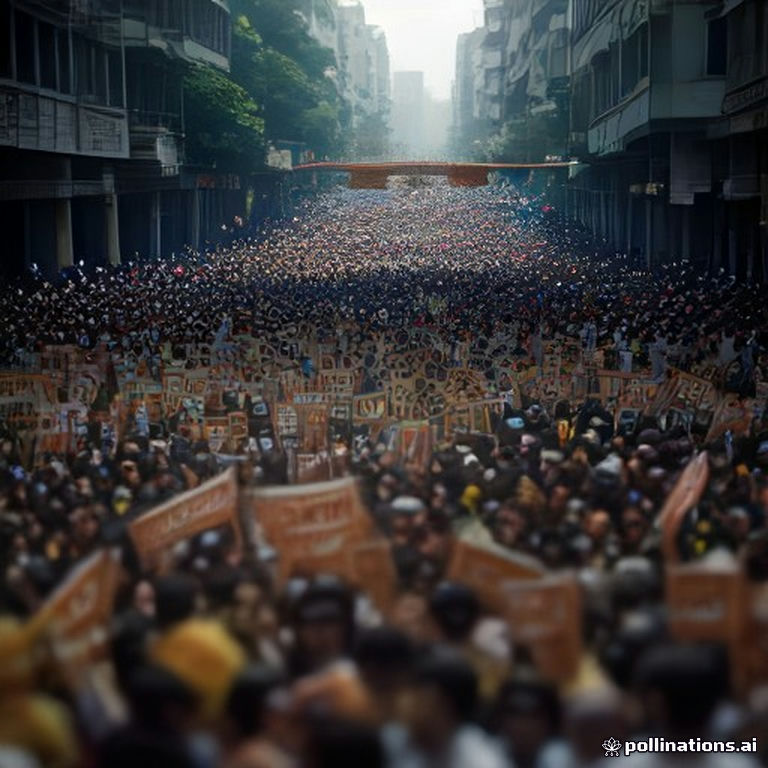
New Delhi, India – In a swift and assertive response to recent remarks made by Congress President Mallikarjun Kharge concerning Prime Minister Narendra Modi, activists from the Bharatiya Janata Party (BJP) have launched widespread protests across India, demanding an official apology. These demonstrations, seen in states like Bihar, Jammu, and Karnataka, underscore a growing national debate on Political Respect and mutual decorum within the country’s vibrant, often contentious, political landscape. The controversy has not only highlighted the deep ideological divides between India’s two largest parties but has also brought into sharp focus the increasingly shrill tone of political discourse, prompting calls for greater restraint and civility.
The genesis of the current uproar lies in remarks attributed to Mallikarjun Kharge, the veteran leader and President of the Indian National Congress. While the exact phrasing has been a point of contention, the BJP alleges that Kharge’s comments were deeply disrespectful towards Prime Minister Modi and, by extension, his family. The ruling party swiftly condemned the remarks, characterizing them as a new low in Indian politics and an affront to the office of the Prime Minister. This immediate and strong reaction from the BJP leadership set the stage for the nationwide protests that quickly followed, mobilizing party cadres and supporters in key regions.
A Wave of Protests Across India
Bihar: A Strong Display of Dissent
In Bihar, a politically crucial state, BJP activists took to the streets with particular fervor. Led by prominent local BJP leaders, protestors gathered in significant numbers, burning effigies and shouting slogans denouncing Kharge and the Congress party. They demanded an unequivocal apology, asserting that Kharge’s statements were not merely political criticism but personal attacks designed to demean the Prime Minister. Local media reported significant disruptions in traffic and public life in several urban centers as the demonstrations intensified, reflecting the BJP’s determination to make its displeasure known.
Jammu: Echoes of National Sentiment
The Union Territory of Jammu and Kashmir also witnessed robust protests orchestrated by the BJP. In Jammu city, party workers, holding placards and banners, highlighted what they perceived as a pattern of disrespect from the Congress leadership towards Prime Minister Modi. Senior BJP figures in the region addressed the gatherings, reiterating the party’s stance that such language was unacceptable in a democratic setup. They emphasized that while political differences are natural, personal vilification crosses a line, undermining the sanctity of public office and the dignity of political discourse.
Bengaluru: The Southern Outcry
Further south, in Bengaluru, the capital of Karnataka, BJP activists mirrored the sentiments expressed elsewhere. The protests there were equally vocal, with leaders demanding that Kharge retract his comments and issue a public apology. The BJP’s Karnataka unit seized the opportunity to galvanize its base, framing the controversy as an issue of national pride and respect for the country’s democratically elected leader. These coordinated protests across diverse geographical regions underscored the BJP’s centralized strategy to amplify the issue and exert pressure on the Congress party.
The BJP’s Stance: Respect for the Office and the Individual
The Bharatiya Janata Party’s core argument revolves around the principle of respect – not just for the individual holding the office of Prime Minister, but for the institution itself. BJP leaders have repeatedly stressed that Prime Minister Modi represents the aspirations of millions of Indians, and any personal attack on him is an attack on the mandate of the people. They accuse Kharge of crossing the bounds of healthy political debate, venturing into territory that they deem disrespectful and unbecoming of a senior political figure. The party’s spokespersons have articulated that while criticism of policies and governance is part and parcel of democracy, targeting an individual’s family or making disparaging personal remarks is a direct assault on decorum.
Furthermore, the BJP has sought to draw a contrast, alleging that the Congress party, particularly its leadership, has a history of making similar “indecorous” remarks against Prime Minister Modi. This narrative aims to paint the Congress as a party that consistently resorts to personal attacks when faced with political challenges, rather than engaging in substantive policy debates. The party’s demand for an apology is thus framed as a stand for civility in public life and a call to uphold the dignity of political discourse.
Congress Rallies Behind Kharge: Freedom of Speech vs. Decorum
On the other side of the political spectrum, the Indian National Congress has firmly rallied behind its President, Mallikarjun Kharge. Congress leaders have vehemently defended Kharge, asserting that his comments were taken out of context or misinterpreted by the BJP for political mileage. They argue that Kharge was merely exercising his right to criticize the government and its leader, a fundamental tenet of a healthy democracy. Many Congress functionaries have accused the BJP of overreacting and attempting to stifle legitimate political dissent by crying foul over every critical remark.
Senior Congress leaders have also pointed out that robust and often fiery debate is not new to Indian politics. They contend that the BJP itself has, in the past, used strong language against opposition figures, and therefore, its outrage is hypocritical. The party emphasizes that holding the government accountable requires sharp questioning and, at times, strong rhetoric. To demand an apology for comments made in the heat of political battle, they argue, is an attempt to curb the freedom of speech and expression guaranteed under the Constitution.
Some Congress spokespersons have also tried to shift the narrative, highlighting what they perceive as more pressing national issues that the BJP is attempting to distract from. They argue that the BJP’s focus on Kharge’s remarks is a diversionary tactic to avoid answering difficult questions on economic challenges, social divisions, or governance failures. This counter-narrative seeks to portray the BJP’s protests as politically motivated grandstanding rather than a genuine concern for decorum.
The Broader Debate: Political Decorum in Indian Democracy
Beyond the immediate political slugfest between the BJP and Congress, the controversy has reignited a much larger national debate about the state of political decorum in India. Observers and political analysts have long noted a decline in civility and an increase in personal attacks in political discourse. This incident serves as another prominent example of how quickly political exchanges can devolve into acrimony, often overshadowing substantive policy discussions.
- Historical Context: Indian politics has a history of passionate, sometimes confrontational, rhetoric. However, there was a perceived understanding that certain lines, especially those involving personal attacks or family, were generally not crossed. The current climate, many argue, sees these unwritten rules increasingly disregarded.
- Role of Media and Social Media: The proliferation of 24/7 news cycles and the pervasive influence of social media have significantly amplified political statements. Every comment, no matter how minor, can be dissected, debated, and weaponized by opposing factions, often leading to rapid escalation of controversies.
- Impact on Public Trust: When political leaders engage in frequent personal attacks, it risks eroding public trust in democratic institutions. Citizens may become disillusioned with a political system perceived as being more about scoring points than addressing genuine concerns.
- Call for Moderation: There is a growing chorus of voices, including from civil society and independent commentators, calling for greater moderation and mutual respect from political leaders. They argue that while vigorous debate is essential for democracy, it must not come at the cost of basic civility.
Implications for India’s Political Landscape
This latest skirmish between the BJP and Congress carries significant implications for India’s political landscape. Firstly, it underscores the intense rivalry and zero-sum nature of current Indian politics, where every perceived slight becomes a battleground. Secondly, it highlights the strategic use of such controversies by political parties to mobilize their cadres, energize their base, and portray their opponents in a negative light, especially as major elections loom.
The incident also raises questions about the long-term impact on democratic norms. If personal attacks become the norm rather than the exception, it could further polarize the electorate and make consensus-building even more challenging. The onus, therefore, lies on all political stakeholders to reflect on the nature of their discourse and strive for a more constructive and respectful approach to political disagreements.
Conclusion: A Call for Elevated Discourse
The nationwide protests by BJP activists against Mallikarjun Kharge’s remarks, and the subsequent defense by the Congress, encapsulate a critical moment in India’s political journey. While the immediate focus remains on whether an apology will be issued, the broader significance of this episode lies in its capacity to trigger a much-needed introspection on the state of Political Respect and decorum in the world’s largest democracy. As India continues to evolve, its political leaders face the imperative challenge of balancing robust opposition and criticism with the fundamental need for mutual respect and civility, ensuring that the vibrancy of its democracy does not succumb to the corrosiveness of unbridled rhetoric. The call for an elevated discourse is not just a plea for politeness but a foundational requirement for the healthy functioning and continued strength of India’s democratic institutions.