
 By NewsMatrix
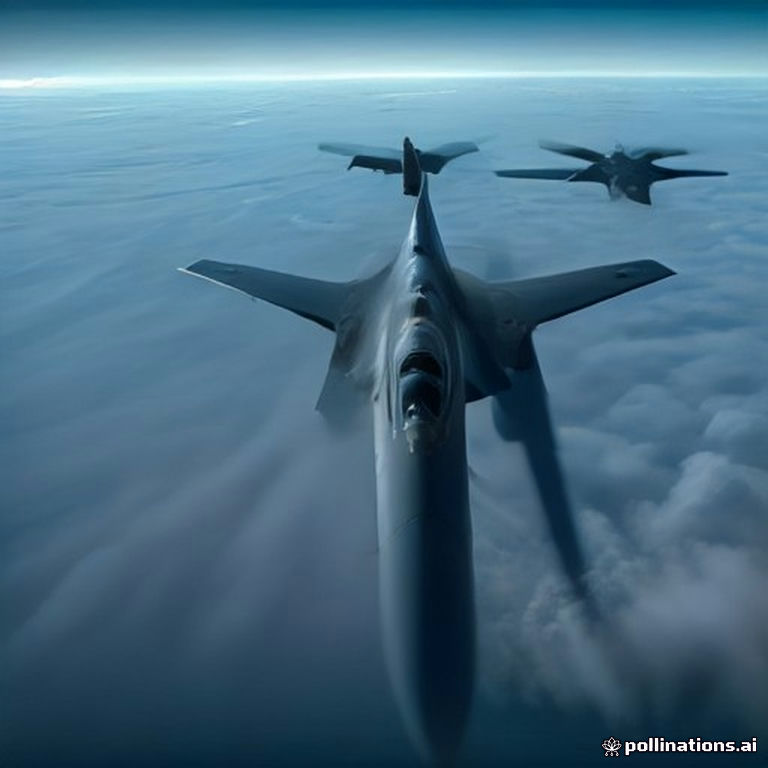
NewsMatrix — In a significant strategic pivot, the United States Air Force is undertaking a comprehensive review of its strategic bomber fleet, exploring novel applications that could redefine their traditional missions. Central to this evolving doctrine is the consideration of enhancing US Air Force bomber roles to include air-superiority missions, a domain historically reserved for fighter aircraft. This reevaluation is driven by a confluence of factors, including advancing adversary capabilities, the imperative to bolster overall combat capacity, and the challenges posed by an aging fighter fleet. The B-21 Raider, the nation’s newest stealth bomber, is anticipated to be a linchpin in these future operations, complemented by an expansion of the fighter fleet and a greater reliance on cutting-edge Collaborative Combat Aircraft (CCAs).
A Strategic Reassessment: Bombers Beyond Bombing
For decades, the strategic bomber has been the quintessential symbol of long-range power projection, primarily tasked with delivering vast quantities of ordnance deep into enemy territory. From the B-17s of World War II to the B-52s of the Cold War and the stealthy B-2 Spirit, their mission has remained largely consistent: to strike ground targets with precision and overwhelming force. However, the rapidly evolving global threat landscape and advancements in aerial warfare technology are compelling the Air Force to think beyond these conventional boundaries. The notion of bombers engaging in air-superiority tasks represents a radical departure from established doctrine, suggesting a future where multi-role platforms become the norm, rather than the exception.
The impetus for this reevaluation is multifaceted. Potential adversaries are rapidly developing sophisticated integrated air defense systems (IADS) and advanced fighter aircraft, making traditional penetration missions more hazardous. Furthermore, the sheer scale and geographic dispersion of potential future conflicts demand platforms with exceptional reach, endurance, and versatility. By equipping bombers with enhanced air-to-air capabilities, the Air Force aims to create a more resilient, adaptable, and potent force capable of operating across the full spectrum of aerial combat, from long-range strike to localized air defense suppression and, potentially, even direct air-to-air engagement.
The Emergence of Air-to-Air Capabilities for Bombers
What precisely would “increasing air-to-air capabilities” for bombers entail? This concept moves beyond mere self-defense, which some bombers already possess in a limited capacity (e.g., electronic warfare countermeasures). Instead, it envisions bombers acting as sophisticated, long-range platforms capable of detecting, tracking, and engaging enemy aircraft. This could involve:
- Advanced Sensor Integration: Equipping bombers with powerful, long-range active electronically scanned array (AESA) radars and passive electro-optical/infrared (EO/IR) systems capable of detecting stealthy threats at significant distances.
- Long-Range Air-to-Air Missiles: Carrying a substantial payload of advanced, long-range air-to-air missiles (e.g., AIM-260 JATM or future equivalents) within their internal bomb bays, allowing them to engage targets far beyond visual range. The sheer volume of munitions a bomber could carry far surpasses that of a typical fighter.
- Enhanced Electronic Warfare (EW) Suites: Robust EW capabilities not just for self-protection but also for offensive jamming and denial, disrupting enemy command and control, and assisting friendly fighters.
- Networked Targeting and Data Fusion: Functioning as a high-altitude, long-endurance sensor and communications node, collecting and fusing data from various sources (fighters, CCAs, satellites) to create a comprehensive air picture and direct engagements.
Such capabilities would allow bombers to contribute to air superiority in several ways: acting as “missile trucks” to overwhelm enemy defenses with sheer volume of fire, providing vital long-range sensor coverage, or even engaging high-value airborne assets like enemy AWACS or tankers.
The B-21 Raider: A Cornerstone of Future Airpower
At the heart of this transformative vision is the B-21 Raider. Designed from the outset with an open architecture and multi-mission flexibility, the B-21 is not merely a replacement for older bombers but a platform built for future challenges. Its advanced stealth technology, unprecedented survivability, and ability to carry a diverse payload make it an ideal candidate for expanded roles.
The B-21’s inherent stealth allows it to penetrate contested airspace with a high degree of impunity, making it a critical asset for delivering precision strikes. However, its design ethos extends beyond just bombing. Its sophisticated sensor suite and robust communication systems position it to serve as a command-and-control node for swarms of CCAs, or as a long-range intelligence, surveillance, and reconnaissance (ISR) platform. Should it be equipped with air-to-air armaments, the B-21 could potentially operate as a deep strike platform with self-defense air-to-air capabilities, or even contribute to establishing local air superiority in areas where traditional fighter assets might be at a disadvantage due to range or logistics.
Its ability to remain airborne for extended periods also makes it a valuable asset for maintaining persistent presence and responding to dynamic threats across vast operational areas. The B-21’s adaptability ensures that it will be a cornerstone of the Air Force’s power projection capabilities for decades to come, moving beyond a single-minded bomber role to become a true multi-domain asset.
Collaborative Combat Aircraft (CCAs): Force Multipliers in the Sky
Integral to the Air Force’s future vision is the widespread adoption of Collaborative Combat Aircraft (CCAs). These unmanned aerial vehicles (UAVs) are envisioned as “loyal wingmen” for both manned fighters and, crucially, for bombers like the B-21. Operating semi-autonomously or under direct control from a manned platform, CCAs offer a revolutionary approach to enhancing combat capacity and mitigating risk.
For bombers, CCAs could act as forward scouts, extending sensor range and providing a clearer picture of the battlespace. They could carry additional weapons, including air-to-air missiles, effectively increasing the bomber’s firepower without exposing manned platforms to undue risk. In an air-superiority context, CCAs could be launched ahead of a bomber to engage or distract enemy fighters, jam enemy radars, or even act as decoy targets, absorbing enemy fire and preserving more expensive manned assets.
The concept of “mass with resilience” is central to the CCA strategy. By deploying numerous, relatively inexpensive CCAs alongside a smaller number of high-value manned platforms, the Air Force can create a more distributed, survivable, and adaptable force. This distributed lethality complicates adversary targeting and enhances overall combat effectiveness, especially in highly contested environments.
Expanding the Fighter Fleet and Addressing Aging Assets
While the focus on bombers and CCAs represents a significant strategic shift, it does not diminish the importance of a robust manned fighter fleet. The Air Force plans to expand its fighter inventory, recognizing that these aircraft remain indispensable for specific missions, including close air combat, rapid interception, and maintaining air patrols over sensitive areas. Fighters offer unmatched agility, human decision-making in complex and rapidly evolving situations, and the ability to operate from a wider array of airfields.
However, a critical challenge facing the Air Force is its aging fleet of fighter aircraft, particularly legacy F-15s and F-16s, which are becoming increasingly expensive to maintain and operate, and less survivable against modern threats. The introduction of advanced platforms like the F-35, coupled with the strategic burden-sharing with CCAs, aims to alleviate the strain on these older assets. By leveraging CCAs to perform some of the “dull, dirty, or dangerous” tasks, manned fighters can be preserved for missions requiring unique human judgment and adaptability, thereby extending the operational life of the remaining high-performance aircraft while accelerating the transition to newer, more capable platforms.
This multi-pronged approach – integrating bombers with enhanced capabilities, deploying CCAs as force multipliers, and modernizing the fighter fleet – seeks to create a synergistic air force capable of addressing the full spectrum of future threats. It represents a move towards a more flexible, distributed, and resilient combat force that can operate effectively in both permissive and highly contested environments.
Strategic Implications and Future Outlook
The strategic implications of these proposed changes are profound. By diversifying the roles of its bomber fleet, the US Air Force aims to enhance its global power projection capabilities, strengthen deterrence, and maintain a competitive edge against near-peer adversaries. A bomber capable of both long-range strike and contributing to air superiority presents a formidable and unpredictable challenge to any potential foe.
This evolution in doctrine also underscores a broader shift in military thinking, moving away from platforms designed for single-purpose missions towards a more integrated, multi-domain approach. The synergy between manned and unmanned systems, between strike and air-superiority roles, and across different platform types, is expected to yield an exponential increase in combat effectiveness.
However, the implementation of such an ambitious strategy will not be without its challenges. Significant investment in research and development, procurement, and training will be required. Overcoming technological hurdles, developing new operational doctrines, and ensuring seamless integration between diverse platforms will be critical to success. The cultural shift within the Air Force, adapting to a future where bombers might conduct air-to-air engagements, will also be a key consideration.
In conclusion, the US Air Force’s exploration of enhanced US Air Force bomber roles, particularly in air superiority, marks a pivotal moment in military aviation history. With the B-21 Raider poised to lead this charge, supported by an expanded fighter fleet and the transformative potential of Collaborative Combat Aircraft, the service is charting a course towards a more formidable, flexible, and future-ready airpower capability. This strategic evolution is not just about new aircraft; it is about redefining how air superiority is achieved and maintained in an increasingly complex and contested global arena, ensuring that the United States retains its aerial advantage for decades to come.