
 By NewsMatrix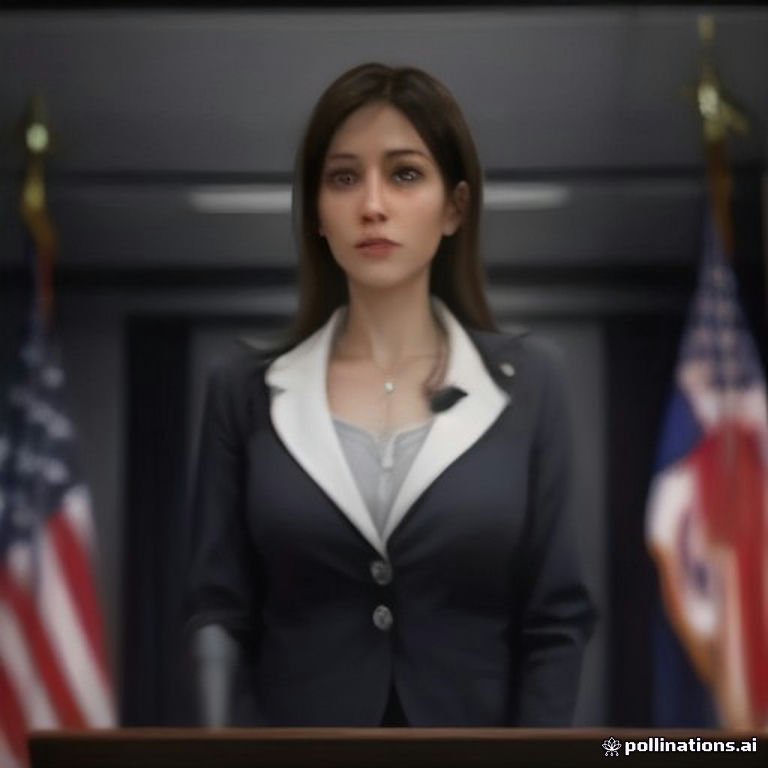
NewsMatrix
Katie Zacharia’s Abrupt Exit: Five Days That Shook the White House Press Office
Washington D.C. – The often-turbulent waters of White House communications were roiled further this week by the abrupt departure of Press Secretary Katie Zacharia, whose tenure lasted a mere five days. Her surprisingly brief stint in one of the most visible and demanding roles in American politics ended amid a flurry of questions concerning her qualifications and an underwhelming inaugural briefing that set a rocky tone. Despite direct warnings from President Donald Trump to reconsider the immense pressures of the position, Zacharia had publicly expressed an unwavering determination to serve both the President and the nation. Her sudden exit has plunged the White House press office into a state of considerable uncertainty, a precarious situation exacerbated by the looming specter of critical midterm elections.
The role of White House Press Secretary is one steeped in tradition and immense responsibility. It serves as the primary conduit between the President of the United States and the global press corps, a position demanding unparalleled communication skills, a deep understanding of policy, and an unwavering ability to articulate the administration’s message under intense scrutiny. Zacharia’s appointment, initially met with a mixture of anticipation and skepticism, was seen by some as a bold, if unconventional, choice. Her background, while not entirely devoid of political experience, did not align with the typical profile of previous press secretaries, who often boast extensive résumés in media relations, political campaigning, or high-level government communications. This background immediately raised eyebrows within seasoned D.C. circles, hinting at potential challenges ahead for Katie Zacharia.
A Warning Unheeded: President Trump’s Foreboding Counsel
It is now widely reported that President Donald Trump himself had expressed reservations about Zacharia taking on the high-stakes position. Sources close to the administration, who spoke on condition of anonymity due to the sensitivity of the matter, revealed that the President had cautioned Zacharia about the grueling nature of the job, the relentless media scrutiny, and the unforgiving political landscape. These warnings, conveyed in no uncertain terms, reportedly urged her to carefully reconsider the immense personal and professional sacrifices the role would demand. The President, known for his direct and often blunt communication style, was apparently concerned about the potential for burnout and the intense pressure cooker environment that defines the White House press briefing room. This counsel, while perhaps intended to be supportive, underscored the inherent difficulties of the position and foreshadowed the challenges that would quickly emerge.
Despite these significant warnings, Katie Zacharia remained steadfast in her resolve. Her public statements prior to assuming the role conveyed a strong sense of duty and a deep commitment to the President’s agenda and the American people. She articulated a vision of transparent and effective communication, pledging to foster a productive relationship with the press corps while accurately conveying the administration’s policies and achievements. This determination, while commendable, perhaps underestimated the unique crucible that is the White House briefing room. The belief that sheer will and loyalty could overcome a lack of specific, high-level communications experience proved to be a critical miscalculation, highlighting the often-unforgiving nature of political optics and public perception in Washington.
The Briefing That Broke the Camel’s Back: A Rocky Debut
The initial White House press briefing conducted by Katie Zacharia quickly became the focal point of her brief tenure and ultimately, a significant factor in her downfall. What was intended to be a robust introduction to the administration’s messaging strategy instead unfolded as an underwhelming performance that drew sharp criticism from seasoned journalists and political commentators alike. Reports from inside the briefing room described a hesitant demeanor, a lack of detailed command over key policy points, and an apparent struggle to parry challenging questions with the confidence and precision expected of a White House Press Secretary. Multiple sources noted instances where Zacharia appeared to be consulting notes extensively or providing responses that lacked the authoritative depth typically associated with the role.
The questions surrounding her qualifications, which had simmered since her appointment, reached a boiling point during this initial public appearance. Journalists, ever keen to test the mettle of a new press secretary, pressed her on various complex issues, from intricate foreign policy nuances to domestic legislative details. Zacharia’s responses, according to many in the press corps, often lacked the clarity and decisiveness required, leading to further skepticism about her preparedness for such a demanding post. Critics pointed to a perceived lack of fluency with specific policy intricacies and a general discomfort under the intense glare of the cameras and rapid-fire questioning. This perceived deficiency in her initial outing fundamentally undermined confidence in her ability to effectively champion the administration’s narrative.
Media Reaction and Political Fallout
The immediate aftermath of Zacharia’s first briefing was marked by a flurry of critical analysis across media platforms. News outlets dissected her performance, with many commentators openly questioning the wisdom of her appointment and the administration’s vetting process. Social media, a relentless amplifier of political narratives, was awash with observations, ranging from constructive criticism to harsh condemnations. The narrative quickly shifted from anticipation to a palpable sense of concern regarding the effectiveness of the White House’s communications strategy moving forward. This intense scrutiny, typical for a new press secretary, was amplified by the perception that Zacharia was not adequately equipped for the role, creating an immediate and significant public relations challenge for the administration.
Internally, the feedback was reportedly just as stark. The White House operates as a highly coordinated ecosystem, and any perceived weakness in a crucial role like the Press Secretary can have ripple effects. Concerns were likely raised about the administration’s ability to control its message, particularly as it approached a critical electoral cycle. A press secretary who struggles to convey key messages risks not only misrepresenting the President’s stance but also creating unnecessary distractions and undermining public trust. The five-day period became a rapid assessment of her capability to withstand the unique pressures of the job, and the consensus, regrettably for Zacharia, appeared to be unfavorable.
The Aftermath: Press Office in Limbo and Midterm Election Challenges
Katie Zacharia’s rapid departure has undeniably left the White House press office in a state of disarray. Such a high-profile vacancy, especially one occurring so abruptly, creates a vacuum in leadership and raises immediate questions about who will step into the crucial role. The interim period often sees deputies or other senior communications staff temporarily assuming the duties, but this stop-gap measure is rarely a long-term solution. The absence of a permanent, authoritative figure at the podium can lead to fragmented messaging, a lack of consistent communication with the press, and potentially, an inability to effectively counter opposing narratives. The press corps thrives on consistency and access, and any disruption to these can be highly problematic for an administration seeking to project stability and control.
The timing of this unexpected vacancy could not be more critical for the administration. With midterm elections rapidly approaching, the White House needs a robust and effective communications strategy to rally its base, persuade undecided voters, and defend its record against political challengers. A strong press secretary is an invaluable asset in this endeavor, capable of delivering daily talking points, countering opposition attacks, and framing the election narrative in the administration’s favor. Without a steady hand at the helm of the press office, the administration risks losing control of its message, potentially impacting voter perception and the outcomes of key races across the country. The search for a new press secretary will undoubtedly be expedited, but finding a suitable candidate who can immediately command respect and effectively communicate the President’s agenda will be a formidable task under such pressing circumstances.
The incident serves as a stark reminder of the unique pressures and immense demands placed upon those who serve in the highest echelons of government communication. The White House Press Secretary is not merely a spokesperson; they are a political strategist, a public relations expert, and often, a lightning rod for criticism. The role requires an almost superhuman ability to juggle multiple complex issues, maintain composure under fire, and command the attention and respect of a discerning media. Katie Zacharia’s brief tenure underscores the unforgiving nature of this very public office, where even the slightest misstep can have immediate and far-reaching consequences.
Conclusion: A Press Office Adrift, A Nation Watches
The swift exit of Katie Zacharia from the White House press secretary role after just five tumultuous days marks a significant, albeit brief, chapter in the administration’s communication challenges. Her initial struggle with an underwhelming briefing and persistent questions about her qualifications, combined with the President’s earlier warnings, painted a picture of an impossible task. While her determination to serve was evident, the harsh realities of the position proved insurmountable. The press office now finds itself in a state of flux, without a clear voice to guide its message, particularly as the nation gears up for consequential midterm elections. The administration faces the urgent task of identifying and installing a new press secretary who possesses the specific blend of experience, resilience, and communication prowess required to navigate the complexities of modern political discourse. The nation watches keenly to see who will next step into this formidable role, hoping for stability and clear communication in an increasingly polarized political landscape.