
 By NewsMatrix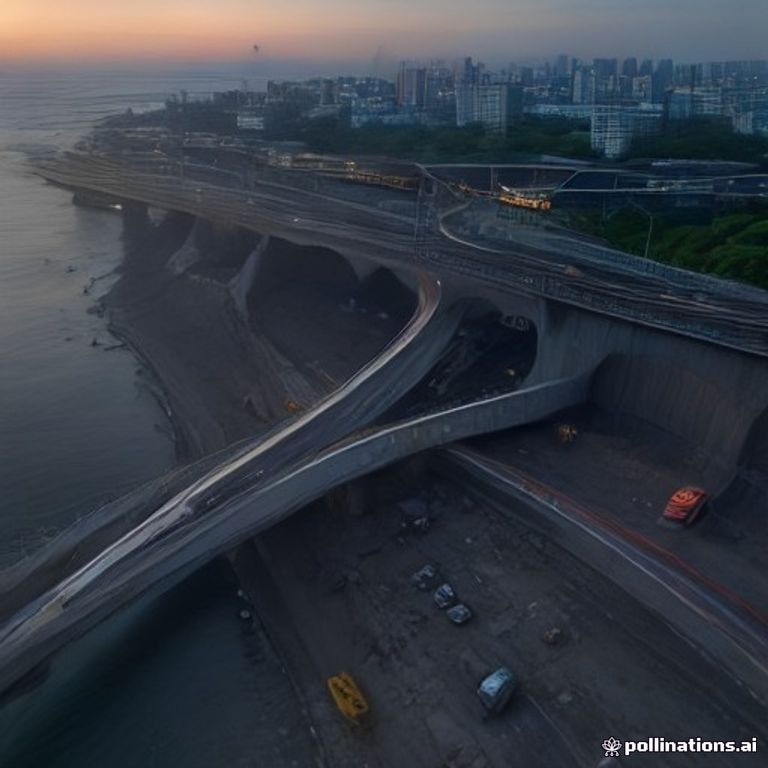
Tragic Mumbai Coastal Road Accident Claims Three Student Lives, Renews Safety Concerns
MUMBAI, INDIA – A pall of grief and outrage has descended upon Mumbai following a devastating Mumbai Coastal Road Accident that claimed the lives of three promising students. The incident, which occurred late on a recent evening, saw a speeding BMW sedan lose control and plummet from a section of the newly inaugurated Coastal Road, sending shockwaves across the city and reigniting urgent discussions surrounding road safety and enforcement. This tragic event is further compounded by the revelation that the very same vehicle had been cited in a First Information Report (FIR) for overspeeding just a few months prior, raising serious questions about accountability and preventive measures on Mumbai’s modern infrastructure.
The accident has brought into sharp focus the alarming number of mishaps on this high-speed corridor, intended to ease traffic congestion but now increasingly becoming a site of concern for commuters and authorities alike. As police launch a comprehensive investigation into the driver’s actions and the circumstances leading to the fatal collision with the railing, the collective conscience of the city grapples with the preventable loss of young lives and the systemic challenges in ensuring public safety on its roads.
Incident Details: A Night of Unspeakable Tragedy
The fateful incident unfolded around 11:30 PM near the Priyadarshini Park exit on the northbound stretch of the Mumbai Coastal Road. According to preliminary reports from the Mumbai Police, the luxury BMW, believed to be traveling at an excessively high speed, suddenly veered off course. Eyewitnesses, some of whom were driving on the same stretch, reported seeing the vehicle swerving erratically before it collided with the reinforced concrete railing. The impact was catastrophic, leading to the car breaching the barrier and plunging several feet onto the service road below.
Emergency services were immediately alerted, with police patrols, fire brigades, and ambulance teams rushing to the scene. The mangled remains of the vehicle bore testament to the severity of the crash. Rescuers faced immense challenges in extricating the occupants, who were found trapped inside the wreckage. Sadly, three of the four occupants – all identified as university students – were declared dead at the scene or shortly after being transported to nearby hospitals. The fourth occupant, believed to be the driver, sustained severe injuries and is currently receiving critical medical care, with his condition being closely monitored.
The Victims: Promising Futures Cut Short
The identities of the deceased students have been released as Rohan Sharma, Priya Singh, and Alok Mehta. All three were reportedly enrolled in various undergraduate programs at prominent educational institutions in Mumbai, harboring dreams and aspirations that were tragically extinguished in a single, devastating moment. Rohan Sharma, a 20-year-old engineering student, was known for his academic brilliance and passion for coding. Priya Singh, 19-year-old, was pursuing a degree in commerce and was actively involved in social outreach programs. Alok Mehta, 21-year-old, an architecture student, was celebrated for his creative flair and leadership skills.
Their untimely demise has left their families shattered and their respective university communities in profound mourning. Tributes have poured in from friends, professors, and fellow students, highlighting the immense void left by their absence. The incident serves as a grim reminder of the vulnerability of youth and the devastating consequences of reckless driving, impacting not just the immediate families but also the broader social fabric.
Vehicle History: A Prior Warning Unheeded
One of the most concerning revelations emerging from the investigation is the prior history of the ill-fated BMW. Police sources confirmed that the same vehicle had been implicated in an FIR for overspeeding just months before this fatal crash. While specific details of the previous offense remain under wraps as part of the ongoing inquiry, the existence of such a record points towards a pattern of disregard for traffic regulations by the vehicle’s operator.
This prior warning raises critical questions about the efficacy of enforcement mechanisms and whether sufficient deterrents are in place to prevent repeat offenses, especially on newly developed high-speed urban infrastructure like the Coastal Road. Road safety advocates are vocal in their criticism, arguing that a more robust system for tracking and penalizing chronic offenders is desperately needed. The incident underscores the potential for fatal outcomes when previous violations are not met with adequate preventative action or stricter penalties.
Police Investigation: Piecing Together the Puzzle
The Mumbai Police have launched a multi-faceted investigation into the accident, meticulously examining every detail to determine the precise sequence of events and assign accountability. Initial focus is on the driver, who is currently hospitalized. Once medically fit, he will be questioned extensively regarding his actions leading up to the crash, including his speed, attention levels, and any potential impairment. Blood samples have reportedly been collected for toxicology tests to ascertain if alcohol or drugs played a role.
Investigators are also scrutinizing CCTV footage from the Coastal Road and surrounding areas, which could provide crucial visual evidence of the BMW’s trajectory and speed. Forensic teams are examining the accident site, the damaged railing, and the wreckage of the car to reconstruct the impact dynamics. Parameters such as tire marks, points of impact, and the structural integrity of the barrier are all being considered. The police aim to build a comprehensive picture, not just to understand the immediate cause but also to identify any contributing factors that could lead to broader safety recommendations.
Mumbai Coastal Road: A Corridor of Concern
The Mumbai Coastal Road, a monumental infrastructure project designed to alleviate the city’s notorious traffic woes, has unfortunately garnered a reputation for speed-related incidents since its partial opening. While hailed for its engineering marvel, its long, relatively straight stretches and limited access points often tempt drivers to exceed prescribed speed limits. This tragic Mumbai Coastal Road Accident is not an isolated event; several minor and major accidents have been reported on the corridor, prompting growing calls for enhanced safety measures.
- Speed Enforcement: Critics argue that while speed cameras are present, their coverage and the consistency of enforcement may need strengthening.
- Driver Behavior: There is a significant concern about drivers, particularly younger individuals, misinterpreting the modern infrastructure as an opportunity for reckless driving.
- Road Design and Safety Features: While designed to international standards, every high-speed corridor requires continuous evaluation of its safety features, including barrier strength, signage, and lighting, especially at potential exit/entry points and curves.
- Public Awareness: A renewed campaign emphasizing responsible driving and the dangers of overspeeding on expressways could be crucial.
Authorities are under increasing pressure to review safety protocols, including implementing advanced traffic monitoring systems, increasing police patrols, and considering additional physical deterrents if necessary, to curb overspeeding and ensure driver compliance.
Expert Insights: The Peril of Speed and Apathy
“Speed is almost always a critical factor in severe road accidents, and when combined with a lack of judgment or impaired driving, the consequences can be catastrophic,” states Dr. Anjali Rao, a prominent road safety expert based in Mumbai. “The Coastal Road, despite its design, is not an exception. Drivers must understand that high speeds drastically reduce reaction time and increase stopping distances, making even minor errors fatal.”
Traffic police officials, while not commenting directly on the ongoing investigation, have consistently reiterated the importance of adhering to speed limits and traffic regulations. They highlight that public infrastructure, no matter how advanced, relies heavily on individual driver responsibility. The challenge lies in instilling a culture of safety among commuters, a task that requires continuous education, strict enforcement, and active public participation.
Concerns also extend to the psychological aspect of driving on newly built, wide roads. “There’s a tendency for drivers to feel a false sense of security on such roads, leading them to push their limits,” explains a traffic psychologist. “This ‘highway hypnosis’ coupled with the thrill of speed can be deadly. Educational campaigns should focus not just on rules but on the cognitive biases that lead to dangerous driving.”
Community Reaction and Calls for Action
The tragedy has ignited a wave of grief and anger across social media platforms and within local communities. Petitions are reportedly being drafted, calling for a thorough review of the Coastal Road’s safety measures and stricter penalties for reckless drivers. Parents and educators are urging authorities to implement more stringent checks and balances, particularly concerning young drivers.
Political leaders and civic bodies have also weighed in, expressing condolences to the bereaved families and promising swift action. The incident serves as a stark reminder that while urban development projects aim to enhance quality of life, they must be complemented by robust safety frameworks and a vigilant citizenry. The public’s demand is clear: action must be taken to prevent such senseless loss of life from recurring.
Legal Ramifications and Future Outlook
Once the driver’s medical condition stabilizes, he is expected to face charges under various sections of the Indian Penal Code and the Motor Vehicles Act, potentially including causing death by negligence. The prior FIR for overspeeding could also play a significant role in determining the severity of the charges and the court’s judgment. The legal proceedings will undoubtedly be closely watched by the public, keen to see justice served and to understand the broader implications for road safety governance.
The Mumbai Coastal Road Accident is a sobering moment for a city that prides itself on its rapid development. It forces a critical introspection into the balance between infrastructural progress and public safety. Moving forward, a multi-pronged approach involving advanced technology for monitoring, enhanced enforcement by traffic police, continuous public awareness campaigns, and community engagement will be essential to transform the Coastal Road from a corridor of concern into a genuinely safe and efficient artery of Mumbai.
Conclusion: A Wake-Up Call for Road Safety
The tragic death of three students in the recent Mumbai Coastal Road Accident stands as a stark and painful reminder of the critical importance of road safety. This incident, compounded by the prior speeding offense of the vehicle involved, underscores the urgent need for a societal shift towards responsible driving and unwavering commitment from authorities to enforce traffic laws rigorously. While the Mumbai Coastal Road represents a significant leap in urban infrastructure, its safety must never be compromised by reckless behavior.
As the investigation continues and the city mourns its lost youth, this tragedy must serve as a potent wake-up call. It is imperative that all stakeholders – drivers, law enforcement, urban planners, and the community at large – collaborate to implement lasting solutions. Only through collective action, stringent enforcement, continuous education, and a renewed focus on driver accountability can Mumbai hope to prevent such devastating incidents from recurring and ensure that its modern thoroughfares are indeed pathways to progress, not peril.