
 By NewsMatrix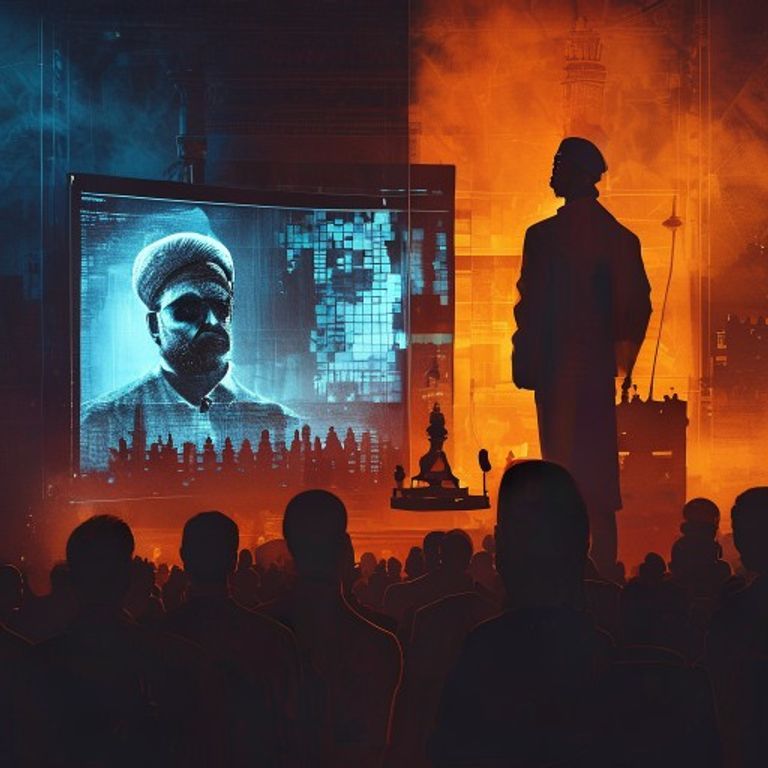
The Brewing Storm in Punjab Politics: Chief Minister Bhagwant Mann Breaks Silence
In the high-stakes arena of Punjab politics, where religious sentiments and administrative duties often overlap in complex ways, a new controversy has taken center stage. Punjab Chief Minister Bhagwant Mann has found himself at the heart of a whirlwind of allegations concerning “sacrilegious conduct.” However, far from stepping back, the Chief Minister has launched a scathing counter-offensive, labeling the entire episode as a “dirty politics” campaign orchestrated by his political rivals. At NewsMatrix, we have been closely monitoring the developments of this story, which threatens to reshape the political discourse in the state as it moves toward critical electoral milestones.
The controversy stems from a viral video that has been circulating across social media platforms, purportedly showing the Chief Minister in a state or situation that critics claim is disrespectful to religious traditions. Along with the video, allegations have surfaced regarding an alleged Rs 10 lakh deal aimed at securing a favorable forensic report to clear the Chief Minister’s name. For a state like Punjab, where the issue of “Beadbi” or sacrilege is perhaps the most sensitive emotional and political trigger, these accusations are not merely administrative hurdles—they are existential threats to a political career.
The Anatomy of the Allegation: What the Video Claims
The crux of the opposition’s attack lies in a video that began trending late last week. Opponents of the Aam Aadmi Party (AAP) government have claimed that the footage depicts Mann in a manner inconsistent with the dignity of his office and the religious sanctity held dear by the people of Punjab. The specific details of the video have been debated, with various factions providing differing interpretations of the Chief Minister’s behavior and the setting in which the video was filmed.
However, Bhagwant Mann has remained steadfast in his denial. In a recent press briefing and subsequent public addresses, he clarified that the individual in the video is not him. According to the Chief Minister, the person depicted is a professional actor or a lookalike, carefully chosen to mislead the public. Mann pointed out that in the age of deepfakes and advanced video editing, creating a “digital doppelganger” is a tactic frequently used by those who cannot defeat an opponent on the grounds of developmental work or governance.
The Rs 10 Lakh Forensic Deal Controversy
Compounding the video controversy is a secondary, perhaps more legalistic, allegation. Rival parties have claimed that there exists a back-channel deal involving a sum of Rs 10 lakh. This money was allegedly intended to influence the outcome of a forensic examination of the video. The goal, according to the opposition, was to ensure that any official investigation would return a “tampered” or “inconclusive” verdict, thereby giving Mann a clean chit.
NewsMatrix reached out to legal experts and political analysts to understand the gravity of these claims. While no concrete evidence of a financial transaction has been presented to the public, the mere suggestion of “buying” a forensic report has added fuel to the fire. Mann has dismissed these claims as “fantastical stories” cooked up in the “war rooms” of the Akali Dal and the Congress party. He challenged his detractors to produce a single shred of evidence regarding the alleged bribe, asserting that his government’s commitment to transparency remains unshaken.
“Dirty Politics” and the Weaponization of Religion
A central theme in Bhagwant Mann’s defense is the accusation that his rivals are “using religion as a tool for political gain.” This is a potent argument in Punjab, a state that still bears the scars of past sacrilege incidents that led to widespread unrest and political upheaval. Mann argues that because the opposition has failed to find flaws in his “Bijli-Paani” (Electricity-Water) and “Mohalla Clinic” initiatives, they have resorted to the “last refuge of the desperate”—religion.
In his passionate rebuttal, Mann stated:
- That the opposition is afraid of the AAP’s rising influence beyond Punjab.
- That religious sentiments are being manipulated to distract from the developmental agenda.
- That the use of “lookalikes” in videos is a new low in the state’s political history.
- That he is ready to face any legitimate inquiry but will not succumb to character assassination.
The Chief Minister’s supporters have echoed these sentiments, pointing out that the timing of the video’s release is suspiciously close to upcoming local body elections and by-polls. They suggest that the “dirty politics” campaign is a coordinated effort to erode the Chief Minister’s popularity among the rural Sikh heartland, which is particularly sensitive to issues of religious conduct.
The Historical Context of Sacrilege in Punjab
To understand why these allegations are so explosive, one must look at the recent history of Punjab. The 2015 Bargari sacrilege and the subsequent Behbal Kalan police firing cases are still deeply etched in the collective memory of the state. Those events led to a massive shift in the political landscape, contributing significantly to the downfall of the then-ruling Shiromani Akali Dal (SAD).
Because the AAP came to power on the promise of providing “justice” for these past incidents, any allegation of sacrilegious conduct against its own leadership is viewed with extreme seriousness. The opposition knows this well. By framing the viral video within the context of religious disrespect, they are attempting to turn the AAP’s own historical platform against them. This is why Bhagwant Mann’s denial is not just a defense of his personal character, but a defense of his party’s moral authority to rule Punjab.
The Role of Social Media and Misinformation
At NewsMatrix, we recognize that this controversy highlights a growing problem in modern Indian politics: the role of unverified digital content in shaping public opinion. The Chief Minister’s claim that the man in the video is an “actor” brings to light the difficulties of the “Post-Truth” era. When a video goes viral, the initial emotional impact often outweighs the later factual corrections.
The AAP’s IT cell has been working overtime to produce side-by-side comparisons of the man in the video and the Chief Minister, pointing out discrepancies in body language, facial features, and even the “Dastar” (turban) style. They argue that the video was “scripted and staged” to create a specific narrative of misconduct. This battle of the “narratives” is being fought not in the halls of the Vidhan Sabha, but on the screens of millions of smartphones across the Punjab countryside.
Opposition Parties Intensify the Pressure
Despite Mann’s denials, the opposition has not relented. Leaders from the Shiromani Akali Dal and the Punjab Congress have called for a high-level, independent probe into both the video and the alleged forensic deal. They argue that a person holding the highest office in the state must be “beyond reproach” and that a mere verbal denial is not sufficient to clear the air.
Critics argue that if the Chief Minister is so confident that the video features an actor, he should have no objection to a court-monitored investigation. The pressure is mounting on the state’s Home Department to clarify the status of any ongoing preliminary inquiries. For Mann, the challenge is to balance his role as a popular leader with the need to address these serious accusations through formal, legal channels.
Impact on Governance and Future Prospects
While the political storm rages, the question remains: how does this affect the governance of Punjab? Bhagwant Mann has insisted that he will not let these “distractions” hinder his work. He has recently announced several new schemes for farmers and infrastructure projects, perhaps as a way to shift the conversation back to the “Vikas” (development) agenda.
However, the psychological impact on the administration cannot be ignored. When a Chief Minister is constantly on the defensive regarding his personal conduct, it can lead to a perception of instability. NewsMatrix analysts suggest that the AAP will need to be very careful in how it handles the fallout in the coming weeks. If the public perceives the denial as weak or evasive, it could embolden the opposition further.
Conclusion: The Path Ahead for Bhagwant Mann
The controversy surrounding Bhagwant Mann is a stark reminder of the volatile nature of politics in Punjab. In a state where faith and politics are inextricably linked, an accusation of sacrilege is the most potent weapon an opponent can wield. Mann’s vigorous denial and his counter-accusations of “dirty politics” suggest that he is prepared for a long, drawn-out battle.
As the forensic experts potentially weigh in and the political rhetoric reaches a fever pitch, the people of Punjab are left to navigate a sea of information and misinformation. Whether this “video controversy” will be remembered as a calculated character assassination or a genuine lapse in conduct remains to be seen. What is certain, however, is that NewsMatrix will continue to provide in-depth coverage and unbiased analysis as this story unfolds.
Ultimately, Bhagwant Mann’s political survival depends on his ability to convince the electorate that his heart and his actions are in the right place. In the court of public opinion, the verdict is often based on more than just forensic evidence; it is based on trust. For now, the Chief Minister is betting that the people of Punjab will see through what he calls a “theatrical performance” by his rivals and stay focused on the progress of the state.