
 By NewsMatrix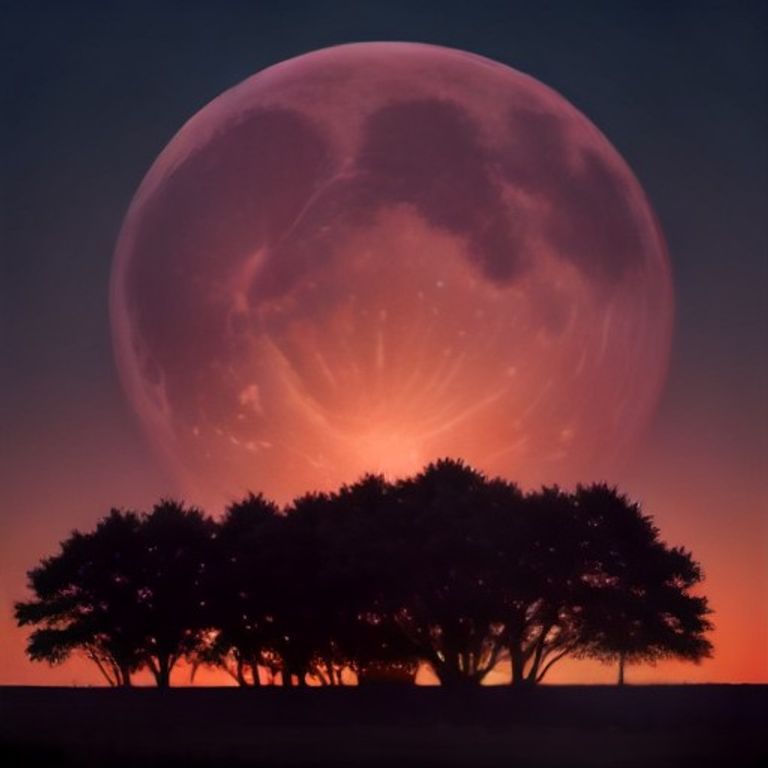
The Enduring Allure of the Harvest Moon: A Celestial Phenomenon
As September draws to a close each year, a unique celestial event graces our skies, captivating observers across the globe: the Harvest Moon. This particular full moon, traditionally associated with the bountiful season of autumn, holds a special significance not only for its breathtaking visual display but also for its profound historical and practical implications for agriculture. In 2026, this much-anticipated lunar spectacle is set to reach its peak brilliance on September 26th, promising an extended period of natural evening illumination that has aided farmers for millennia. Beyond its utility, the Harvest Moon presents a stunning visual phenomenon, often appearing larger and imbued with a warm, orange hue, a result of atmospheric effects and fascinating optical illusions that add to its mystique. Its subtle shift in moonrise timing, differing remarkably from other full moons, is the astronomical key to its extended presence in the twilight hours, a characteristic that has earned it revered status in numerous cultures worldwide, each bestowing upon it names that reflect their unique observations and traditions.
The Astronomical Mechanics Behind Extended Light
The defining characteristic of the Harvest Moon, and indeed any full moon close to the autumn equinox, is its relatively short interval between successive moonrises. While the moon typically rises about 50 minutes later each day, the Harvest Moon defies this norm. For several nights around its peak, the moonrise occurs only about 20 to 30 minutes later, or even less, particularly at higher latitudes. This phenomenon is a direct consequence of the moon’s orbital path around the Earth relative to the Earth’s tilted axis and the ecliptic – the apparent path of the Sun across the sky. Around the autumn equinox, the ecliptic makes a shallow angle with the eastern horizon for observers in the Northern Hemisphere. When the full moon is near this point on the ecliptic, its daily eastward motion translates into a smaller southward shift relative to the horizon, thus causing its rising time to change less dramatically from one night to the next. This continuous, albeit slightly delayed, appearance of the moon just after sunset provides a remarkable period of extended twilight, a natural advantage that has been harnessed by agricultural societies for centuries.
For those in the Southern Hemisphere, the equivalent phenomenon occurs around their autumn equinox in March, though it might not always be referred to as the “Harvest Moon” in their cultural lexicon. Regardless of hemisphere, the underlying astronomical principles remain constant, illustrating the elegant predictability of celestial mechanics. This consistent behavior of the moon’s orbit, dictated by gravitational forces and orbital inclinations, underscores the intricate dance between Earth and its natural satellite, a dance that directly influences our perception of time, seasons, and natural light cycles.
A Lifeline for Ancient Agriculture
Historically, the Harvest Moon was not merely a beautiful sight but an indispensable tool for survival. In an era predating artificial lighting, the extended twilight provided by this bright full moon offered a critical window for farmers to complete their arduous tasks. As summer yields transitioned into autumn harvests, crops like corn, pumpkins, squash, and various grains reached their peak ripeness. The race against impending frosts and shorter daylight hours meant that every extra moment of visibility was precious. Farmers would work late into the night, guided by the luminous glow of the Harvest Moon, gathering their crops and preparing them for storage. This extended period of natural light allowed for the collection of greater yields, directly impacting the sustenance of communities through the harsh winter months. It was a period of intense labor, but also of gratitude and communal effort, with the moon serving as a silent, benevolent overseer. The very name “Harvest Moon” is a testament to this profound agricultural connection, echoing through history as a symbol of abundance, hard work, and the rhythm of the seasons.
Beyond the practical implications, the Harvest Moon often marked a significant cultural moment. Festivals and celebrations were common, expressing thanks for the bounty of the land and acknowledging the arduous work involved in securing it. These traditions, while varying widely across different civilizations and geographical locations, shared a common thread: a deep respect for nature’s cycles and the moon’s role in supporting human endeavors. From ancient agrarian societies to indigenous communities, the moon’s consistent presence and its seasonal variations were woven into the very fabric of daily life, influencing planting schedules, hunting patterns, and spiritual beliefs.
The Illusory Grandeur: Why the Harvest Moon Appears Orange and Large
One of the most striking features of the Harvest Moon is its often-reported appearance: larger than usual and bathed in hues of orange, red, or amber. These visual characteristics are primarily due to two distinct phenomena. The orange coloration is an atmospheric effect, identical to why sunrises and sunsets often appear reddish. When the moon is low on the horizon, its light must travel through a greater amount of Earth’s atmosphere to reach our eyes. The atmosphere acts as a filter, scattering shorter-wavelength blue light more effectively than longer-wavelength red and orange light. Consequently, much of the blue light is dispersed, allowing the red and orange light to pass through more directly, giving the moon its distinctive warm glow. This effect is intensified when there are more dust particles or pollutants in the atmosphere, making for even more vivid coloration.
The illusion of the moon appearing larger when it is near the horizon, known as the “moon illusion,” is a fascinating optical phenomenon that has puzzled scientists and philosophers for centuries. While the moon’s actual angular size in the sky does not significantly change whether it is high overhead or near the horizon, our brains perceive it differently. Several theories attempt to explain this illusion. One prominent theory suggests that when the moon is close to familiar terrestrial objects (buildings, trees, mountains), our brain inadvertently compares its size to these objects, leading to an exaggerated perception of its scale. When the moon is high in a vast, empty sky, there are no reference points, and thus it appears smaller. Another theory involves the apparent distance of the sky, suggesting that our brains perceive the sky above as a flattened dome rather than a hemisphere, making objects on the horizon seem further away and therefore larger to maintain a consistent perceived size. Regardless of the exact neurological mechanism, the moon illusion, combined with the atmospheric scattering, transforms the Harvest Moon into a truly dramatic and memorable sight, anchoring it firmly in our collective imagination.
A Kaleidoscope of Cultural Lunar Names
While “Harvest Moon” is a widely recognized term, particularly in Western cultures, this significant full moon boasts a rich tapestry of alternative names from various indigenous and historical traditions around the world, each reflecting unique observations, agricultural practices, and seasonal changes. These names provide a fascinating glimpse into the diverse human relationship with the cosmos.
- Corn Moon: Many Native American tribes, for instance, referred to it as the Corn Moon, recognizing the time when corn and other staple crops were harvested.
- Barley Moon: In some European traditions, particularly those focused on grain production, it was known as the Barley Moon.
- Fruit Moon: Other names like the Fruit Moon or Drying Grass Moon highlight different aspects of the autumnal transition, from the ripening of fruits to the preparation for winter.
- Wine Moon: Reflecting viticulture, some cultures knew it as the Wine Moon, marking the grape harvest.
- Singing Moon: Some Native American tribes also used names like the Singing Moon or the Elk Moon, connecting the lunar phase to animal behaviors or cultural events.
- Nut Moon: For forest-dwelling communities, the Nut Moon signaled the time for gathering nuts and other forest provisions.
These diverse appellations underscore a universal human tendency to interpret celestial events through the lens of daily life and seasonal rhythms. They are more than just labels; they are cultural markers, mnemonic devices, and expressions of a deep connection to the natural world, passed down through generations. Each name carries with it a story, a tradition, and a specific understanding of the time of year, making the Harvest Moon a truly global phenomenon in its cultural resonance.
The 2026 Spectacle: A Date for Your Calendar
For eager sky-watchers and astrophotographers, marking the calendar for celestial events is a cherished ritual. In 2026, the Harvest Moon will reach its full phase on Saturday, September 26th. While the exact moment of fullness is astronomical, the moon will appear full to the naked eye for approximately three days centered around this date. This means that from the evening of September 25th through the morning of September 27th, observers will be treated to the spectacle of a brightly lit, full moon. The best time to experience the distinctive Harvest Moon effect – its low-hanging, orange appearance and relatively early rise – will be just after sunset on the evenings closest to the peak. Finding a viewing spot with an unobstructed eastern horizon will enhance the experience, allowing one to witness the moon ascending majestically, often against a backdrop of twilight colors.
No special equipment is needed to enjoy the Harvest Moon, though binoculars or a small telescope can reveal fascinating details of the lunar surface, from craters to maria (dark plains). For photographers, this period offers an excellent opportunity to capture stunning wide-field shots of the moon rising above landscapes, particularly when the atmospheric effects enhance its color and apparent size. Checking local moonrise and moonset times for September 2026 will be crucial for planning the optimal viewing and photography sessions, ensuring that no one misses this annual astronomical highlight.
Conclusion: A Timeless Connection to the Cosmos
The Harvest Moon, an annual beacon in the September sky, continues to embody a powerful blend of scientific marvel, historical utility, and cultural richness. From its unique astronomical properties that grant extended evening light to its mesmerizing orange glow and illusory grandeur, every aspect of this full moon speaks to humanity’s enduring fascination with the night sky. In 2026, as it peaks on September 26th, it will once again serve as a reminder of our deep-rooted connection to the rhythms of nature and the celestial ballet above. Whether viewed as an aid to harvest, a subject of awe-inspiring beauty, or a symbol of seasonal transition, the Harvest Moon remains a testament to the profound influence the cosmos has, and continues to have, on our lives and imaginations. It is an invitation to pause, look up, and appreciate the timeless elegance of our universe.