
 By NewsMatrix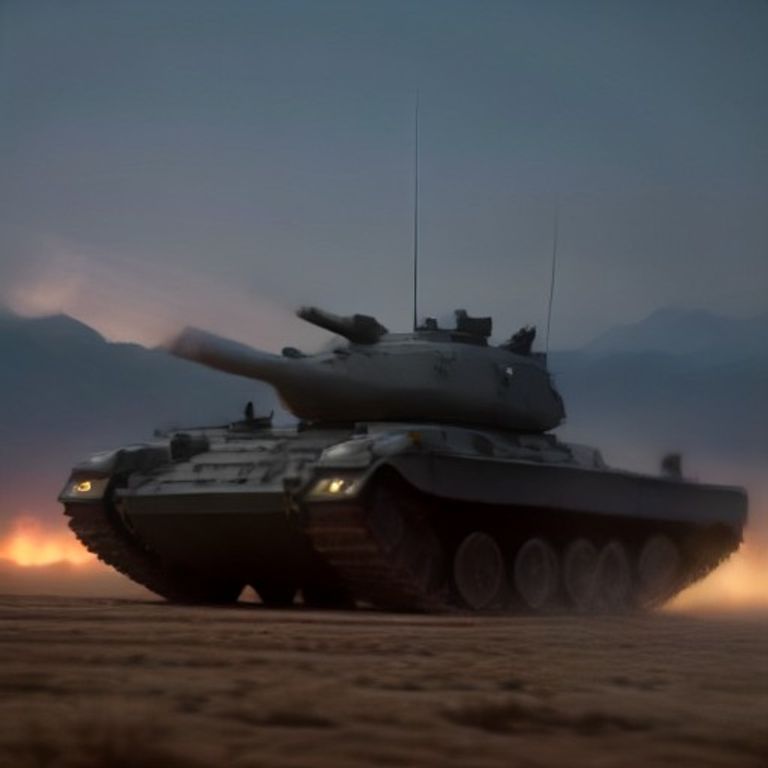
China’s Type 100 Main Battle Tank: A New Era of Armored Warfare Emerges
New footage circulating within defense circles and publicly online has unveiled what appears to be China’s next-generation armored behemoth: the Type 100 main battle tank. This advanced military vehicle is not merely an incremental upgrade but represents a significant leap forward in design philosophy and technological integration, signaling a profound shift in China’s approach to armored warfare. With its distinctive unmanned turret, sophisticated active protection systems, and innovative hybrid-electric propulsion, the Type 100 main battle tank is poised to redefine battlefield capabilities and strategic doctrines for the People’s Liberation Army (PLA).
The emergence of the Type 100 comes at a time of accelerated global military modernization, where nations are increasingly investing in high-tech platforms to gain a decisive edge. China, long a proponent of rapid military technological advancement, appears to be consolidating various cutting-edge concepts into a single, formidable platform designed not just for conventional engagements but also for complex, networked battlefield operations and deep assault missions. Its design ethos reflects a comprehensive understanding of contemporary threats and a forward-looking vision for future conflicts, focusing on survivability, lethality, and stealth.
The Dawn of a New Generation: Unmanned Turrets and Crew Protection
Perhaps the most visually striking feature of the Type 100 is its unmanned turret. This revolutionary design choice moves the entire crew – typically commander, gunner, and loader – into the highly protected hull of the tank. The implications of this are manifold and strategically significant. Firstly, it dramatically enhances crew survivability by isolating them from direct hits to the turret, which is historically a vulnerable area for manned tanks. By relocating the crew, the tank can withstand greater damage while keeping its most vital assets – its human operators – safe and operational.
Furthermore, an unmanned turret allows for a significantly smaller and potentially lower-profile design. A reduced silhouette makes the tank harder to detect and target, providing a critical tactical advantage on the battlefield. It also opens up possibilities for more advanced autoloader systems and ammunition storage, potentially increasing the rate of fire and magazine capacity without compromising crew safety. The adoption of an unmanned turret signifies a mature understanding of robotic and autonomous systems integration, moving China closer to a future where human operators function more as system supervisors rather than direct manipulators in high-risk environments.
This design also enables the integration of more extensive sensor arrays and targeting systems without the ergonomic constraints of a manned compartment. This could translate into superior situational awareness for the crew, allowing them to detect threats and engage targets with unprecedented speed and accuracy, even in complex and contested battle spaces.
Active Protection Systems: The Shield of the Type 100
Complementing its enhanced structural protection, the Type 100 main battle tank incorporates advanced active protection systems (APS). These systems are crucial for modern armored vehicles, providing an essential defense layer against the proliferation of sophisticated anti-tank guided missiles (ATGMs), rocket-propelled grenades (RPGs), and even loitering munitions and attack drones. APS typically operates in two modes: “soft-kill” and “hard-kill.”
- Soft-kill systems aim to disrupt or deceive incoming threats. This might involve jamming their guidance systems, deploying smoke screens to obscure the tank, or using directed energy to blind electro-optical sensors on missiles. The goal is to prevent the incoming projectile from acquiring or maintaining a lock on the tank.
- Hard-kill systems actively intercept and destroy incoming threats before they impact the vehicle. This involves a network of sensors that detect an incoming projectile, calculate its trajectory, and then launch a counter-munition to intercept it at a safe distance. The effectiveness of such systems can dramatically increase the survivability of tanks against even the most advanced anti-tank weaponry, which has become a significant concern in recent conflicts.
The integration of advanced APS on the Type 100 underscores China’s commitment to ensuring its armored forces can operate effectively in environments saturated with asymmetric threats. It reflects a strategic recognition that traditional passive armor alone is no longer sufficient to guarantee dominance against modern anti-tank weaponry, making the Type 100 one of the most survivable tanks on the global stage.
Silent Power: Hybrid-Electric Propulsion and Stealth
One of the most innovative and strategically impactful features of the Type 100 is its hybrid-electric propulsion system. This technology is a game-changer for main battle tanks, offering a multitude of advantages that enhance both operational flexibility and battlefield stealth. Hybrid-electric drives combine a traditional combustion engine with electric motors and batteries, allowing the tank to operate in various modes.
The primary benefit is a significantly reduced signature across multiple spectrums. In “silent watch” mode, the tank can run solely on its electric motors, drastically lowering its acoustic signature – making it far harder for enemy forces to detect audibly. This is invaluable for reconnaissance, ambush positions, or covert movements. Furthermore, electric propulsion generates less heat than a conventional engine, reducing the tank’s thermal signature, a critical factor in evading infrared detection systems.
Beyond stealth, hybrid-electric systems offer improved fuel efficiency, potentially extending the tank’s operational range and reducing its logistical footprint. The substantial electrical power generated by such a system can also be harnessed to run an array of advanced onboard electronics, including sophisticated sensors, communication systems, and directed energy weapons (should they be integrated in the future), without taxing the main engine. This “power-on-demand” capability ensures that all advanced systems operate at peak efficiency, providing the crew with a constant stream of critical information and operational capabilities.
Networked Dominance: The Type 100 in the Digital Battlefield
The Type 100 is explicitly designed for networked battlefield operations. In modern warfare, individual platforms are no longer isolated entities but integral nodes within a vast, interconnected network. The Type 100 will likely seamlessly integrate with China’s advanced Command, Control, Communications, Computers, Intelligence, Surveillance, and Reconnaissance (C4ISR) systems.
This networked capability means the tank can share and receive real-time intelligence, targeting data, and situational awareness information with other tanks, infantry fighting vehicles, artillery units, drones, and even air assets. Such integration allows for highly coordinated maneuvers, rapid target engagement, and a comprehensive understanding of the battlespace. Data fusion from multiple sources can present the crew with a clearer, more accurate picture of enemy positions, friendly forces, and terrain, enabling faster decision-making and more effective tactical execution. This level of digital integration ensures that the Type 100 is not just a powerful individual weapon but a force multiplier within a larger, cohesive fighting system.
Deep Assaults and Strategic Reach: Reshaping Offensive Doctrine
The description of the Type 100 as being designed for “deep assaults” highlights its intended role in offensive operations. This suggests a tank capable of penetrating deep into enemy territory, bypassing initial defensive lines, and striking high-value targets. Its combination of speed, mobility, and formidable firepower, coupled with enhanced survivability features, makes it ideal for breakthrough missions and sustained offensive campaigns.
Deep assault capabilities are critical for achieving strategic objectives, such as disrupting enemy command structures, interdicting supply lines, or seizing key terrain far behind the front lines. The Type 100’s hybrid-electric propulsion likely contributes to its operational range, reducing the need for frequent refueling and allowing for more rapid and sustained advances. This platform provides the PLA with a potent tool for projecting power and executing complex maneuver warfare, significantly enhancing its ability to conduct large-scale ground operations across varied terrains.
A Paradigm Shift in Armored Warfare
The unveiling of the Type 100 main battle tank is more than just the introduction of a new piece of hardware; it signifies a profound paradigm shift in China’s armored warfare approach. Previous Chinese tank designs, while robust, often drew comparisons to existing Russian or Western platforms. The Type 100, however, appears to embody a truly indigenous and forward-thinking design philosophy, incorporating technologies that place it at the forefront of global tank development.
Its features — unmanned turret, advanced APS, hybrid propulsion, and deep networking capabilities — collectively point towards a future where tanks are not just heavily armored vehicles but intelligent, stealthy, and highly interconnected nodes in a broader military ecosystem. This emphasis on systemic integration and advanced survivability suggests that China is preparing for a future of high-intensity, technologically sophisticated conflicts, moving away from sheer numerical superiority towards qualitative advantages.
Globally, the Type 100 will undoubtedly be scrutinized by military analysts and defense planners. Its capabilities will influence future tank development in other nations, potentially accelerating the adoption of similar technologies. It underscores China’s growing prowess as a military technology innovator and its ambition to field a world-class military capable of defending its interests and projecting power on a global scale.
Challenges and Future Outlook
While the Type 100 represents a significant technological leap, challenges remain. The complexity of integrating so many cutting-edge systems means that development, production, and maintenance will be demanding. Fielding a tank of this sophistication in large numbers requires robust industrial capabilities and extensive logistical support. Training crews to operate such an advanced machine, particularly one with an unmanned turret and complex networked systems, will also require significant investment in specialized education and simulation.
Nevertheless, the Type 100 main battle tank clearly signals China’s trajectory in military modernization. It is a testament to the nation’s rapid advancements in engineering, robotics, AI, and materials science. As more details emerge and the tank potentially enters wider service, its performance and capabilities will be closely watched, offering insights into the future direction of armored warfare and the evolving balance of military power.
Conclusion
The debut of China’s Type 100 main battle tank marks a pivotal moment in contemporary military technology. With its innovative unmanned turret, robust active protection systems, stealth-enhancing hybrid-electric propulsion, and deep integration into networked operations, the Type 100 is far more than just a new tank; it is a declaration of intent. It embodies China’s strategic vision for future conflicts, prioritizing advanced capabilities, crew protection, and systemic battlefield dominance. As this formidable platform becomes a more visible component of the PLA’s arsenal, it will undoubtedly influence the global conversation around armored warfare, prompting other nations to reassess and accelerate their own defense modernization efforts. The era of the intelligent, stealthy, and highly integrated main battle tank has truly arrived, spearheaded by platforms like the Type 100.