
 By NewsMatrix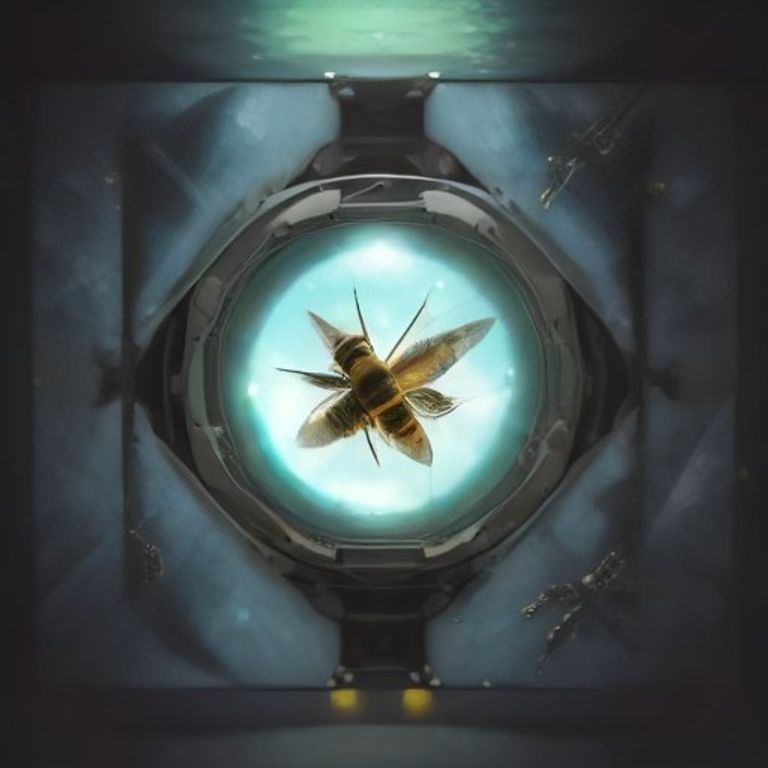
Honeybees in Space: A Pioneering Experiment on NASA’s Space Shuttle Discovery
In a remarkable testament to the adaptability of life and the relentless pursuit of scientific understanding, thousands of honeybees embarked on an extraordinary journey into space aboard NASA’s Space Shuttle Discovery in 1984. This pioneering mission, often overlooked amidst the grander narratives of human spaceflight, represented a critical step in understanding how complex biological systems, particularly social insects with intricate behaviors, would fare in the alien environment of microgravity. The experiment, designed to observe their survival and their famous ability to construct hexagonal honeycomb cells, yielded fascinating insights that continue to resonate within the fields of space biology and entomology, underscoring the resilience of Earth’s creatures far beyond their terrestrial confines.
The Genesis of a Groundbreaking Experiment
The idea of sending honeybees into space was not merely a whimsical thought but a carefully conceived scientific inquiry. Researchers at NASA and collaborating institutions sought to answer fundamental questions about the impact of altered gravitational fields on insect behavior, physiology, and social organization. Honeybees (Apis mellifera) were ideal candidates due to their highly structured society, their well-documented ability to navigate and communicate, and crucially, their instinct to build precise hexagonal honeycombs – a process heavily reliant on gravity on Earth. The 1984 mission of Space Shuttle Discovery, specifically STS-41G, provided the perfect platform for this unique biological payload. The shuttle, known for its extensive scientific capabilities, allowed for a controlled environment where the bees could be observed and their activities meticulously recorded by onboard cameras and sensors. This mission aimed to bridge a significant knowledge gap: how would an organism so intrinsically linked to Earth’s gravitational pull perform its most fundamental tasks when that pull was virtually absent?
Initial Challenges and Rapid Adaptation
Upon reaching orbit and experiencing the profound shift from Earth’s gravity to the weightlessness of space, the honeybees initially struggled. Observers noted that many bees, accustomed to a constant downward pull, would often crash into the walls of their enclosure. Their flight patterns, honed over millennia to compensate for gravity, were suddenly maladaptive. This initial disorientation was not unexpected; similar behavioral anomalies had been observed in other organisms, including humans, during their first days in microgravity. Astronauts often experience space sickness and a period of adaptation as their vestibular systems adjust to the absence of up and down. For the bees, the challenge was arguably more fundamental, impacting their very mode of locomotion and orientation within their habitat.
However, the most remarkable finding was not their initial struggle, but their astonishing capacity for adaptation. Within a matter of days, the honeybees began to modify their flight techniques and navigational strategies. Their movements became more controlled, their collisions with the enclosure walls diminished significantly, and they started to demonstrate a newfound proficiency in maneuvering through their zero-gravity environment. This rapid behavioral plasticity highlighted an inherent resilience within the species, suggesting that even complex, instinct-driven behaviors could be recalibrated to respond to drastic environmental changes. This period of adaptation was closely monitored, providing invaluable data on the neurological and physiological adjustments occurring within the bee colony.
Honeycomb Construction in the Void
Perhaps the most anticipated aspect of the experiment was observing whether the bees could construct their iconic honeycomb without gravity. On Earth, honeybee construction is a marvel of engineering, relying on the bees’ ability to hang in chains and excrete wax, forming perfect hexagonal cells. Gravity plays a role in how they gauge their orientation and the stability of their structures. Scientists questioned whether the precise geometry of the comb could be maintained, or if the bees would even attempt to build at all. The results were unequivocally positive and, for many, surprising. Despite the absence of gravity, the honeybees not only attempted to build but succeeded in constructing a significant amount of honeycomb. By the mission’s end, the bees had collectively built approximately 200 square centimeters of honeycomb. While the initial sections might have shown minor deviations from the perfect hexagonal pattern, the bees quickly refined their building techniques, producing structures remarkably similar to those found on Earth. This achievement demonstrated that the fundamental biological programming for comb construction was robust enough to manifest even under extreme environmental conditions, albeit with some initial adjustments. It suggested that their internal mechanisms for sensing and responding to environmental cues were highly versatile.
Survival and Reproduction: A Mixed Outcome
The survival rate of the honeybees throughout the mission was also a key metric. Remarkably, the vast majority of the bees survived the journey into space, the duration in microgravity, and the return to Earth. This high survival rate was a positive indicator for the robustness of the species and the viability of transporting insects for prolonged periods in space. It also validated the environmental controls and life support systems within their specialized habitat aboard the Space Shuttle. However, while survival was largely successful, the reproductive aspect presented a different outcome. The queen bee, a critical component of any healthy colony, successfully laid eggs during the mission. This demonstrated that the physiological processes required for oviposition were not inhibited by microgravity. Yet, upon the colony’s return to Earth, none of the eggs laid in space hatched. The reasons for this lack of hatching were not immediately clear but pointed to potential disruptions in embryonic development or post-laying care in the microgravity environment that might be critical for successful larval emergence. This finding opened new avenues for research into the effects of spaceflight on insect embryogenesis and the subtle environmental factors that influence reproductive success.
Implications for Space Biology and Future Missions
The honeybee experiment on Space Shuttle Discovery provided a wealth of data that extended far beyond a simple curiosity about bees in space. It contributed significantly to the burgeoning field of space biology, offering crucial insights into how complex organisms adapt to and are affected by microgravity. The ability of the bees to adapt their flight and construction behaviors within days highlighted the impressive plasticity of biological systems. This understanding is vital for long-duration human space missions, where astronauts also undergo significant physiological and psychological adjustments. Furthermore, the experiment underscored the importance of studying social insects, whose cooperative behaviors and intricate societies offer unique models for understanding collective intelligence and environmental responses.
The lessons learned from these spacefaring bees continue to inform contemporary research. Scientists are now exploring more deeply the genetic and molecular mechanisms behind such rapid adaptation. The findings also have potential implications for understanding fundamental biological processes on Earth, such as how organisms navigate and build in challenging environments, or how their internal clocks and physiological rhythms respond to external cues in the absence of a strong gravitational reference. As humanity contemplates longer journeys to Mars and beyond, understanding the resilience and limitations of various life forms in extraterrestrial environments becomes increasingly critical. Such knowledge is not only for the potential of future human habitats but also for the possibility of terraforming or introducing specific organisms to other celestial bodies, albeit a distant prospect.
Moreover, the experiment fueled discussions about the practical applications of insect behavior in space. Could insect colonies, with their ability to recycle waste and produce resources, play a role in closed-loop life support systems on future space stations or planetary outposts? While the unhatched eggs posed a challenge, the overall success in survival and construction suggests that with further research and potentially modified environmental conditions, even reproductive success might be achievable. The unique challenges of understanding reproductive biology in microgravity remain a frontier of space research, extending from insects to mammals and even human fertility in space.
A Small Step for Bees, a Giant Leap for Science
The journey of thousands of honeybees into space in 1984 aboard NASA’s Space Shuttle Discovery remains a landmark achievement in biological space research. It eloquently demonstrated the extraordinary adaptability of life, proving that even creatures as seemingly terrestrial as honeybees could not only survive but also perform complex, gravity-dependent behaviors in the microgravity environment. From initially bumping into walls to gracefully navigating and meticulously building their characteristic honeycomb, these tiny pioneers provided profound insights into the resilience of nature. While the mystery of the unhatched eggs lingers, the mission undeniably broadened our understanding of life beyond Earth’s protective embrace, paving the way for future explorations into the intricate dance between biology and physics in the cosmos. The honeybees in space experiment continues to inspire new questions and drive ongoing research into how life thrives, adapts, and evolves in the boundless expanse of the universe, reaffirming the enduring spirit of scientific inquiry.