
 By NewsMatrix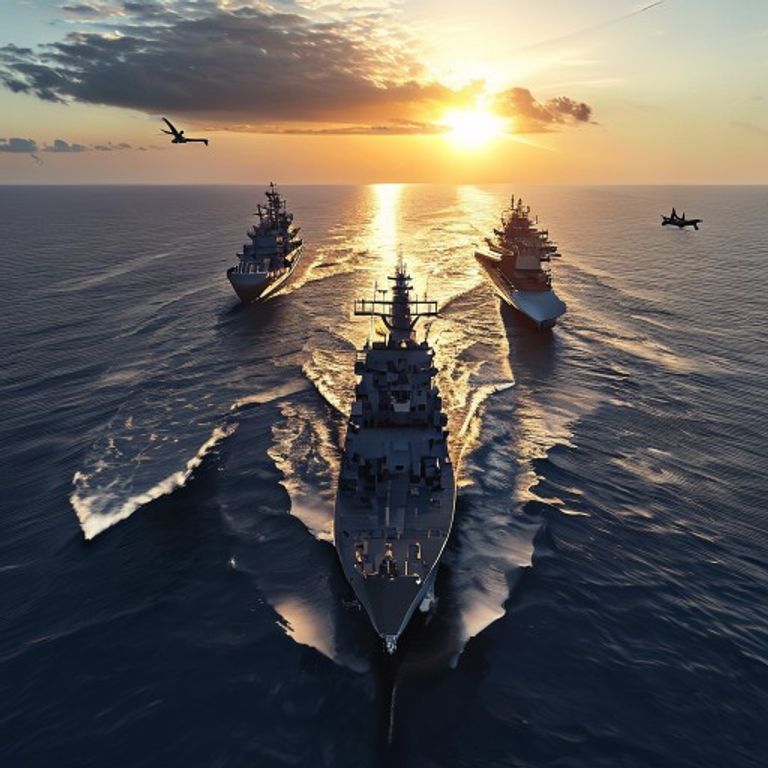
The Evolution of India’s Maritime Strategy
The Indian Ocean Region (IOR) has historically been a theater of immense geopolitical significance. Today, as global trade routes increasingly rely on the stability of these waters, the Indian Navy is undergoing a radical transformation. No longer content with merely being a “brown-water” force focused on coastal defense, India is rapidly maturing into a “blue-water” power capable of projecting influence across the vast maritime expanse. At NewsMatrix, we have observed that this shift is not just about adding more ships, but about integrating specialized platforms into a cohesive, network-centric fighting force.
The recent commissioning and operational integration of vessels like the INS Dunagiri, INS Sanshodhak, and INS Agray represent a masterstroke in naval planning. This strategy focuses on “layered awareness,” where different classes of ships work in tandem to create a comprehensive picture of the maritime environment. From stealth combatants to deep-sea surveyors and specialized sub-hunters, the Indian Navy is building a modular shield to protect its interests and ensure regional security.
The Strategic Imperative of the Indian Ocean
The Indian Ocean is the world’s third-largest body of water, carrying nearly half of the world’s container ships and two-thirds of its oil shipments. For India, the ocean is a lifeline. With a coastline exceeding 7,500 kilometers and a vast Exclusive Economic Zone (EEZ), the security of the maritime domain is synonymous with national security. NewsMatrix analysts point out that the rising presence of extra-regional powers and the increasing sophistication of underwater threats have necessitated a more nuanced approach to naval warfare. The integration of Dunagiri, Sanshodhak, and Agray is a direct response to these evolving challenges.
INS Dunagiri: The Stealth Vanguard
At the heart of India’s modern combat fleet lies the Project 17A frigates, of which INS Dunagiri is a shining example. Named after a mountain range in Uttarakhand, this stealth frigate is designed to be the “sword arm” of the fleet. Built by Garden Reach Shipbuilders and Engineers (GRSE), the Dunagiri represents a significant leap in indigenous shipbuilding capabilities under the Aatmanirbhar Bharat initiative.
What sets INS Dunagiri apart is its advanced stealth features. The ship’s hull and superstructure are designed to minimize its radar cross-section, making it difficult for enemy sensors to detect and track. This “invisible” quality allows the frigate to penetrate deep into contested waters, providing a lethal platform for both offensive and defensive operations. Equipped with a formidable array of sensors and weapons, including the BrahMos supersonic cruise missiles and the Barak-8 surface-to-air missiles, the Dunagiri is a versatile predator on the high seas.
Technological Advancements in Project 17A
The Dunagiri is not just a standalone fighter; it is a node in a larger digital network. It features advanced Integrated Platform Management Systems (IPMS) that automate many of the ship’s functions, allowing a smaller crew to operate a more complex machine. According to NewsMatrix reports, the ship’s sonar and electronic warfare suites are among the most advanced in the world, providing it with the ability to detect threats from the air, the surface, and beneath the waves long before they become a direct danger.
- Advanced Radar Cross-Section reduction for enhanced stealth.
- Indigenous propulsion and power distribution systems.
- Capability to carry and operate two multi-role helicopters.
- Network-centric architecture for real-time data sharing with other fleet units.
INS Sanshodhak: Mastering the Deep through Surveying
While stealth frigates capture the headlines, the backbone of a successful maritime strategy often lies in what we cannot see. This is where INS Sanshodhak comes into play. As the fourth ship of the Survey Vessels (Large) project, Sanshodhak—which means “Researcher”—is tasked with the vital mission of mapping the ocean floor. At NewsMatrix, we believe that hydrographic excellence is the “silent enabler” of naval power.
A navy cannot fight effectively in waters it does not understand. INS Sanshodhak provides the high-resolution charts and underwater topographical data necessary for safe navigation and, more importantly, for submarine operations. By mapping the thermal layers, salinity, and seafloor characteristics of the Indian Ocean, the Sanshodhak allows the Indian Navy to optimize its sonar performance and hide its own submarines in the complex underwater terrain.
Hydrographic Excellence as a Strategic Asset
The capabilities of INS Sanshodhak extend beyond traditional mapping. In times of peace, it aids in disaster management, search and rescue, and the protection of marine environments. In times of conflict, the data it provides is tactical gold. Understanding the “acoustic landscape” of the ocean allows combatants like the Dunagiri to better utilize their sensors, while also assisting anti-submarine vessels in locating hidden threats.
The vessel is equipped with sophisticated equipment such as Autonomous Underwater Vehicles (AUVs), Remotely Operated Vehicles (ROVs), and multi-beam echo sounders. This technology ensures that India remains a leader in maritime hydrography, offering its services to friendly neighboring nations and further solidifying its role as the “Net Security Provider” in the region.
INS Agray: The Silent Sentinel of the Littorals
The third pillar of this integrated approach is the INS Agray, an Anti-Submarine Warfare Shallow Water Craft (ASW SWC). As submarines become quieter and more accessible to various regional actors, the threat in the littoral (coastal) zones has increased. The Agray is specifically designed to hunt and neutralize these “silent killers” in the relatively shallow waters near India’s coast and island territories.
The Agray class replaces the aging Abhay-class corvettes and brings a significant upgrade in terms of speed, endurance, and detection capabilities. NewsMatrix defense experts highlight that the Agray is equipped with indigenous hull-mounted sonar and a towed array sonar, providing 360-degree coverage of the underwater environment. Its weaponry includes lightweight torpedoes and anti-submarine rockets, making it a formidable adversary for any intruding submarine.
Countering the Submarine Threat
Submarines are the ultimate asymmetric threat. A single conventional submarine can tie up an entire carrier strike group if not properly countered. The INS Agray is India’s answer to this challenge in the coastal domain. By deploying these agile craft in large numbers, the Indian Navy creates a “layered” defense that starts far out at sea and continues right up to the harbor gates. The Agray works in close coordination with maritime patrol aircraft like the P-8I Neptune, forming a deadly trap for any underwater intruder.
- Optimized for sub-hunting in shallow and coastal waters.
- Equipped with high-frequency sonar for precise target acquisition.
- Advanced communication systems for data-linking with airborne assets.
- High speed and maneuverability for rapid response to contacts.
A Network-Centric Approach: The Sum of Its Parts
The true genius of the Indian Navy’s current trajectory lies in the integration of these diverse platforms. On its own, a survey ship like the Sanshodhak is vulnerable; a frigate like the Dunagiri can be blind to underwater threats; and an ASW craft like the Agray lacks the long-range punch of a larger vessel. However, when networked together, they become a formidable ecosystem. This is the “Integrated Approach” that NewsMatrix has been tracking closely.
In a modern naval engagement, the Sanshodhak provides the “map” of the battlefield. The Dunagiri provides the “shield” and the “sword” for air and surface defense. The Agray provides the “eyes and ears” below the surface. This data is shared instantly across a secure naval cloud, allowing commanders to make decisions based on a unified, real-time picture of the theater. This synergy reduces the “sensor-to-shooter” lag, ensuring that threats are neutralized before they can inflict damage.
Layered Awareness and Real-Time Integration
Layered awareness means that there is no single point of failure. If an enemy submarine manages to evade the long-range sensors of a frigate, it must still bypass the specialized shallow-water sensors of the Agray. If an enemy surface ship tries to use the underwater terrain to hide, the data from the Sanshodhak will have already predicted those hiding spots. This integrated net makes the Indian Ocean a very dangerous place for those who wish to challenge India’s sovereignty.
The NewsMatrix Analysis: Regional Implications and Self-Reliance
From the NewsMatrix perspective, the commissioning of these vessels is as much a political statement as it is a military one. It signals India’s commitment to the “SAGAR” initiative (Security and Growth for All in the Region). By building these ships indigenously, India is also reducing its dependence on foreign suppliers, ensuring that its strategic autonomy remains intact. The high percentage of indigenous content in the Dunagiri, Sanshodhak, and Agray projects—ranging from 75% to 90%—is a testament to the growing prowess of the Indian defense industry.
Furthermore, this buildup serves as a stabilizing force in the Indo-Pacific. As the global center of gravity shifts toward the East, the Indian Navy acts as a balance against any single power seeking to dominate the maritime commons. The ability to conduct joint operations, share intelligence, and maintain a persistent presence in the IOR is crucial for maintaining the “rules-based order” that allows international trade to flourish.
Conclusion: A Future-Ready Force
The integration of INS Dunagiri, INS Sanshodhak, and INS Agray is a milestone in the Indian Navy’s journey toward becoming a world-class force. It represents a shift from a “collection of ships” to an “integrated system of systems.” As we have explored at NewsMatrix, the modern maritime battlefield is won by those who can best manage information and coordinate diverse assets.
With stealth frigates leading the charge, survey ships mapping the unknown, and ASW craft guarding the depths, India is well on its way to securing its maritime future. These vessels are more than just steel and machinery; they are the embodiment of a nation’s resolve to protect its waters and maintain peace in one of the world’s most critical regions. As technology continues to evolve, the Indian Navy’s commitment to integration and innovation will remain its greatest strength, ensuring that the Indian Ocean remains a zone of prosperity and security for all.