
 By NewsMatrix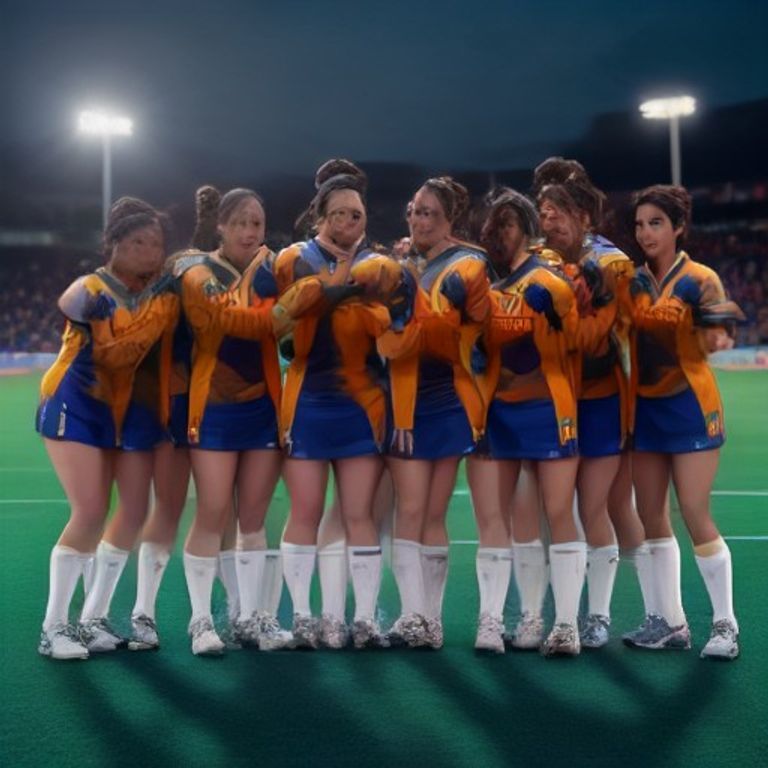
Indian Hockey Teams Ignite Debate with New Saffron Jersey Ahead of World Cup
NewsMatrix Exclusive: The world of field hockey is abuzz not just with anticipation for the upcoming World Cup, but also with a striking visual change from the Indian contingent. Both the Indian men’s and women’s hockey teams are set to don a bold saffron jersey as their primary kit at the highly anticipated World Cup, scheduled to commence on August 15 in the Netherlands and Belgium. This unprecedented move, while signaling a fresh visual identity, has not been without its share of contention, igniting a significant debate across the nation and within the sporting fraternity. The introduction of the Indian Hockey Saffron Jersey has drawn sharp criticism from several decorated former India captains, even as current players and officials navigate the change.
The decision to shift from the traditional blue, a colour synonymous with Indian sports teams for decades, to saffron has particularly raised eyebrows. While the team’s veteran goalkeeper, P.R. Sreejesh, a stalwart of Indian hockey, has stated his personal indifference to the colour change itself, he has publicly questioned the official rationale provided for the switch. The explanation posited by authorities cited difficulties in distinguishing blue jerseys against the blue hockey turfs, a reasoning Sreejesh found perplexing given years of playing in blue without significant issues. This article delves into the various facets of this intriguing development, exploring the historical context, the official explanations, the ensuing controversy, and the potential implications as India gears up for one of hockey’s most prestigious tournaments.
A New Visual Identity: The Saffron Unveiling
For generations, the colour blue has been inextricably linked with India’s sporting identity on the international stage. From cricket to hockey, the ‘Men in Blue’ and ‘Women in Blue’ have been iconic monikers, fostering a deep sense of familiarity and pride among fans. The sudden pivot to saffron, a colour with profound cultural and religious significance in India, marks a dramatic departure from this established tradition. The new primary kit, vibrant and unmistakable, will be the uniform in which the Indian teams will contest their matches on the blue astroturfs of the Netherlands and Belgium, hoping to make a strong impact on the global stage.
The World Cup, a quadrennial spectacle of skill and athleticism, represents the pinnacle of international field hockey. For a nation as passionate about hockey as India, every aspect of the team’s preparation and presentation is scrutinized. The unveiling of the saffron jersey, therefore, transcended a mere wardrobe change; it became a talking point, inviting discussions that range from aesthetics and tradition to pragmatism and underlying motives. The kit change was announced with relatively little fanfare, making its revelation closer to the tournament a moment of significant interest for followers of the sport.
The Storm of Criticism: Voices from the Past
The decision to adopt the saffron kit has not been universally welcomed, especially by those who have previously led the national team. Several former India captains, whose insights often carry considerable weight within the hockey community, have voiced their disapproval. While specific names were not publicly disclosed in initial reports, the collective dissent underscores a deeper unease with the perceived rationale and timing of the change.
Critics from this revered group have reportedly questioned the necessity of such a significant alteration so close to a major tournament. Their concerns extend beyond mere aesthetics, touching upon elements of tradition, team identity, and the potential for external factors to influence sporting decisions. The traditional blue jersey, for many, is more than just a uniform; it embodies decades of legacy, struggles, and triumphs on the global stage. To alter this symbol, particularly for reasons that seem debatable, has been met with resistance from those who have worn the blue with distinction.
- Preservation of Tradition: Many former players feel a strong connection to the traditional blue, viewing it as an integral part of India’s hockey heritage.
- Timing of the Change: Introducing a new primary kit just weeks before the World Cup has been flagged as potentially disruptive, though players are professional enough to adapt.
- Lack of Clear Rationale: The official explanation regarding visibility has been widely debated, leading to speculation about other motives.
- Impact on Team Morale: While players often adapt, an external controversy can sometimes create unwanted distractions.
Sreejesh’s Measured Response: Questioning the ‘Blue on Blue’ Logic
One of the most notable reactions came from the seasoned goalkeeper P.R. Sreejesh, an undisputed leader and one of the most respected figures in contemporary Indian hockey. Sreejesh, known for his calm demeanour and candidness, articulated a nuanced perspective on the matter. He acknowledged that he harboured no personal objection to the colour saffron itself, emphasizing that for a professional athlete, the focus remains on performance irrespective of the jersey’s hue.
However, Sreejesh’s concern stemmed specifically from the official justification provided for the kit change: that blue jerseys are difficult to distinguish on blue hockey turfs. He openly questioned this explanation, drawing on his extensive experience playing at the highest levels of the sport for many years, both domestically and internationally. He highlighted that blue turf has been a standard for a considerable period, and teams worldwide, including India, have successfully competed in blue kits without significant visibility issues. This critical observation by a current player of his stature has added considerable weight to the skepticism surrounding the official narrative.
Sreejesh’s comments implicitly suggest that if the visibility argument holds true, it would imply a fundamental oversight that should have been addressed much earlier, or that the explanation provided might not be the complete picture. His professional stance, separating personal preference from the validity of the technical explanation, has resonated with many who seek clarity on the decision-making process.
Exploring the Rationale: Beyond Visibility
The official explanation – improved visibility against blue turfs – is certainly a plausible technical reason for a kit change in sports. In high-speed games like hockey, clear visual distinction between teammates, opponents, and the ball is paramount for decision-making and fluid play. However, Sreejesh’s query, coupled with the critical reception from former captains, suggests that the “blue on blue” argument might not fully address the underlying motivations or satisfy all stakeholders.
Saffron, or ‘bhagwa’, holds significant cultural and political symbolism in India. It is a colour associated with courage, sacrifice, and spirituality, and has historically been linked with various socio-political movements and ideologies. In contemporary Indian politics, it is prominently identified with certain nationalist sentiments and political parties. While sporting bodies often assert their apolitical nature, decisions involving national symbols, especially colours, can rarely escape broader societal interpretations.
The timing of such a change, so close to a major international tournament, further fuels speculation. Some observers might interpret the move as an attempt to project a specific national identity or to align the team’s visual representation with current political narratives. Such interpretations, whether intended or not, inevitably add layers of complexity to what might otherwise be a straightforward logistical or aesthetic decision.
It is crucial for sporting federations to clearly articulate and justify such significant changes, especially when they touch upon deep-seated traditions and national identity. Transparency in decision-making helps to build trust and mitigate controversy, allowing the focus to remain squarely on the athletes and their performance.
Historical Context of Indian Sporting Kits
India’s sporting history is replete with changes in kit designs and colours, often driven by evolving fashion trends, sponsor requirements, or technical advancements in sportswear. However, major colour shifts for primary kits are less common and tend to spark greater discussion.
Traditionally, Indian sports teams, particularly in cricket and hockey, have predominantly worn shades of blue. This blue has been seen as representative of the Ashok Chakra on the Indian flag, symbolizing progress and the sky, or simply as a universally appealing sporting colour. While alternative kits (often white or occasionally other colours) have been used, the primary ‘home’ kit has largely remained blue.
The shift to saffron for the primary kit in hockey could set a precedent or be a one-off for this particular World Cup. Only time will tell if this change marks a permanent rebranding or a temporary experiment. The design and fabric technology of the new jerseys are undoubtedly state-of-the-art, ensuring player comfort and performance, but the colour choice itself has overshadowed these technical aspects.
The Road Ahead: Focusing on Performance
Amidst the swirling discussions around the new Indian Hockey Saffron Jersey, the Indian men’s and women’s hockey teams are intensely focused on their ultimate objective: bringing glory to the nation at the World Cup. Both teams carry the hopes of millions, and their preparations have been rigorous, aiming to peak at precisely the right moment.
The men’s team, under the guidance of their coaching staff, has shown tremendous promise in recent international outings, displaying a blend of attacking prowess and defensive solidity. The women’s team, too, has been a force to reckon with, demonstrating resilience and tactical acumen. Their journeys to the World Cup have been marked by dedication, sacrifice, and an unwavering commitment to excellence.
While the kit controversy has undoubtedly garnered headlines, the players themselves are expected to compartmentalize such external debates and concentrate solely on their performance on the turf. The true test will lie in their ability to translate their training into results against formidable international opponents. Ultimately, a strong performance at the World Cup has the potential to overshadow any initial skepticism regarding their uniform.
Conclusion: A Unified Goal Amidst Divided Opinion
The introduction of the saffron jersey for the Indian men’s and women’s hockey teams at the upcoming World Cup in the Netherlands and Belgium represents a significant moment in Indian sports. It is a decision that has sparked considerable debate, dividing opinions among former captains and raising questions about tradition, symbolism, and rationale. While the official explanation points to improved visibility on blue turfs, a veteran like P.R. Sreejesh has openly challenged this reasoning, suggesting that the full picture might be more complex.
Regardless of the ongoing discussions, the immediate focus for both teams remains resolute: to perform at their absolute best on the international stage. As August 15 approaches, the vibrant saffron jerseys will become the new visual symbol of India’s hockey ambitions. While the colour change has undeniably captured national attention, the hope is that the indelible performances of the players themselves will ultimately define this World Cup campaign, uniting the nation in support of the Indian Hockey Saffron Jersey and the pursuit of gold.