
 By NewsMatrix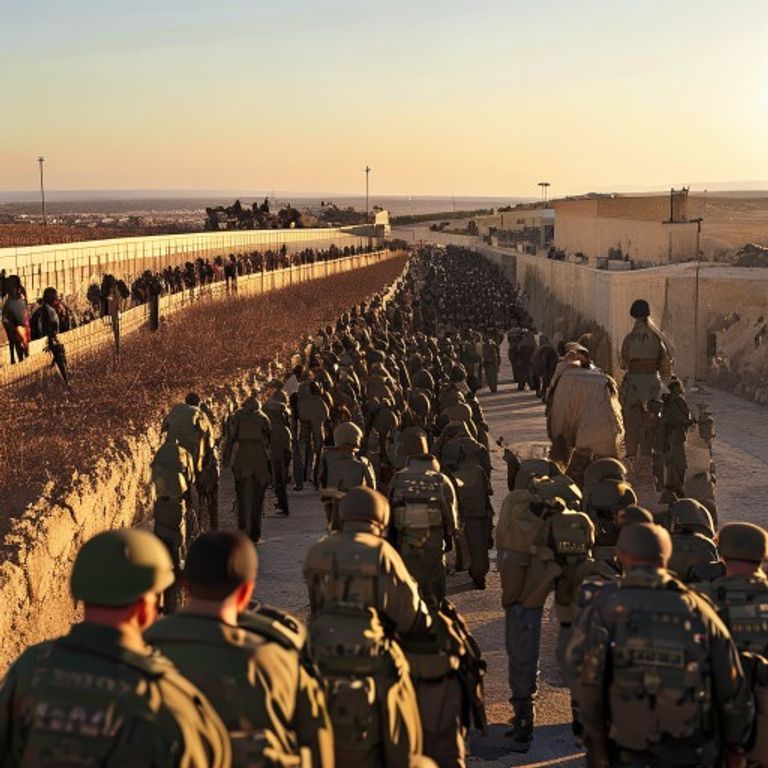
Spain Deploys Military to Ceuta Amid Escalating Migrant Crisis
NewsMatrix – In an unprecedented move, Spain has deployed its military to the autonomous city of Ceuta, a Spanish enclave bordering Morocco, following a massive and sudden influx of thousands of migrants who crossed the border. The unfolding situation has rapidly escalated into a severe Ceuta migrant crisis, overwhelming local security forces and prompting urgent international attention. Authorities have confirmed an agreement with Morocco for the swift return of illegal migrants, yet the underlying reasons for this extraordinary surge remain a complex and debated topic.
An Unprecedented Surge Overwhelms Ceuta
The crisis began abruptly, with reports of thousands of individuals, including families and children, attempting to cross into Ceuta from Morocco. Many swam around the breakwaters separating the two territories, while others navigated the land border. Eyewitness accounts and official figures quickly painted a stark picture: within a span of 48 hours, an estimated 8,000 to 10,000 migrants had entered Spanish territory. This sheer volume far surpassed the capacity of Ceuta’s established border control and humanitarian services. The local police and Civil Guard, accustomed to managing smaller, more contained migration attempts, found themselves entirely overwhelmed by the relentless flow.
Videos and images circulating globally showed scenes of desperation and chaos: individuals wading through the water, being helped ashore by Spanish soldiers, and children, some as young as toddlers, being carried to safety. The rapid nature of the crossings meant that many arrived without belongings, exhausted and in need of immediate assistance. The Red Cross and other aid organizations quickly mobilized, providing blankets, food, and medical attention to the new arrivals, many of whom were suffering from hypothermia and minor injuries.
Spain’s Swift and Decisive Response
Faced with a humanitarian and security challenge of this magnitude, the Spanish government acted decisively. Prime Minister Pedro Sánchez cancelled a trip to Paris to personally oversee the response, declaring the situation a matter of national security and ordering the immediate deployment of the military. Troops, including units from the Spanish Army and Legion, were dispatched to the border to reinforce the Civil Guard and National Police. Their primary tasks included controlling the influx, securing the perimeter, and assisting in the orderly return of those who had crossed illegally.
The deployment marked a significant escalation, underscoring the severity of the crisis. Soldiers were seen forming human chains to guide migrants, and in some instances, preventing further crossings. The government emphasized that the military presence was crucial not only for border control but also for maintaining public order and ensuring the safety of both migrants and residents of Ceuta. Spain’s Minister of Defence, Margarita Robles, stated firmly that Spain would not allow the “violation of its borders” and that the integrity of Spanish territory would be defended.
- Deployment of Spanish Army and Legion units.
- Reinforcement of Civil Guard and National Police.
- Focus on border control and public order.
- Assistance in humanitarian efforts and returns.
The Strategic Importance of Ceuta
Ceuta, along with Melilla, represents one of Europe’s only land borders with Africa. These two Spanish enclaves, situated on the northern coast of Africa, have historically been flashpoints for migration. For many sub-Saharan Africans, and increasingly those from North Africa, they represent the closest and most tangible gateway to the European Union. The border separating Ceuta from Morocco is heavily fortified, featuring a double fence, razor wire, and surveillance technology, making direct crossings incredibly difficult. However, the coastal areas and breakwaters have often been exploited by migrants attempting to bypass these defenses.
The enclaves are not only geographically significant but also hold historical and political importance for Spain. Their sovereignty is fiercely defended by Madrid, and any perceived challenge to their borders is met with a strong response. The current crisis has once again highlighted the unique geopolitical position of Ceuta and the immense pressure it faces as a frontier of Europe.
Morocco’s Role and Diplomatic Tensions
A critical element in this crisis has been the ambiguous role of Morocco. Initially, Spanish officials hinted at a deliberate loosening of Moroccan border controls as a potential retaliatory measure. This speculation arose amidst a diplomatic dispute between Madrid and Rabat concerning Brahim Ghali, the leader of the Polisario Front, a Western Sahara independence movement. Ghali had been admitted to a Spanish hospital for COVID-19 treatment under a false identity, a move that angered Morocco, which considers the Western Sahara its own territory.
While Morocco officially denied any deliberate relaxation of border controls, the sudden and massive nature of the crossings suggested at least a lack of concerted effort to prevent them. Following intense diplomatic pressure and a strong stance from Spain, an agreement was reached for the return of illegal migrants. Moroccan authorities subsequently began to reinforce their own border patrols, significantly reducing the flow of new arrivals and facilitating the return of thousands. This diplomatic resolution, however, did not fully dissipate the underlying tensions, underscoring the fragile nature of Spain-Morocco relations when it comes to migration and regional politics.
- Initial accusations of relaxed Moroccan border controls.
- Diplomatic dispute over Brahim Ghali.
- Agreement reached for migrant returns.
- Morocco reinforces its own border patrols.
Humanitarian Concerns and the Plight of Migrants
Beyond the political and security dimensions, the Ceuta migrant crisis is fundamentally a humanitarian one. Many of the migrants arrived in dire conditions, some injured, others suffering from dehydration and hypothermia. The sight of young children among the arrivals particularly moved international observers and underscored the desperate circumstances driving these individuals to undertake such perilous journeys.
International humanitarian organizations, including UNHCR and UNICEF, voiced concerns about the welfare of the migrants, especially unaccompanied minors. Spanish law dictates that unaccompanied minors cannot be immediately returned to their country of origin and must be cared for by regional authorities. This presented an additional challenge for Ceuta, which had to swiftly set up emergency shelters and processing centers for hundreds of children. The long-term care and potential asylum claims for these minors represent a significant ongoing responsibility for Spain.
The Broader European Context
The events in Ceuta reverberated across Europe, reigniting debates about border security, migration policy, and burden-sharing among EU member states. European Union officials expressed solidarity with Spain, with the European Commission emphasizing that “Spain is a European border” and that the EU would support its member state. However, the crisis also highlighted the persistent divisions within the bloc on how to manage external borders and process asylum seekers.
For many, Ceuta served as a stark reminder of the ongoing pressures on Europe’s southern flank. The continent continues to grapple with complex migratory flows driven by conflict, poverty, and climate change in Africa and the Middle East. The crisis underscored the need for a comprehensive and coordinated European approach that combines robust border management with humanitarian considerations and effective cooperation with transit countries like Morocco.
Unraveling the Reasons Behind the Surge
While the immediate trigger for Morocco’s perceived inaction might have been the diplomatic spat over Brahim Ghali, experts suggest a confluence of factors contributed to the sheer scale of the migration surge.
- Economic Hardship: Morocco, like many nations, has been significantly impacted by the COVID-19 pandemic, leading to job losses and increased poverty. This could have pushed more individuals, particularly young men, to seek opportunities elsewhere.
- Disinformation: There were reports of false rumors circulating on social media in Morocco, suggesting that the border to Ceuta was open or that Spain was offering asylum readily. Such misinformation can act as a powerful catalyst for mass movements.
- Exploitation by Human Traffickers: While not explicitly confirmed as a primary driver for this particular event, organized criminal networks often exploit periods of political tension or perceived weakness in border controls to facilitate crossings.
- Long-standing Migration Pressure: The underlying demographic and economic disparities between Africa and Europe ensure a constant pressure on borders like Ceuta, which can erupt into crises when other factors align.
Understanding these multifaceted drivers is crucial for developing sustainable long-term solutions that address the root causes of irregular migration, rather than solely reacting to border crises as they unfold.
Conclusion: A Crisis Managed, But Challenges Remain
The immediate crisis in Ceuta has largely been brought under control, with the vast majority of migrants either returned to Morocco or processed within Spain. The swift deployment of the Spanish military, coupled with renewed cooperation from Moroccan authorities, proved effective in stemming the flow. However, the events of these tumultuous days have left an indelible mark, highlighting the profound vulnerabilities at Europe’s borders and the delicate balance of international relations.
While the agreement with Morocco for migrant returns offers a short-term solution, the longer-term challenges persist. The humanitarian needs of unaccompanied minors, the ongoing diplomatic complexities between Spain and Morocco, and the broader issue of irregular migration into Europe all demand sustained attention. The Ceuta migrant crisis serves as a potent reminder that effective migration management requires not only robust security measures but also compassionate humanitarian responses, strong international cooperation, and a concerted effort to address the underlying socio-economic drivers that compel individuals to embark on such perilous journeys. The world watches to see if the lessons learned from Ceuta will pave the way for more comprehensive and humane policies in the future.