
 By NewsMatrix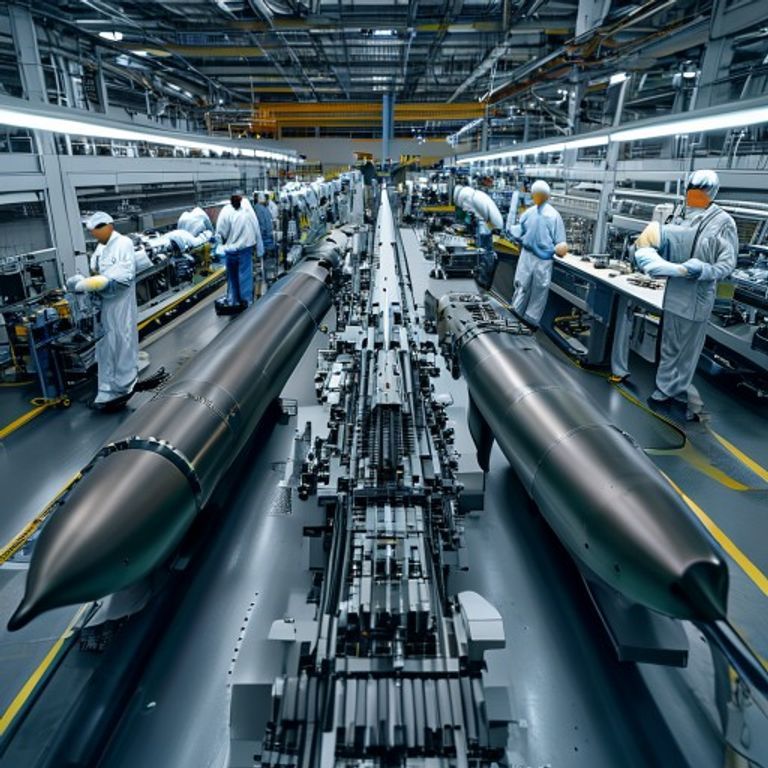
U.S. Secures Long-Term Patriot Missile Production with Major Lockheed Martin Contract
WASHINGTON D.C. – In a pivotal move to bolster its air defense capabilities and replenish critical inventories, the United States has awarded a significant Patriot missile contract to defense giant Lockheed Martin. This monumental agreement is set to ensure the long-term production of the indispensable Patriot interceptor missiles, providing a crucial lifeline to the U.S. Army’s air defense architecture and addressing mounting concerns over dwindling missile stockpiles. The deal is not merely a procurement decision; it is a strategic investment aimed at tripling production capacity and injecting a substantial boost into employment at a key manufacturing facility, aligning with the Pentagon’s broader initiative to accelerate weapons manufacturing on a global scale.
The urgency behind this major procurement decision underscores the evolving complexities of the global security landscape. Recent geopolitical tensions and ongoing conflicts have placed an unprecedented demand on existing defense inventories, highlighting the critical need for a robust and resilient industrial base capable of sustaining long-term production. This contract with Lockheed Martin, a leading aerospace and defense company, represents a decisive step by the U.S. Department of Defense to solidify its defensive posture and ensure its armed forces are equipped with the advanced capabilities required to counter modern aerial threats.
The Strategic Imperative: Addressing Dwindling Stockpiles
The decision to award this substantial Patriot missile contract comes against a backdrop of increasing international demand and significant expenditure of existing missile inventories. Global conflicts, particularly the ongoing war in Ukraine, have demonstrated the vital role of sophisticated air defense systems like the Patriot in protecting critical infrastructure and military assets from ballistic missiles, cruise missiles, and advanced aircraft. The U.S. and its allies have provided substantial military aid to Ukraine, including Patriot systems and interceptors, leading to a considerable draw-down from existing stockpiles.
Experts and defense officials have repeatedly voiced concerns about the rate at which interceptors are being expended compared to the pace of their production. The manufacturing process for complex systems such as the Patriot interceptor is not instantaneous; it involves intricate supply chains, specialized labor, and advanced technology, often requiring years from initial order to final delivery. This inherent lag between demand and supply necessitates forward-looking contracts that guarantee sustained production, preventing critical readiness gaps. This Lockheed Martin contract is a direct response to these concerns, aiming to create a more resilient and responsive supply chain for these vital defense assets.
Beyond immediate battlefield needs, maintaining robust stockpiles is essential for deterrence. A nation’s ability to defend its airspace and project power is heavily reliant on the availability of advanced interceptors. Dwindling inventories can signal vulnerabilities, potentially inviting aggression. Therefore, this long-term procurement strategy is a cornerstone of national security, ensuring that the U.S. Army and its allies possess the necessary resources to deter potential adversaries and defend against a spectrum of aerial threats, ranging from sophisticated hypersonic weapons to swarms of drones. This strategic foresight ensures that the U.S. maintains its technological edge and operational readiness in an increasingly volatile world.
Lockheed Martin’s Role and Production Expansion
As the primary contractor for the Patriot Advanced Capability-3 (PAC-3) missile segment, Lockheed Martin plays an indispensable role in the U.S. and global air defense landscape. The new contract tasks the company with significantly increasing its manufacturing output for these crucial interceptors. The stated goal of tripling production capacity is an ambitious undertaking that will require substantial investment in infrastructure, machinery, and human capital at Lockheed Martin’s facilities, particularly its Camden, Arkansas plant, which is central to PAC-3 production.
This expansion is expected to translate into a significant boost in employment, creating numerous high-skill jobs in engineering, manufacturing, and logistics. Such large-scale defense contracts are vital economic drivers, supporting local communities and contributing to the broader national economy. For Lockheed Martin, this agreement solidifies its position as a critical partner in national security and provides long-term stability for its defense programs. The company will leverage its extensive experience in precision manufacturing and advanced aerospace technologies to meet the heightened production targets, ensuring the delivery of high-quality, reliable interceptors.
The process of scaling up production involves more than just increasing output; it requires optimizing supply chains, enhancing automation, and investing in research and development to refine manufacturing processes. Lockheed Martin will work closely with its network of suppliers to ensure a steady flow of raw materials and components, mitigating potential bottlenecks. This collaborative effort across the defense industrial base is crucial for meeting the aggressive production timeline and fulfilling the strategic objectives of the U.S. Army. The expansion signifies a commitment to not only meeting current demands but also establishing a sustainable capacity for future needs, reinforcing the resilience of the American defense industry.
The Patriot System: A Pillar of Air Defense
The Patriot missile system, officially known as MIM-104 Patriot (Phased Array Tracking Radar to Intercept of Target), is a long-range, all-weather, high-to-medium altitude air defense system. It is designed to engage tactical ballistic missiles, cruise missiles, and advanced aircraft. Since its initial deployment in the 1980s, the Patriot system has undergone continuous upgrades, with the PAC-3 variant representing its most advanced iteration, offering enhanced precision and a smaller, more maneuverable interceptor with “hit-to-kill” technology.
The effectiveness of the Patriot system has been proven in numerous conflicts and real-world engagements, solidifying its reputation as one of the world’s most capable air defense solutions. Its modular design allows for flexible deployment and integration into various air defense architectures, making it a cornerstone for not only the U.S. but also for many allied nations, including Germany, Japan, Israel, Saudi Arabia, and South Korea, among others. The interoperability of the Patriot system among NATO and other partner nations further enhances collective security and provides a robust layer of defense against sophisticated aerial threats.
Each Patriot battery typically includes a radar set for detection and tracking, a control station for command and control, and launchers that can hold multiple interceptor missiles. The PAC-3 missile, the focus of this contract, uses a direct hit-to-kill approach, destroying targets through kinetic energy rather than fragmentation. This minimizes collateral damage and increases the probability of kill against even the most advanced threats. The sustained production of these interceptors is therefore critical for maintaining the operational readiness and defensive capabilities of the U.S. Army and its global partners.
Pentagon’s Broader Strategy: Accelerating Weapons Manufacturing
The Lockheed Martin Patriot missile contract is a prime example of the Pentagon’s overarching strategy to accelerate weapons manufacturing and fortify the U.S. defense industrial base. In an era marked by renewed great power competition and the proliferation of advanced military technologies, the Department of Defense recognizes the imperative to shift from a just-in-time inventory approach to a just-in-case production mindset. This paradigm shift aims to ensure that the U.S. can quickly scale up production of critical armaments to meet both its own defense needs and those of its allies.
Initiatives within the Pentagon are focused on several key areas: streamlining the procurement process, incentivizing private sector investment in manufacturing capabilities, and fostering innovation across the defense supply chain. The goal is to reduce the lead times for complex weapons systems, enhance surge capacity, and reduce reliance on single points of failure within the industrial ecosystem. This strategic pivot is not merely about increasing quantities; it’s about building a more resilient, agile, and technologically advanced defense manufacturing enterprise capable of responding to unpredictable global challenges.
Such efforts are crucial for maintaining a credible deterrent and ensuring the U.S. retains its military advantage. By securing long-term contracts for essential systems like the Patriot, the Pentagon provides the defense industry with the stability and certainty needed to make significant investments in expansion and modernization. This symbiotic relationship between government procurement and industrial capacity is fundamental to national security, ensuring that the U.S. remains at the forefront of defense technology and manufacturing, capable of defending its interests and supporting its allies worldwide.
Economic Impact and National Security Implications
The economic ramifications of a contract of this magnitude extend far beyond the direct financial transaction. For communities hosting Lockheed Martin facilities, particularly the Camden plant, the increased production capacity translates directly into job creation and economic stability. These are often high-paying, skilled positions that support families and contribute significantly to local tax bases. The investment in manufacturing infrastructure and technology also has a ripple effect, benefiting numerous small and medium-sized businesses throughout the supply chain that provide components, services, and logistical support.
From a national security perspective, a robust and responsive defense industrial base is a non-negotiable asset. It underpins the nation’s ability to project power, deter aggression, and respond effectively to crises. Relying on foreign sources for critical components or facing significant delays in replenishing essential munitions can compromise military readiness and strategic independence. This Patriot missile contract reinforces domestic manufacturing capabilities, reducing vulnerabilities and ensuring that the U.S. has sovereign control over its most vital defense assets.
Furthermore, by supporting the defense industrial base, the U.S. fosters innovation and technological advancement. The demands of modern warfare push manufacturers to continuously improve their products, leading to breakthroughs that often have civilian applications. This contract, therefore, not only secures a critical defense capability but also stimulates research and development, contributing to the nation’s overall technological leadership and economic competitiveness on the global stage. It is an investment in both present defense needs and future technological superiority.
Challenges and Future Outlook
While the contract marks a significant step forward, challenges remain. The defense industry, like many others, faces hurdles such as workforce shortages, particularly in highly specialized fields, and potential disruptions in global supply chains for critical materials. Ensuring a consistent flow of components and a skilled labor pool will be paramount for Lockheed Martin to meet the ambitious production targets within the stipulated timelines. Continuous collaboration between government agencies, defense contractors, and educational institutions will be essential to address these challenges effectively.
Looking ahead, the demand for advanced air defense systems like the Patriot is only expected to grow. The proliferation of ballistic and cruise missile technology, combined with the increasing sophistication of aerial threats from state and non-state actors, ensures that interceptors will remain a cornerstone of national and international security. This long-term contract positions the U.S. to not only meet its immediate requirements but also to sustain a credible defense posture for years to come.
The agreement reflects a strategic commitment to investing in the capabilities necessary for future conflicts, maintaining a technological edge, and ensuring the readiness of the U.S. armed forces. It underscores the understanding that in a complex and unpredictable world, a proactive approach to defense manufacturing and inventory management is not just advantageous—it is indispensable.
Conclusion
The awarding of a significant Patriot missile contract to Lockheed Martin by the United States marks a critical juncture in reinforcing the nation’s air defense capabilities and strengthening its industrial base. This strategic procurement addresses urgent concerns over dwindling missile stockpiles, ensuring a long-term supply of essential interceptors for the U.S. Army. By committing to triple production capacity and boosting employment, the agreement aligns with the Pentagon’s broader vision of accelerating weapons manufacturing globally, securing both national defense and economic stability.
This initiative is a testament to the U.S.’s unwavering commitment to maintaining its military readiness and supporting its allies in an increasingly volatile world. As global threats evolve, investments in proven, high-performance systems like the Patriot are paramount. The collaboration with Lockheed Martin not only safeguards critical defense assets but also invigorates the domestic defense industry, ensuring a resilient and responsive capability to meet the challenges of today and tomorrow. The Patriot missile contract stands as a beacon of strategic foresight, designed to uphold security and deter aggression for decades to come.