
 By NewsMatrix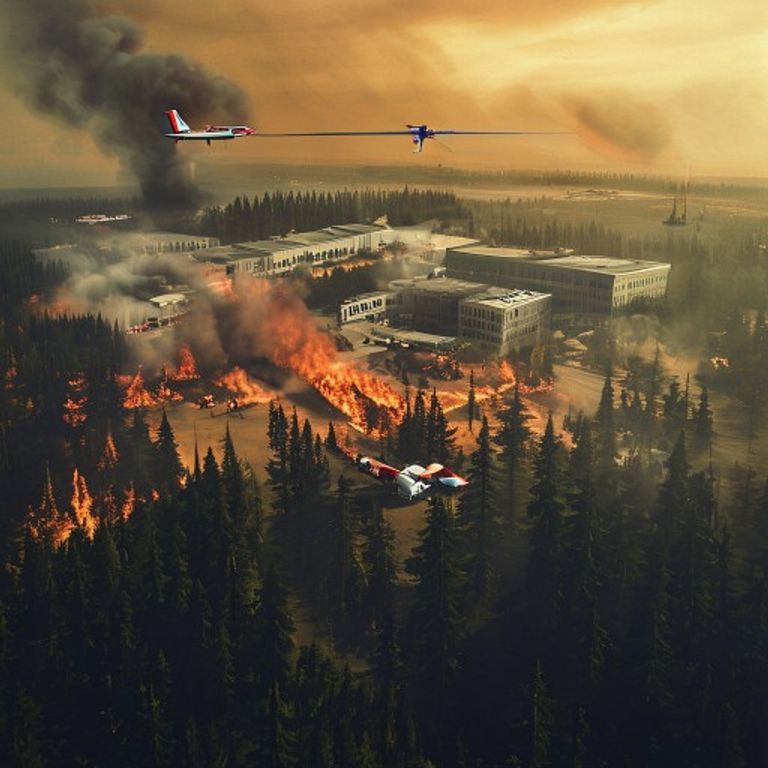
French Wildfires Threaten Critical Defense and Aerospace Facilities in Escalating Crisis
SOUTHWESTERN FRANCE – A catastrophic inferno of French wildfires is sweeping across southwestern France, posing an unprecedented and grave threat to the nation’s vital defense and aerospace facilities. The blazes, described by authorities as extensive and rapidly advancing, are alarmingly close to areas indispensable for the production of France’s nuclear deterrent, triggering emergency protocols and a concentrated effort to safeguard these military-industrial infrastructures. Firefighters, battling punishing conditions and the sheer scale of the conflagration, are working tirelessly to contain the blaze that has already consumed thousands of hectares, while national and regional authorities prioritize the defense of these strategic sites from the encroaching flames. The situation underscores a critical juncture where environmental disaster intersects with national security, demanding an immediate and robust response.
The Proximity of Peril: Wildfires Encroach on Strategic Infrastructure
The current wave of French wildfires represents more than just an environmental catastrophe; it is a direct challenge to France’s sovereign capabilities. Located in a region known for its dense pine forests and sometimes arid conditions, several key defense and aerospace facilities are now directly in the path or immediate vicinity of the inferno. These include, but are not limited to, testing grounds, manufacturing plants, and research and development centers that form the backbone of France’s military-industrial complex. Of particular concern is the proximity of the fires to sites associated with the nation’s nuclear deterrent program, a cornerstone of its defense policy. While specific details of these sensitive locations remain classified for obvious security reasons, their designation as “critical” by authorities highlights the severe implications of the wildfire threat.
Understanding France’s Nuclear Deterrent and its Infrastructure
France maintains an independent nuclear deterrent, a strategic force comprising submarine-launched ballistic missiles (SLBMs) and air-launched cruise missiles (ASCMs). This capability, developed and maintained over decades, relies on a sophisticated network of facilities for research, design, production, maintenance, and deployment. These include highly secure sites for warhead assembly and disassembly, propulsion system development, missile testing, and command and control centers. The disruption or damage to any part of this intricate chain, even if indirectly caused by environmental factors like wildfires, could have far-reaching consequences for national security and international stability. The very nature of nuclear materials and sensitive technologies necessitates extreme caution and robust protective measures, which are now being tested by the relentless march of the fires.
Beyond Nuclear: Aerospace and Defense Assets at Risk
Beyond the nuclear deterrent, southwestern France is a hub for the European aerospace industry, home to major manufacturing plants, test sites, and training academies for both military and civilian aircraft. Companies like Airbus, Dassault Aviation, and their vast network of suppliers and subcontractors operate significant facilities in the region. These sites contribute massively to France’s economy and its technological prowess. The threat of wildfires to these operations extends beyond immediate physical damage; it includes potential disruptions to supply chains, evacuation of personnel, loss of sensitive equipment, and long-term environmental impacts that could hinder recovery and future development. The aerospace sector is highly integrated and relies on precise manufacturing and testing conditions, making any external interference a significant concern.
Emergency Protocols and Unyielding Response
In response to the escalating threat, French authorities have activated comprehensive emergency protocols. These measures go beyond standard wildfire fighting procedures, specifically tailored to protect the integrity and operational continuity of the military-industrial sites. This includes:
- Enhanced Firefighting Resources: Deployment of specialized military firefighting units alongside civilian brigades, utilizing advanced equipment such as Canadair water bombers, Puma helicopters, and heavy ground machinery.
- Strategic Firebreaks and Defenses: Creation of wide firebreaks around critical facilities, controlled burns, and the establishment of robust water supply systems to create defensible spaces.
- Personnel Evacuation and Security: Pre-emptive evacuation plans for non-essential personnel from threatened facilities, while essential staff and security forces remain on alert to manage the crisis and prevent unauthorized access.
- Continuous Monitoring and Intelligence: Use of satellite imagery, drone surveillance, and ground patrols to monitor fire progression in real-time and inform tactical decisions for defending specific assets.
- Inter-Agency Coordination: A high level of coordination between local prefectures, national civil security, the Ministry of Armed Forces, and industrial partners to ensure a unified and effective response.
The commitment to defending these strategic locations is absolute, reflecting their national importance. Firefighters on the ground describe a relentless battle against unpredictable flames fueled by strong winds and dry vegetation. The sheer size of the affected area, stretching across thousands of hectares of forests and brushland, presents immense logistical challenges. Despite these difficulties, the focus remains steadfast on preventing the fires from reaching the most critical infrastructures, particularly those linked to national defense.
Environmental and Economic Repercussions
While the immediate focus is on safeguarding strategic facilities, the broader environmental and economic impact of these French wildfires cannot be overstated. Thousands of hectares of biodiverse forests, vital ecosystems for numerous species, have been incinerated. The long-term ecological recovery will be a monumental task, potentially taking decades. Air quality across the region has deteriorated significantly due to the dense smoke plumes, posing health risks to residents. Economically, the destruction extends to local agriculture, tourism, and forestry industries that are crucial to the regional economy. The cost of firefighting operations, property damage, and ecological restoration will run into hundreds of millions of euros, placing a substantial burden on public finances. This crisis serves as a stark reminder of the increasing vulnerability of European regions to the impacts of climate change, which exacerbates the conditions for such intense and widespread wildfires.
The Broader Context: Climate Change and Future Preparedness
Experts and policymakers are increasingly linking the severity and frequency of these large-scale wildfires to climate change. Higher average temperatures, prolonged droughts, and altered precipitation patterns create an environment highly conducive to extreme fire behavior. This event in southwestern France is not isolated but part of a wider trend observed across Southern Europe and other parts of the world. The challenges posed by these fires underscore the urgent need for enhanced climate adaptation strategies, including improved forest management, early warning systems, and increased investment in firefighting capabilities. For a nation like France, with critical infrastructure dispersed across various geographical zones, understanding and mitigating these risks becomes an even more pressing concern. Future preparedness will require a multi-faceted approach, combining scientific research, technological innovation, and robust public policy to protect both natural environments and strategic national assets.
Conclusion: A Nation United Against the Flames
The ongoing French wildfires in southwestern France represent a multi-layered crisis, threatening not only vast natural landscapes and local communities but also the very core of the nation’s defense capabilities. The concentrated efforts to protect nuclear deterrent production sites and other critical aerospace facilities highlight the profound implications of this environmental disaster. As firefighters continue their arduous battle against the encroaching flames, supported by extensive emergency measures and inter-agency coordination, the world watches on, recognizing the delicate balance between environmental resilience and national security. The aftermath of these fires will undoubtedly prompt a reassessment of preparedness strategies, emphasizing the need for continued investment in both firefighting resources and long-term climate adaptation, ensuring France’s ability to protect its people, its environment, and its strategic assets against future threats.