
 By NewsMatrix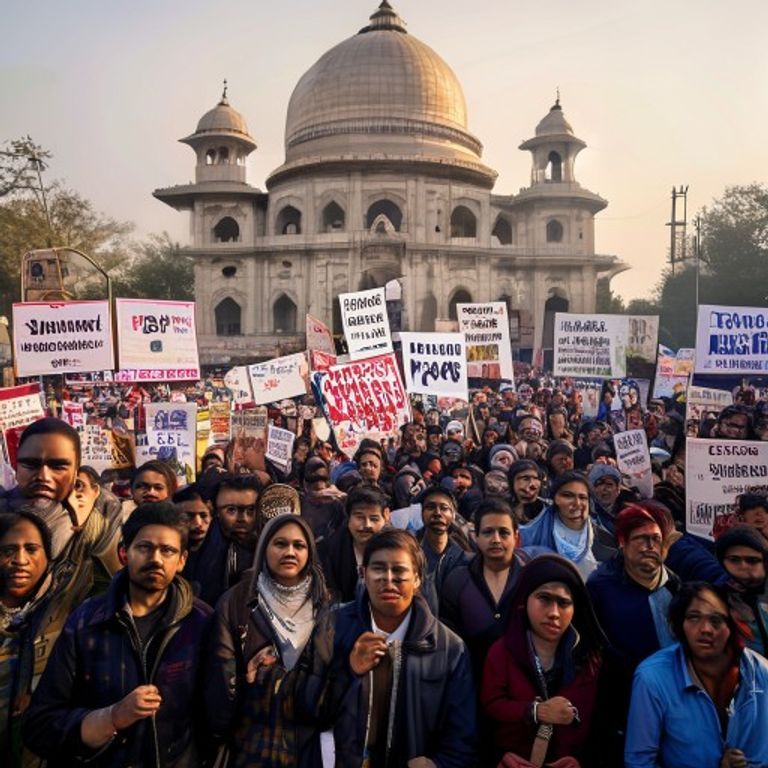
Jantar Mantar Protests Reignite as Education Minister’s Resignation Fuels Public Outcry
New Delhi – India’s capital city once again witnessed a fervent display of public discontent this Sunday, as Jantar Mantar, the historic protest site, came alive with demonstrators following the recent resignation of the Union Education Minister. The departure of the high-profile minister has ignited a fresh wave of **Jantar Mantar protests**, drawing a diverse coalition of students, seasoned activists, and concerned citizens. Despite prior attempts to clear the area, signs from earlier demonstrations served as poignant reminders of ongoing struggles, blending seamlessly with the vibrant new expressions of public will. The scene was characterized by scattered clusters of individuals and groups, each embodying an unwavering determination to press their demands and continue fighting for a more equitable and transparent educational system.
The resignation of a cabinet minister is always a significant political event, but when it concerns the critical portfolio of education, the reverberations extend far beyond the corridors of power. It touches the lives of millions of students, educators, and families across the nation. The immediate trigger for the resurgence of activity at Jantar Mantar was undoubtedly the minister’s sudden exit, which many view not as a resolution, but as a potential acknowledgement of systemic failures within the education sector. This perception has emboldened those who have long advocated for reforms, bringing them back to the fore, and crucially, galvanizing a new generation of activists.
The Catalyst: A Minister’s Abrupt Departure
The news of the Education Minister’s resignation sent ripples across the political landscape, sparking intense speculation and public debate. While the official reasons cited were often vague, whispers within political circles and among educational stakeholders pointed towards mounting pressure over several contentious policy decisions and alleged administrative missteps. Over the past year, the ministry had faced scrutiny regarding issues such as the implementation of new curriculum frameworks, the allocation of funds for public education, and concerns about transparency in examination processes. These issues, simmering beneath the surface, found an outlet in the minister’s departure, which for many, validated their long-held grievances.
The resignation created a power vacuum and, more significantly, a moment of perceived vulnerability for the government. Protesters, seeing an opportunity to amplify their voices, quickly mobilized. This immediate response underscores a fundamental aspect of India’s democratic ethos: the public’s readiness to hold its leaders accountable, particularly when core services like education are seen to be faltering. The minister’s exit, far from quelling dissent, inadvertently provided a new focal point for it, transforming a political transition into a catalyst for renewed activism.
Jantar Mantar: A Bastion of Dissent
Jantar Mantar, an 18th-century astronomical observatory, has paradoxically evolved into one of India’s most potent symbols of modern democratic protest. Its central location in New Delhi, coupled with its historical significance, makes it an unparalleled stage for public demonstrations. From farmers’ rights to women’s safety, and now to educational reforms, this site has witnessed countless movements, each adding to its rich tapestry of dissent. Its enduring appeal lies in its accessibility and its history as a place where the common person can directly address the machinery of the state.
The visual landscape of Jantar Mantar on Sunday was a testament to this legacy. Lingering posters and banners from previous rallies, slightly faded but still legible, spoke volumes about the persistent nature of activism in India. These remnants, rather than being an eyesore, served as layers of historical memory, connecting the current **Jantar Mantar protests** to a broader narrative of citizen vigilance. The site’s ability to draw crowds, from the seasoned veteran of social movements to the newly awakened youth, highlights its unique role in facilitating public expression and collective action. It is more than just a location; it is an institution of democratic participation, a space where grievances find voice and demands coalesce into a collective roar.
A Mosaic of Voices: Unity in Diversity
The demographic of the protesters at Jantar Mantar on Sunday was remarkably diverse, showcasing the wide-ranging impact of educational policies across different segments of society. Students, often the most directly affected by educational reforms, formed a significant contingent. Their youthful energy and passionate chants resonated through the air, demanding quality education, fair opportunities, and accountability from the system. Many were first-time attendees, drawn by a newfound sense of civic duty and the urgency of the moment, their presence injecting fresh vigor into the movement.
Alongside them stood long-term advocates, individuals and groups who have dedicated years, sometimes decades, to championing educational causes. These seasoned activists provided guidance and historical context, their presence lending credibility and depth to the unfolding demonstrations. Engaged citizens, comprising professionals, parents, and concerned members of the public, also joined the ranks, emphasizing that the issue of education transcends age and profession. This diverse mix – a blend of youthful idealism and experienced advocacy – forged a powerful, unified front, demonstrating that the pursuit of educational justice is a collective societal endeavor.
Underlying Grievances: Beyond the Resignation
While the Education Minister’s resignation served as the immediate impetus, the protests at Jantar Mantar were fueled by a deeper reservoir of grievances concerning the state of education in the country. Many placards and slogans pointed to systemic issues that have plagued the sector for years. Concerns ranged from inadequate funding for public schools and universities, leading to dilapidated infrastructure and a shortage of qualified educators, to the perceived commercialization of education, making quality learning inaccessible to economically weaker sections of society.
Furthermore, issues of curriculum relevance, pedagogical methods, and the quality of teacher training were frequently raised. Protesters voiced anxieties about the increasing pressure of competitive examinations, often at the expense of holistic learning and mental well-being. Allegations of corruption in recruitment processes and a lack of transparency in policy formulation added to the public’s disillusionment. These multifaceted concerns suggest that the protests are not merely a reaction to a single event but rather an articulation of a widespread desire for fundamental reforms that address the core challenges of equity, quality, and accessibility in education. The demonstrators’ demands, articulated through speeches and banners, highlighted a yearning for a system that truly empowers and prepares the nation’s youth for a rapidly evolving future.
Student Empowerment and Citizen Engagement
A striking feature of Sunday’s demonstration was the palpable sense of empowerment among the students. No longer content to be passive recipients of policy, they actively engaged in organizing, articulating their demands, and leading chants. This burgeoning student activism signals a critical shift in India’s civic landscape, where young people are increasingly asserting their right to participate in governance and shape their future. Their presence underscores the direct impact of educational policies on their lives and their determination to be heard.
The active participation of engaged citizens further amplified the movement’s legitimacy. These were not just students but also professionals, parents, and taxpayers who recognize that a robust education system is the bedrock of a prosperous and just society. Their involvement transformed the protests from a narrow sectoral demand into a broad-based citizen’s movement for accountability and good governance. The scattered clusters of protesters, far from indicating disunity, actually highlighted the organic and grassroots nature of the movement, with various groups mobilizing independently yet converging on a shared cause. This decentralized yet synchronized action is a powerful indicator of collective resolve.
The Unwavering Spirit: A Long Haul Ahead
The lingering signs of previous demonstrations at Jantar Mantar were not merely remnants to be tidied away; they were symbolic. They represented the persistent issues that have yet to be fully addressed and the enduring spirit of those who refuse to be silenced. This continuity underscores that the fight for comprehensive educational reform is not a sprint but a marathon. The protesters’ determination, visible in their tireless chants and unwavering presence, signals that they are prepared for a long haul, ready to sustain their efforts until tangible changes are implemented.
The ability of the movement to draw both long-term advocates and first-time attendees speaks to its growing appeal and the increasing public awareness of the stakes involved. This cross-generational and cross-sectional participation strengthens the movement’s foundation, ensuring its resilience against potential government inaction or attempts to diffuse the protests. The message is clear: the public’s commitment to education, and their demand for a system that serves all, remains undeterred. This unwavering spirit is a testament to the power of collective action in a vibrant democracy, demonstrating that citizen engagement can indeed drive meaningful change, albeit through persistent and often arduous struggle.
Implications for Governance and Policy
The renewed protests at Jantar Mantar carry significant implications for the current government and its approach to policy-making. The resignation of a key minister under public pressure, followed by immediate and sustained demonstrations, indicates a heightened level of public scrutiny and a demand for greater accountability. The government will likely face intensified pressure to address the core grievances of the protesters, particularly those related to transparency, funding, and the overall quality of education. Ignoring these demands risks further erosion of public trust and could complicate future policy initiatives.
Moreover, the incident highlights the critical need for inclusive governance that genuinely incorporates stakeholder feedback, especially from those directly impacted by policies. A proactive approach involving dialogue with student bodies, educators, and civil society groups could help mitigate future unrest and foster a more collaborative environment for policy development. The ongoing protests serve as a powerful reminder that in a democracy, the will of the people, when expressed collectively and persistently, holds significant sway in shaping the national agenda and influencing government actions.
National Dialogue and Future Trajectory
Beyond the immediate demands, the Jantar Mantar protests have reignited a broader national dialogue about the future of education in India. Discussions are now more prominent concerning the balance between academic rigor and holistic development, the role of technology in learning, and the imperative of making education truly equitable and accessible for all. This national conversation, amplified by the media and social platforms, can be a crucial step towards envisioning and implementing long-term reforms that transcend political cycles.
The trajectory of this movement remains to be seen. Will the government respond with concrete measures and meaningful dialogue, or will it attempt to quell the dissent through other means? The answer will not only determine the immediate future of the educational reform movement but also set a precedent for future citizen-led activism in India. Regardless of the immediate outcome, the resurgence of protests at Jantar Mantar following the Education Minister’s resignation stands as a powerful testament to the enduring power of public advocacy and the unwavering commitment of citizens to fight for the causes they believe in.
Conclusion
The Sunday protests at Jantar Mantar, sparked by the Education Minister’s resignation, represent far more than a fleeting moment of anger. They are a powerful resurgence of public will, a clear signal that citizens, young and old, are united in their demand for accountability and fundamental reform in the education sector. The lingering presence of signs from previous demonstrations, coupled with the arrival of new faces, paints a vivid picture of a determined populace committed to sustained advocacy. The scattered yet resolute clusters of protesters underscored their unwavering resolve, transforming a site of historical protest into a beacon of contemporary civic engagement. As the echoes of their slogans fade, the message remains clear: the fight for educational justice in India is alive, potent, and far from over, poised to shape the national discourse for the foreseeable future. The government faces a critical juncture, where listening to and addressing these voices will be paramount for the nation’s progress and the democratic health of its institutions.