
 By NewsMatrix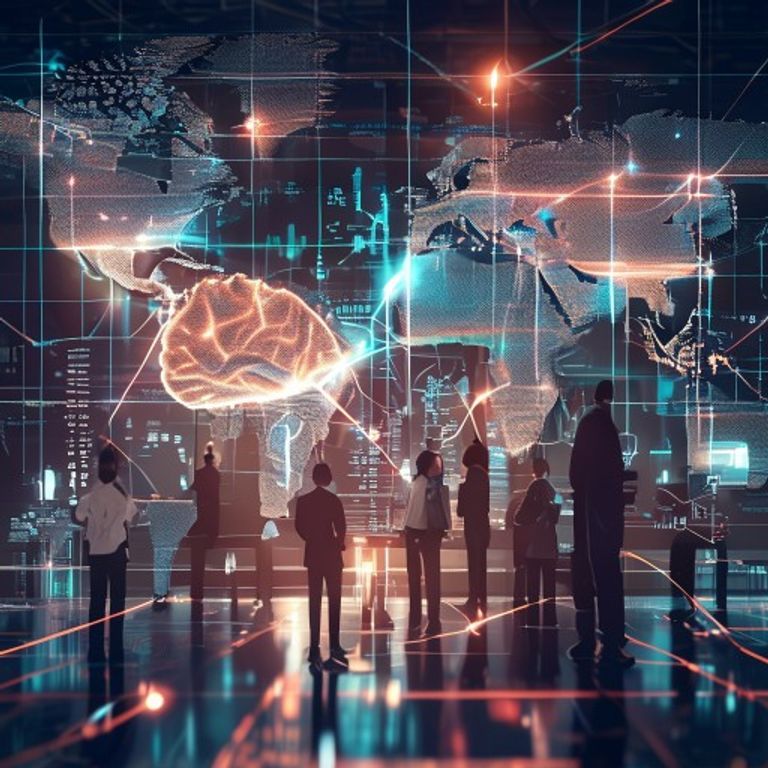
The Unprecedented AI Transformation: Reshaping Global Economies and Future Workforces
The dawn of the 21st century has witnessed a technological paradigm shift on an unprecedented scale, largely driven by the rapid advancements in Artificial Intelligence (AI). What was once the realm of science fiction is now an integral part of daily life and a formidable force reshaping industries, economies, and societies worldwide. This profound influence marks a significant AI transformation, fundamentally altering how businesses operate, how governments strategize, and how individuals live and work. As AI systems become more sophisticated, their capacity to analyze vast datasets, automate complex tasks, and generate insights continues to expand, promising both immense opportunities and considerable challenges for the global economic landscape and the very nature of human employment.
Introduction: The AI Revolution at a Glance
Artificial Intelligence, encompassing machine learning, deep learning, natural language processing, and computer vision, is no longer a nascent technology. It has matured into a powerful suite of tools that are augmenting human capabilities and, in many cases, surpassing them in specific domains. From optimizing supply chains and personalizing consumer experiences to accelerating scientific discovery and enhancing national security, AI’s applications are diverse and growing. This technological wave is not merely an incremental improvement; it represents a foundational shift, creating new markets, disrupting established ones, and necessitating a global re-evaluation of economic strategies, educational priorities, and ethical frameworks. Understanding the scope and implications of this revolution is crucial for navigating the future successfully.
The AI Revolution: A New Economic Paradigm
At the heart of the AI revolution lies its unparalleled ability to process and interpret data at speeds and scales impossible for humans. This capability translates directly into economic value, driving efficiencies, fostering innovation, and opening avenues for entirely new products and services. Economies worldwide are experiencing a fundamental restructuring as sectors embrace AI to gain competitive advantages, reduce operational costs, and unlock previously unattainable insights.
Automation and Efficiency Gains
- Manufacturing: AI-powered robots and automation systems are transforming factory floors, increasing precision, speed, and safety. Predictive maintenance, driven by AI, minimizes downtime and optimizes machinery performance, leading to substantial cost savings and enhanced productivity.
- Logistics and Supply Chain: AI algorithms optimize routing, inventory management, and demand forecasting. This reduces waste, accelerates delivery times, and enhances the resilience of complex global supply chains, making them more adaptive to disruptions.
- Customer Service: Chatbots and virtual assistants powered by AI handle routine inquiries, providing instant support and freeing human agents to focus on more complex issues, thereby improving customer satisfaction and operational efficiency.
Data-Driven Decision Making
AI’s capacity for advanced analytics provides businesses and governments with unprecedented capabilities for informed decision-making. By identifying patterns and correlations in massive datasets, AI offers predictive insights that can shape strategic planning, market positioning, and policy formulation. This data-driven approach minimizes guesswork and allows for more agile and effective responses to market dynamics and societal needs.
- Financial Trading: AI algorithms analyze market trends and execute trades at high speeds, identifying opportunities and managing risks with greater sophistication.
- Healthcare Diagnostics: AI assists in analyzing medical images and patient data to detect diseases earlier and more accurately, leading to improved patient outcomes and more personalized treatment plans.
- Urban Planning: AI helps city planners optimize traffic flow, manage public services, and develop sustainable infrastructure by analyzing real-time data on urban dynamics.
Reshaping the Global Workforce
Perhaps no aspect of the AI transformation elicits more discussion and concern than its impact on employment. While fears of widespread job displacement are prevalent, a more nuanced view suggests a significant evolution of the workforce, characterized by both job creation and the imperative for skill adaptation.
Job Displacement and Creation
Historically, technological advancements have always led to changes in labor markets. AI is no different. Routine, repetitive, and rule-based tasks are increasingly susceptible to automation, leading to the displacement of certain jobs in sectors like manufacturing, administrative support, and data entry. However, AI also creates entirely new roles and industries. Demand for AI developers, data scientists, ethical AI specialists, AI trainers, and roles that leverage uniquely human skills like creativity, critical thinking, emotional intelligence, and complex problem-solving is surging. The net effect on employment is complex and varies by sector and region.
The Rise of New Skills and Roles
The evolving job market necessitates a shift in required skills. Beyond traditional technical competencies, future workers will need strong capabilities in areas such as:
- Digital Literacy: Proficiency in interacting with AI tools and digital platforms.
- Data Fluency: Understanding how to interpret and act on AI-generated insights.
- Critical Thinking: Evaluating AI outputs, identifying biases, and making informed judgments.
- Creativity and Innovation: Developing new ideas and solutions that AI cannot replicate.
- Emotional Intelligence: Excelling in roles requiring empathy, negotiation, and human interaction.
- Adaptability and Lifelong Learning: A continuous commitment to acquiring new skills as technology evolves.
The Importance of Reskilling and Upskilling
To mitigate the negative impacts of job displacement and capitalize on new opportunities, reskilling and upskilling initiatives are paramount. Governments, educational institutions, and corporations must collaborate to provide robust training programs that equip the existing workforce with the competencies needed for AI-augmented roles. Investing in continuous learning pathways is not just a societal responsibility but an economic imperative for maintaining a competitive and adaptable labor force.
Economic Sectors Undergoing AI Transformation
The impact of AI is pervasive, touching almost every sector of the global economy. Some industries, however, are experiencing more profound and rapid changes than others.
Manufacturing and Supply Chains
The factory of the future is smart, interconnected, and highly automated. AI-driven robotics, predictive analytics for machinery maintenance, and sophisticated inventory management systems are optimizing production processes from end to end. Supply chains are becoming more resilient and efficient, capable of responding dynamically to real-time events and consumer demands.
Healthcare Innovation
AI is revolutionizing healthcare in numerous ways. It aids in drug discovery and development, accelerating the identification of potential compounds and predicting their efficacy. In diagnostics, AI algorithms can analyze medical images (X-rays, MRIs, CT scans) with accuracy sometimes surpassing human experts, leading to earlier disease detection. Personalized medicine, tailored to an individual’s genetic makeup and lifestyle, is becoming a reality with AI’s ability to process complex patient data.
Finance and Banking
The financial sector leverages AI for fraud detection, risk assessment, algorithmic trading, and personalized financial advice. AI-powered systems can identify suspicious transactions in real-time, protect against cyber threats, and provide customers with tailored investment strategies based on their financial goals and risk tolerance.
Retail and Customer Experience
AI enhances the retail experience through personalized recommendations, optimized pricing strategies, and efficient inventory management. E-commerce platforms use AI to understand customer preferences and deliver highly relevant product suggestions. In physical stores, AI can analyze foot traffic patterns and optimize store layouts. Chatbots and virtual assistants provide 24/7 customer support, improving satisfaction and reducing operational costs.
Challenges and Ethical Considerations
While the benefits of the AI transformation are vast, its widespread adoption also brings forth significant challenges and ethical dilemmas that require careful consideration and proactive solutions.
Ethical AI and Bias
AI systems are trained on data, and if that data reflects existing societal biases, the AI will perpetuate and even amplify them. Ensuring fairness, transparency, and accountability in AI development is crucial. Addressing algorithmic bias in areas like hiring, credit scoring, and law enforcement is a critical ethical imperative to prevent discriminatory outcomes.
Data Privacy and Security
AI relies heavily on vast amounts of data, raising concerns about privacy and security. Protecting sensitive personal and corporate data from breaches and misuse is paramount. Robust cybersecurity measures and clear data governance policies are essential to build public trust and prevent exploitation.
Regulatory Frameworks and Governance
The rapid pace of AI development often outstrips the ability of legal and regulatory frameworks to keep up. Governments worldwide are grappling with how to regulate AI effectively without stifling innovation. Developing international standards, guidelines, and laws for AI ethics, responsibility, and accountability is a complex but necessary undertaking.
Government and Industry Responses
Recognizing the profound implications of AI, governments and industries globally are implementing strategies to harness its potential while mitigating risks.
Investment in AI Research and Development
Many nations are significantly increasing funding for AI research, both in public institutions and private companies. The goal is to foster innovation, develop cutting-edge AI technologies, and secure a leading position in the global AI landscape. These investments span basic research to applied solutions across various sectors.
Policy Development for an AI-Driven Future
Governments are actively working on national AI strategies that address economic growth, workforce development, ethical guidelines, and international cooperation. These policies aim to create an ecosystem conducive to AI innovation, while simultaneously protecting citizens and ensuring responsible deployment.
Public-Private Partnerships
Collaboration between government, academia, and the private sector is crucial for advancing AI. These partnerships can accelerate research, facilitate knowledge transfer, develop skilled workforces, and ensure that AI innovations align with societal needs and values. Initiatives often focus on specific challenge areas, such as healthcare, sustainable energy, or smart cities.
Conclusion: Navigating the Future of AI
The AI transformation is not merely a technological trend; it is a fundamental shift that is redefining the global economic order and the future of work. While it presents formidable challenges in terms of job displacement, ethical considerations, and the need for new regulatory frameworks, the opportunities for innovation, efficiency, and societal improvement are immense. Successfully navigating this era requires a proactive approach from all stakeholders: governments must craft adaptive policies, businesses must embrace ethical AI development and workforce reskilling, and individuals must commit to lifelong learning. By fostering collaboration, investing in education, and prioritizing responsible development, the world can harness the power of AI to create a more prosperous, equitable, and innovative future for all.