
 By NewsMatrix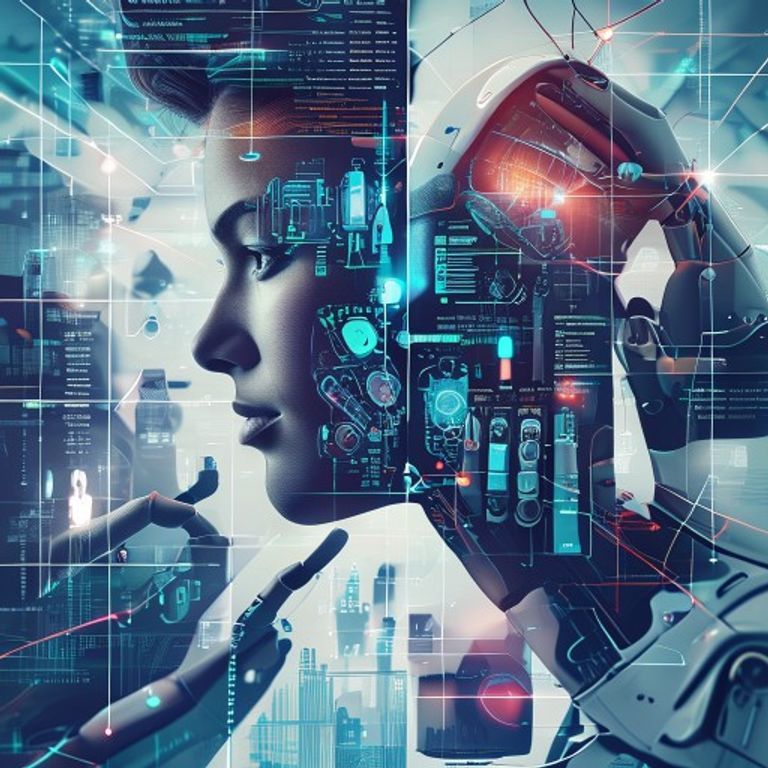
The Unprecedented AI Transformation: Shaping Our Future
In an era defined by rapid technological advancements, the AI Transformation stands as perhaps the most profound force reshaping human civilization. From automating complex industrial processes to revolutionizing healthcare diagnostics and personalizing daily experiences, Artificial Intelligence (AI) is no longer a concept confined to science fiction but a tangible reality that is fundamentally altering every facet of our lives. NewsMatrix delves into the depth of this paradigm shift, exploring its myriad applications, its colossal economic impact, and the critical ethical considerations that accompany its relentless march forward. The pervasive influence of AI signals a new epoch, demanding careful navigation to harness its potential for global good while mitigating its inherent risks.
The Dawn of a New Intelligence: A Brief History and Evolution
The journey of Artificial Intelligence dates back to the mid-20th century, with pioneers like Alan Turing questioning whether machines could think. Early successes in rule-based systems and symbolic AI gave way to periods of “AI winters” when progress stalled due to computational limitations and ambitious expectations. However, the 21st century heralded a renaissance, fueled by exponential increases in computing power, the advent of big data, and the development of sophisticated algorithms, particularly in machine learning.
Machine Learning (ML), a subset of AI, has been the primary engine of this recent boom. It allows systems to learn from data without being explicitly programmed. Deep Learning, a further specialized branch of ML inspired by the structure and function of the human brain (neural networks), has achieved remarkable breakthroughs in areas like image recognition, natural language processing, and speech synthesis. This evolution from theoretical constructs to practical, high-performing systems marks AI’s coming of age.
Key Technologies Driving the AI Revolution
The current wave of AI advancements is propelled by several interlocking technologies:
-
Machine Learning and Deep Learning
These algorithms are the backbone, enabling systems to identify patterns, make predictions, and continually improve performance with more data. From recommendation engines on e-commerce platforms to sophisticated fraud detection systems in banking, ML and Deep Learning are omnipresent.
-
Natural Language Processing (NLP)
NLP allows machines to understand, interpret, and generate human language. This technology underpins virtual assistants like Siri and Alexa, powers advanced translation services, and enables sentiment analysis, offering businesses unprecedented insights into customer feedback.
-
Computer Vision
Empowering machines to “see” and interpret visual information, computer vision is crucial for applications ranging from facial recognition and autonomous vehicles to medical imaging analysis and quality control in manufacturing.
-
Robotics
While not exclusively AI, robotics often integrates AI for enhanced autonomy, perception, and decision-making, leading to more versatile and intelligent robots in industries and even homes.
Transforming Industries: AI’s Ubiquitous Impact
AI is not merely optimizing existing processes; it is fundamentally redefining entire industries, creating new paradigms of efficiency, innovation, and service delivery.
Healthcare: Precision, Prevention, and Personalized Medicine
In healthcare, AI is a game-changer. It assists in early disease detection by analyzing complex medical images (X-rays, MRIs) with accuracy often surpassing human capabilities. AI algorithms accelerate drug discovery by identifying potential compounds and predicting their efficacy. Personalized medicine benefits immensely, with AI tailoring treatment plans based on individual patient data, genetics, and lifestyle. From robotic surgery to predictive analytics for outbreak monitoring, AI is making healthcare more precise, preventive, and patient-centric.
Business and Finance: Automation, Insights, and Security
The business world is leveraging AI for automation of routine tasks, freeing human capital for more strategic endeavors. In finance, AI-driven algorithms power high-frequency trading, detect fraudulent transactions in real-time, and provide personalized financial advice. Customer service is being revolutionized by AI chatbots, offering 24/7 support and handling inquiries efficiently. Predictive analytics help businesses forecast market trends, optimize supply chains, and personalize marketing campaigns, leading to unprecedented levels of operational efficiency and customer engagement.
Automobile Industry: The Road to Autonomy
The dream of self-driving cars is rapidly becoming a reality, primarily thanks to AI. Deep Learning algorithms process vast amounts of sensor data from cameras, radar, and lidar to perceive the environment, predict actions of other road users, and navigate complex traffic situations safely. While challenges remain, AI is at the forefront of transforming transportation, promising increased safety, reduced traffic congestion, and greater accessibility.
Education: Tailored Learning Experiences
AI is poised to personalize education on an unprecedented scale. Intelligent tutoring systems can adapt learning materials to individual student needs and pace, identifying areas where a student struggles and providing targeted support. AI tools can automate grading of objective assessments, provide immediate feedback, and help educators identify at-risk students, fostering more engaging and effective learning environments.
Daily Life: Enhancing Convenience and Connection
Beyond industry, AI is woven into the fabric of our daily lives. Smart home devices, personal assistants, recommendation algorithms for streaming services, and intelligent search engines all rely on AI to provide convenience, entertainment, and information. These applications, often subtle, collectively enhance our connection to the digital world and streamline routine activities.
Economic Impact: Productivity Gains and the Future of Work
The economic implications of AI are vast and multifaceted. On one hand, AI promises significant productivity gains, driving economic growth by automating tasks, optimizing resource allocation, and fostering innovation. Industries are becoming more efficient, leading to lower costs and higher output.
However, AI also sparks anxieties about the future of work. While it creates new jobs requiring advanced AI skills and human-AI collaboration, it also has the potential to displace workers in routine and cognitive tasks. The imperative for governments, businesses, and educational institutions is to invest in reskilling and upskilling programs to prepare the workforce for an AI-driven economy, ensuring a just transition and harnessing the technology’s benefits broadly across society.
Ethical Imperatives and Governance Challenges
As AI becomes more powerful and pervasive, ethical considerations become paramount. Concerns around data privacy, algorithmic bias, accountability for AI decisions, and the potential for misuse demand immediate and sustained attention.
-
Algorithmic Bias
AI systems learn from data, and if that data reflects existing societal biases, the AI will perpetuate and even amplify them, leading to unfair or discriminatory outcomes in areas like hiring, lending, or criminal justice.
-
Privacy Concerns
The vast amounts of data required to train and operate AI systems raise significant privacy concerns, necessitating robust data governance frameworks and transparent data practices.
-
Accountability and Transparency
Determining who is accountable when an AI system makes an error or causes harm, and ensuring transparency in how AI models make decisions (the “black box” problem), are critical challenges for developers and regulators.
-
Job Displacement and Social Equity
Addressing the social and economic inequalities that could arise from AI-driven job displacement requires proactive policy measures, social safety nets, and investments in human development.
The development of ethical AI guidelines and robust regulatory frameworks, both at national and international levels, is crucial to steer AI development towards beneficial outcomes for humanity. Discussions are ongoing regarding AI’s role in national security, autonomous weapons, and maintaining human control over critical decisions.
The Global Race for AI Dominance
Nations and major technology corporations worldwide are engaged in an intense race to lead the AI revolution. Significant investments are being poured into AI research and development, talent acquisition, and infrastructure. This competition drives rapid innovation but also necessitates international cooperation to establish global norms and address universal challenges posed by AI. Collaborative efforts are vital to ensure that AI serves as a tool for collective progress rather than a source of geopolitical friction.
Conclusion: Navigating the Future of Intelligence
The AI Transformation represents a pivotal moment in human history. Its capacity to augment human capabilities, solve complex global challenges, and unlock unprecedented levels of productivity is undeniable. From revolutionizing healthcare and business to personalizing education and daily life, AI’s influence is profound and ever-expanding. However, the true promise of AI can only be realized through a concerted global effort to address its ethical implications, manage its socio-economic impact, and govern its development responsibly. By fostering innovation with an unwavering commitment to human values, transparency, and equity, humanity can navigate this new era of intelligence to build a future that is more prosperous, equitable, and sustainable for all.