
 By NewsMatrix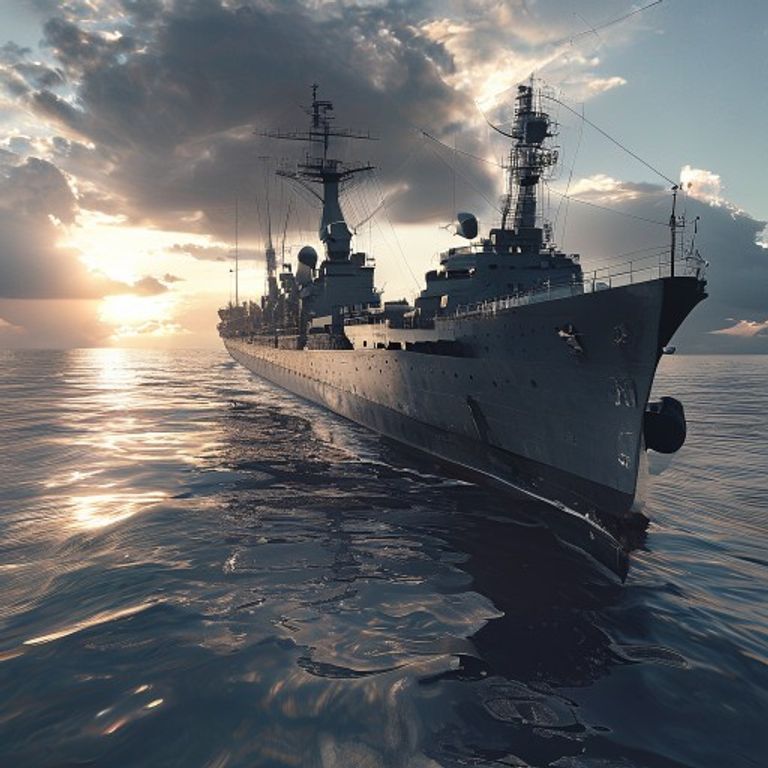
NewsMatrix
Admiral Nakhimov Returns: Russia’s Upgraded Battlecruiser Poised to Reshape Global Naval Power
In a significant development that underscores Russia’s renewed commitment to projecting naval strength on the global stage, the formidable battlecruiser Admiral Nakhimov has successfully concluded its rigorous sea trials and returned to port. This impressive warship, a centerpiece of Russia’s naval modernization efforts, has undergone an extensive and transformative upgrade program, emerging as a cutting-edge naval asset designed to significantly bolster the nation’s influence in far-off waters. With its outdated Soviet-era equipment meticulously replaced by a suite of state-of-the-art technologies, including advanced precision-guided munitions and formidable defense capabilities, the Admiral Nakhimov reclaims its status as the largest non-aircraft carrier surface combatant globally, signaling a potent resurgence of Russian naval might.
The return of the Admiral Nakhimov is more than just a logistical milestone; it represents a strategic declaration. For years, the vessel, a member of the storied Kirov-class, has been undergoing an overhaul that can only be described as a complete metamorphosis. This painstaking process has involved stripping down the original vessel to its hull and rebuilding it with twenty-first-century warfare capabilities. The successful conclusion of its sea trials confirms that this gargantuan undertaking has delivered a warship that is not merely refurbished but reimagined, ready to face the complex challenges of modern maritime operations and assert Russia’s presence across the world’s oceans. Its operational readiness is expected to redefine naval power dynamics in key strategic regions.
A Resurgence of Naval Might: The Admiral Nakhimov’s Transformation
From Soviet Legacy to Modern Powerhouse
The Kirov-class battlecruisers, originally designed in the 1970s, were a product of the Cold War, intended to counter American carrier battle groups. These colossal vessels, with their nuclear propulsion and heavy armament, were symbols of Soviet naval ambition. The Admiral Nakhimov, originally commissioned in 1988 as Kalinin, then renamed in 1992, represented the third ship of this class. However, as technology evolved, the ship’s original systems, formidable for their time, began to show their age. The decision to undertake a comprehensive modernization rather than decommissioning reflected a strategic imperative to retain a powerful surface combatant with long-range capabilities.
The modernization program for the Admiral Nakhimov commenced in 1999, but significant work only began in 2013 at the Sevmash shipyard in Severodvinsk. This decade-long endeavor involved practically dismantling the ship and reconstructing it with an entirely new combat system architecture. The sheer scale of this project involved replacing thousands of kilometers of cabling, hundreds of electronic systems, and virtually every weapon system on board. The aim was not just to upgrade, but to integrate the battlecruiser into Russia’s modern naval doctrine, allowing it to interface seamlessly with contemporary command, control, communications, computers, intelligence, surveillance, and reconnaissance (C4ISR) networks.
The refit was driven by a vision to create a multi-role warship capable of engaging a wide array of threats – from surface vessels and submarines to aircraft and land targets. This required a complete overhaul of its offensive and defensive capabilities, propulsion systems, and living quarters for its expanded crew. The project has been a testament to Russia’s engineering and shipbuilding prowess, overcoming significant technical challenges and substantial financial investment to bring a Cold War behemoth into the 21st century with unparalleled combat potential.
Cutting-Edge Weaponry and Defense Systems
The most dramatic aspect of the Admiral Nakhimov’s transformation lies in its updated armament. The ship’s primary offensive punch previously came from twenty P-700 Granit anti-ship cruise missile launchers, which have now been entirely removed. In their place, the battlecruiser has been equipped with ten universal vertical launch systems (UVLS) capable of carrying up to 80 cells. These UVLS are designed to accommodate a diverse array of modern missiles, significantly enhancing the ship’s flexibility and lethality. Among the munitions it can now deploy are the Kalibr family of land-attack cruise missiles, anti-ship missiles, and anti-submarine missiles, providing extensive operational reach.
More critically, the Admiral Nakhimov is now reportedly capable of launching the advanced Oniks anti-ship cruise missiles, renowned for their supersonic speed and ability to operate in complex electronic warfare environments. Furthermore, it is expected to be armed with the much-vaunted 3M22 Zircon hypersonic cruise missiles. The Zircon, with its unprecedented speed and maneuverability, presents a significant challenge to existing naval defense systems, offering Russia a potent long-range strike capability that can penetrate advanced defenses. This makes the Admiral Nakhimov a formidable threat to any naval formation or coastal target.
Beyond its offensive prowess, the battlecruiser’s defensive systems have received an equally comprehensive upgrade. Its antiquated air defense systems have been replaced with the modern S-400 Fort-M (a naval variant of the land-based S-400 Triumf) long-range surface-to-air missile system, providing a robust area-denial capability against aerial threats, including aircraft and ballistic missiles. For closer-range defense, the ship now boasts multiple Pantsir-M naval close-in weapon systems (CIWS), integrating advanced anti-aircraft missiles and automatic cannons to protect against anti-ship missiles and smaller threats. Anti-submarine warfare (ASW) capabilities have also been substantially enhanced with new sonar systems, torpedoes, and rocket-propelled depth charges, ensuring comprehensive protection against underwater threats. The integration of sophisticated electronic warfare (EW) suites further complicates targeting for adversaries, while new radar and sensor arrays provide superior situational awareness.
Rigorous Sea Trials: Proving Ground for Advanced Capabilities
The journey from the shipyard to full operational readiness is always punctuated by intensive sea trials, and for a vessel of the Admiral Nakhimov’s complexity and scale, these trials are particularly arduous. Beginning in May 2024, the battlecruiser underwent a series of exhaustive tests in the challenging waters of the Barents Sea. These trials were designed to rigorously assess every aspect of its modernized systems: from the performance of its nuclear propulsion plant and navigation systems to the firing accuracy of its new weapon systems and the effectiveness of its integrated combat information control systems.
During this period, naval crews and civilian engineers pushed the ship and its systems to their limits, simulating various combat scenarios, testing its maneuverability, speed, and endurance. The successful completion of these trials signifies that the Admiral Nakhimov has met stringent operational requirements, affirming the reliability and effectiveness of its extensive upgrades. The data gathered from these trials will be crucial for fine-tuning its systems and preparing its crew for deployment. This phase is critical as it validates years of design, construction, and integration work, ensuring that the vessel is not just technologically advanced but also robust and dependable under operational conditions.
The fact that these trials have concluded successfully allows the ship to be formally returned to service, marking the culmination of one of the most ambitious naval modernization projects in recent history. The rigorous nature of these tests ensures that the battlecruiser is fit for purpose, capable of undertaking the demanding missions expected of it on the high seas.
Strategic Implications: Projecting Russian Influence
The re-entry of the Admiral Nakhimov into active service has profound strategic implications for Russia’s global naval posture. For years, the Russian Navy has sought to rebuild its blue-water capabilities, which enable extended operations far from home ports. The Admiral Nakhimov, with its nuclear propulsion, vast endurance, and powerful armament, provides a significant boost to this ambition. It can operate independently or serve as the flagship of a formidable naval task force, offering significant air defense, anti-surface, and land-strike capabilities across vast oceanic expanses.
Its deployment will undoubtedly enhance Russia’s ability to project power in critical strategic regions, including the Arctic, the North Atlantic, and potentially the Pacific. In the Arctic, a region of increasing geopolitical importance due to its resource potential and new shipping lanes, the battlecruiser’s presence could reinforce Russia’s claims and influence. In the Atlantic, it presents a substantial deterrent and surveillance asset, while in the Pacific, it could provide a counterweight to other major naval powers. The battlecruiser’s enhanced capabilities serve as a clear signal of Russia’s determination to maintain a strong military presence and protect its interests globally.
Furthermore, the Admiral Nakhimov’s advanced precision-guided munitions and hypersonic missile capabilities offer a potent deterrent. Its ability to hold distant targets at risk from sea amplifies Russia’s strategic options in various scenarios, from conventional warfare to maintaining regional stability. The vessel serves not only as a military asset but also as a diplomatic tool, asserting Russia’s status as a major global maritime power and demonstrating its technological prowess to potential adversaries and allies alike.
Technical Specifications and Unmatched Scale
The Admiral Nakhimov belongs to the Project 1144 Orlan class, commonly known as Kirov-class battlecruisers. With an estimated full displacement of around 28,000 tons, it remains the largest non-aircraft carrier surface combatant in the world. Its sheer size allows for an unparalleled combination of weaponry, sensors, and endurance. Powered by a nuclear propulsion system, supplemented by steam turbines, the ship can achieve speeds exceeding 30 knots and boasts virtually unlimited range, restricted only by the need for provisions for its large crew, which typically numbers around 700-800 personnel.
To put its scale into perspective, the Admiral Nakhimov dwarfs most contemporary destroyers and cruisers operated by other navies, often having a displacement equivalent to that of light aircraft carriers. Its extensive array of weapons and sensors requires significant onboard power generation and space, features that its massive hull readily accommodates. The modernization has also focused on improving its habitability and resilience, ensuring that it can sustain long deployments in challenging environments. The cost of this ambitious refurbishment project has been estimated in the billions of dollars, reflecting the immense engineering effort and the value placed on retaining such a unique and powerful asset.
The design philosophy behind the Kirov class, and now the modernized Admiral Nakhimov, emphasizes self-sufficiency and overwhelming firepower. It is essentially a floating arsenal, capable of independent operations for extended periods, providing command and control for smaller formations, and delivering devastating strikes against a broad spectrum of targets. Its robust construction and comprehensive layered defenses are designed to withstand significant combat damage, further cementing its role as a formidable presence on the high seas.
The Road Ahead: Deployment and Doctrine
With its sea trials successfully concluded, the Admiral Nakhimov is now poised for its formal return to the Russian Navy’s Northern Fleet, based at Severomorsk. Its first operational deployments will be keenly watched by naval strategists worldwide, offering insights into Russia’s current naval doctrine and strategic priorities. It is highly probable that the battlecruiser will participate in major naval exercises, showcasing its new capabilities and integrating with other elements of the Russian fleet, including submarines and naval aviation assets.
Its role is anticipated to be multifaceted: from leading anti-carrier missions to providing formidable air defense for other surface vessels, and conducting long-range strike operations. The presence of such a heavily armed and technologically advanced warship will undoubtedly influence military planning in regions where Russia seeks to assert its maritime interests. It also sends a clear message about Russia’s long-term naval ambitions, demonstrating a commitment to investing in high-value strategic assets despite economic pressures.
The Admiral Nakhimov, therefore, is not just a ship; it is a statement of intent. Its operational deployment will initiate a new chapter for the Russian Navy, offering an unparalleled platform for power projection and defense in an increasingly complex global security landscape. Its return marks a significant moment in modern naval history, signaling a potent new force on the world’s oceans.
A New Chapter for Russian Naval Power
The successful return to port of the modernized Admiral Nakhimov battlecruiser marks a pivotal moment for the Russian Navy and global maritime power dynamics. After years of intensive refurbishment and rigorous sea trials, this colossal warship has emerged as a state-of-the-art combat platform, embodying a profound technological leap from its Soviet-era origins. Equipped with a formidable array of advanced precision-guided munitions, including hypersonic missiles, and boasting comprehensive defense capabilities, the Admiral Nakhimov reinforces its position as the largest surface combatant globally, excluding aircraft carriers.
Its re-entry into active service significantly enhances Russia’s capacity for blue-water operations, allowing for greater projection of influence in strategic regions across the world’s oceans. From the Arctic to distant naval theaters, the battlecruiser provides Russia with an unmatched combination of firepower, endurance, and technological sophistication. This monumental modernization project not only underscores Russia’s commitment to maintaining a powerful naval presence but also signals its intent to remain a key player in shaping international maritime affairs.
As the Admiral Nakhimov prepares for its operational deployments, its presence will undoubtedly be a focal point for military analysts and naval powers worldwide. It represents not just a resurrected warship, but a powerful symbol of renewed national ambition and technological advancement, ushering in a new chapter for Russian naval power in the 21st century.