
 By NewsMatrix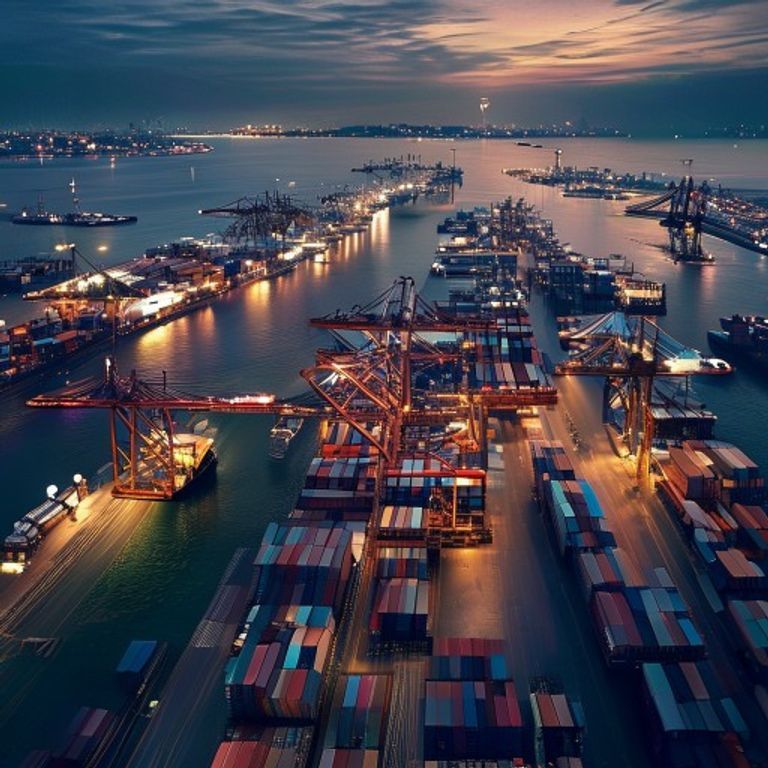
NewsMatrix
US Operations Escalate Against Iran’s Strategic Bandar Abbas Port
In a significant development that underscores the escalating geopolitical tensions in the Middle East, reports indicate that US forces have intensified operations targeting Iran’s vital southern port city of Bandar Abbas. This strategic campaign is reportedly aimed at significantly degrading Iran’s capacity to threaten international shipping lanes, a move with profound implications for global energy markets and the broader landscape of international trade. The actions signal a critical phase in the long-standing rivalry between the United States and Iran, focusing on a location central to Iran’s maritime logistics and coastal defense capabilities.
The Unrivaled Strategic Importance of Bandar Abbas
Bandar Abbas is not merely a port; it is the beating heart of Iran’s maritime infrastructure and a lynchpin in the global energy supply chain. Situated on the Strait of Hormuz, the narrow chokepoint through which approximately one-fifth of the world’s total oil consumption passes daily, its geographical location alone confers immense strategic value. As Iran’s largest port, it serves as the primary gateway for the nation’s seaborne trade, handling the vast majority of its imports and exports, including essential goods and petroleum products.
Beyond its commercial significance, Bandar Abbas is home to the main base of the Islamic Revolutionary Guard Corps Navy (IRGCN), a critical component of Iran’s defense and naval power projection. The port hosts a substantial portion of Iran’s naval fleet and serves as a command and control center for operations in the Persian Gulf and the Strait of Hormuz. Its coastal defense batteries and naval assets stationed there are designed to assert Iranian control over these crucial waterways, making it an indispensable asset for Iran’s national security and its capacity to exert regional influence.
Any disruption to operations at Bandar Abbas, therefore, has immediate and far-reaching consequences, not only for Iran’s economy but also for the stability of global energy prices and the smooth flow of international commerce. It represents a focal point where economic imperatives, national security concerns, and international geopolitics converge.
US Objectives: Countering Maritime Threats
The stated objective behind the US forces’ campaign against Bandar Abbas is to neutralize or significantly diminish Iran’s ability to pose a threat to maritime navigation. Over recent years, concerns have mounted regarding incidents involving commercial vessels in the Strait of Hormuz and surrounding waters, which the US and its allies have frequently attributed to Iran. These include attacks on tankers, seizure of vessels, and harassment of international shipping, often linked to the IRGCN operating from bases like Bandar Abbas.
The methods employed in such a campaign, while not always publicly disclosed, could encompass a range of strategies from enhanced intelligence gathering and surveillance to cyber operations targeting port infrastructure and logistics networks. Naval patrols and increased presence in international waters adjacent to the port would also serve to deter and, if necessary, interdict any perceived threats. The ultimate aim is to create an environment where Iran’s capacity to launch disruptive actions from its primary maritime hub is severely hampered, thereby safeguarding the free flow of commerce through one of the world’s most vital maritime arteries.
By targeting the logistical and operational capabilities centered at Bandar Abbas, the US seeks to raise the cost of Iranian aggression, compelling a recalculation of its maritime strategy. This approach reflects a broader policy of deterrence and defense, designed to protect international shipping and uphold the principle of freedom of navigation in contested waters.
Global Energy Markets on Edge
The ripple effects of heightened tensions around Bandar Abbas extend far beyond the immediate geographical confines of the Persian Gulf. The Strait of Hormuz is singularly important for global energy security, with millions of barrels of crude oil and significant volumes of liquefied natural gas (LNG) transiting through it daily. Any threat to this corridor, or even the perception of such a threat, sends immediate tremors through international energy markets.
Disruptions at Bandar Abbas, whether direct or indirect, could lead to significant bottlenecks, delaying shipments and increasing transportation costs. In a worst-case scenario, severe impediments to passage through the Strait could trigger a sharp spike in global oil and gas prices, reminiscent of past energy crises. Such an event would have detrimental effects on economies worldwide, raising inflation, dampening industrial activity, and burdening consumers. Nations heavily reliant on Middle Eastern oil, particularly in Asia and Europe, would face immediate and substantial economic headwinds.
The current campaign thus plays into a delicate balance of supply and demand, with every development closely monitored by traders, analysts, and governments globally. The specter of disruption hangs heavy over an already volatile energy market, making the stability of operations around Bandar Abbas a matter of international economic concern.
Escalating Geopolitical Tensions and Regional Stability
The targeting of Bandar Abbas by US forces marks a significant escalation in the protracted confrontation between Washington and Tehran. This move is interpreted by many as a clear signal of the US’s resolve to counter what it perceives as Iranian aggression and destabilizing activities in the region. Such actions are inherently fraught with risk, potentially leading to a dangerous cycle of retaliation and counter-retaliation that could spiral into a broader regional conflict.
Regional powers are keenly observing these developments. Allies of the United States, such as Saudi Arabia and the UAE, may view the campaign as a necessary measure to curb Iranian influence, while Iran’s proxies and allies in the region, including various non-state actors, could be galvanized to respond. The intricate web of alliances and rivalries in the Middle East means that actions in one arena can quickly trigger reactions in others, posing a constant threat to regional stability.
The diplomatic channels remain critical, yet increasingly strained. International bodies and concerned nations are likely to intensify calls for de-escalation and a return to dialogue, recognizing the immense potential for devastating consequences should the situation deteriorate further. The control over vital energy corridors and the broader question of regional hegemony continue to fuel these complex and dangerous geopolitical dynamics.
The Human and Economic Cost for Iran
While the focus of the US campaign is on degrading military capabilities and deterring maritime threats, the economic and human toll on Iran should not be overlooked. As the primary port for the nation, disruptions at Bandar Abbas would severely impact Iran’s ability to import essential goods, including food and medicine, and export its non-oil products. This could exacerbate existing economic hardships faced by the Iranian populace, already contending with years of international sanctions and domestic challenges.
The economic squeeze could lead to increased internal dissatisfaction and potentially trigger social unrest, adding another layer of complexity to the regime’s governance. The targeting of a central economic hub carries the risk of further isolating Iran and pushing its economy closer to a critical state, with unpredictable consequences for regional stability and the welfare of its citizens. The delicate balance between applying pressure and avoiding a humanitarian crisis remains a key consideration for international actors.
Conclusion: A Precarious Crossroads
The intensified US operations targeting Iran’s strategic port city of Bandar Abbas represent a critical juncture in US-Iran relations and pose significant challenges to global stability. While the campaign aims to safeguard international shipping and counter perceived threats, its execution carries inherent risks of further escalation, with potential ramifications for global energy markets, international trade, and regional security. The strategic importance of Bandar Abbas to both Iran’s economy and its military capabilities ensures that any actions taken there will resonate across the world.
As the international community watches closely, the coming weeks and months will reveal whether these operations lead to a de-escalation of maritime threats and a return to stability, or if they precipitate a more dangerous confrontation in a region already accustomed to volatility. The stakes are undeniably high, requiring careful consideration and diplomatic engagement to navigate this precarious crossroads and avert a wider crisis.