
 By NewsMatrix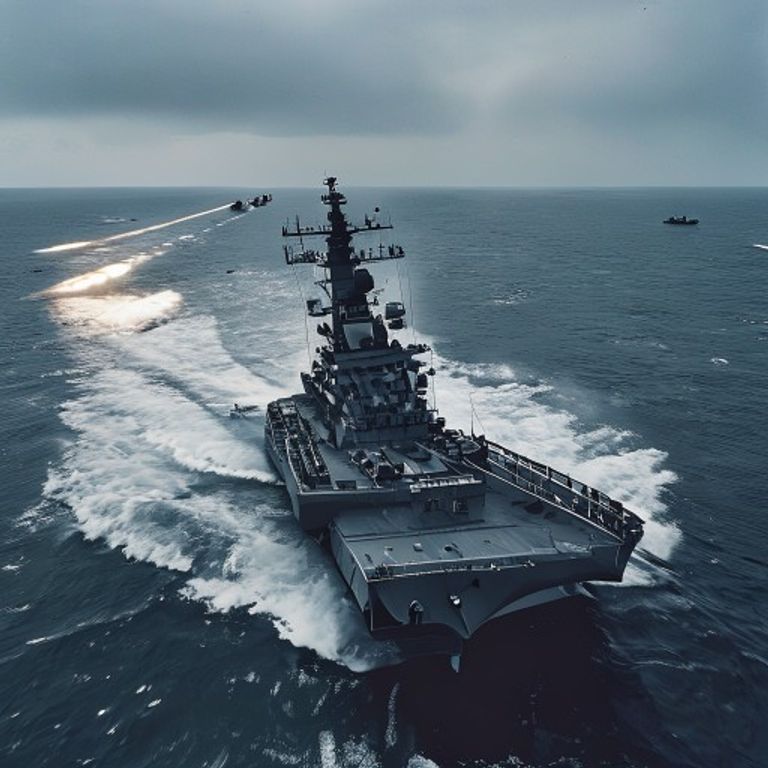
Rising Tensions: China Conducts Live-Fire Naval Drill in Japan’s Claimed EEZ
In a move poised to heighten geopolitical friction in the East China Sea, China recently conducted a live-fire naval drill within waters claimed by Japan as its exclusive economic zone (EEZ). The exercise, which Beijing describes as routine, has drawn a strong diplomatic protest from Tokyo, citing significant potential dangers to navigation and safety. Beijing, however, has swiftly dismissed Japan’s concerns, reiterating its long-held position that the legal basis for Japan’s EEZ claim in the vicinity of the disputed Okinotorishima atoll is without merit. This latest China Japan naval drill is not an isolated incident but is widely interpreted by international observers as another clear indicator of growing military coordination between China and Russia, further complicating the already intricate security landscape of the Indo-Pacific. The incident brings to the forefront a long-standing and deeply entrenched dispute over the precise legal status of Okinotorishima – whether it constitutes an ‘island’ capable of generating an EEZ under international law, or merely a ‘rock’ with limited maritime entitlements.
The Provocative Maneuver and Immediate Aftermath
The naval exercise, conducted by units of the People’s Liberation Army Navy (PLAN), involved the discharge of live ammunition and sophisticated naval maneuvers in an area that Japan asserts falls squarely within its 200-nautical-mile exclusive economic zone. While specific details regarding the exact coordinates of the drill and the types of vessels involved remain somewhat guarded by Beijing, Tokyo’s prompt and forceful reaction underscores the gravity of the situation. Japanese authorities, through diplomatic channels, lodged an official protest, expressing profound concern over what they describe as a unilateral action that disregards international norms and poses direct risks to the free and safe passage of commercial and other vessels in a crucial maritime corridor. The protest highlighted the potential for accidents and miscalculations in an already sensitive region, emphasizing the need for transparency and restraint from all parties.
China, in response, firmly rejected Japan’s protest, issuing a statement that challenged the very premise of Japan’s EEZ claim in the area. Beijing’s foreign ministry spokesperson emphasized China’s sovereign right to conduct military exercises in what it considers international waters, arguing that Japan’s EEZ demarcation around Okinotorishima is not recognized by a significant portion of the international community, including China itself. This exchange of diplomatic barbs illustrates the deep chasm in interpretations of international maritime law and sovereign rights between the two Asian powers, with profound implications for regional stability.
Okinotorishima: A Tiny Atoll, A Giant Dispute
At the heart of this enduring maritime standoff lies Okinotorishima, a remote and uninhabited coral atoll located in the Philippine Sea, approximately 1,700 kilometers south of Tokyo. For Japan, Okinotorishima is unequivocally an island, and as such, it asserts its right under the United Nations Convention on the Law of the Sea (UNCLOS) to claim a 200-nautical-mile EEZ and continental shelf extending from its shores. To bolster this claim, Japan has invested significant resources in maintaining the atoll, undertaking extensive concrete reinforcement and stabilization projects to prevent erosion and ensure its above-water presence at high tide, thereby solidifying its ‘island’ status.
However, China and several other nations vehemently dispute this classification, contending that Okinotorishima is nothing more than a collection of barren rocks that are incapable of sustaining human habitation or economic life of their own. Under Article 121, Paragraph 3 of UNCLOS, “Rocks which cannot sustain human habitation or economic life of their own shall have no exclusive economic zone or continental shelf.” Beijing argues that Japan’s artificial enhancements do not alter the inherent geological nature of Okinotorishima as a ‘rock,’ and therefore, it should only be entitled to a 12-nautical-mile territorial sea, not an expansive EEZ. This fundamental disagreement over the interpretation of UNCLOS, particularly concerning the definition of an ‘island’ versus a ‘rock,’ has far-reaching consequences for maritime resource rights, freedom of navigation, and strategic control over vast swathes of the Pacific.
The dispute over Okinotorishima is not merely academic; it has significant strategic and economic ramifications. An EEZ around Okinotorishima would grant Japan exclusive rights to exploit marine resources, including vast fishing grounds and potential undersea mineral deposits, over an area roughly equivalent to Japan’s landmass. Critically, it also extends Japan’s strategic influence into key shipping lanes and potential submarine routes, making the atoll a focal point in the broader struggle for maritime dominance in the Western Pacific.
The Shadow of China-Russia Military Coordination
The timing and nature of China’s recent naval drill cannot be viewed in isolation; they appear firmly embedded within a broader pattern of intensifying military coordination between Beijing and Moscow. In recent years, both nations have increasingly engaged in joint naval and air force exercises across various regions, from the Baltic Sea to the Pacific. These drills, often involving complex maneuvers and live-fire components, are seen by many international analysts as a concerted effort to project power, enhance interoperability, and send a clear message to the United States and its allies regarding their growing strategic alignment.
Analysts suggest that the increasing convergence of China and Russia’s military objectives is driven by a shared perception of external threats, particularly from what they view as an expanding Western-led alliance system. Both nations have expressed strong opposition to NATO expansion and the growing U.S. military presence in the Indo-Pacific. Joint exercises serve as a practical demonstration of their capacity to operate together and potentially challenge the existing security architecture. For China, collaboration with Russia provides valuable experience and technological insights, while for Russia, it underscores its role as a significant global player despite its focus on the European theatre. This latest China Japan naval drill, conducted in a sensitive area close to a key U.S. ally, Japan, thus takes on added significance within this larger geopolitical context, signaling a deliberate and coordinated challenge to regional security norms.
Implications for Regional Security and International Law
The implications of such exercises extend far beyond the immediate diplomatic spat. They raise serious questions about regional security, the sanctity of international maritime law, and the potential for unintended escalation. When military drills are conducted in disputed waters, especially those involving live-fire elements, the risk of miscalculation, accidental collision, or direct confrontation increases significantly. For commercial shipping and fishing fleets, such activities introduce an element of unpredictable danger, disrupting routine operations and potentially impacting global supply chains.
Moreover, China’s consistent dismissal of Japan’s EEZ claims, particularly those derived from Okinotorishima, represents a broader challenge to the principles of UNCLOS as interpreted by many coastal states. Should Beijing’s stance gain traction or be routinely enforced through military presence, it could set a precedent that undermines the established legal framework for maritime boundaries and resource management globally. This challenge to the rules-based international order is a source of profound concern for nations that rely on stable and predictable maritime governance for their security and economic prosperity. The international community, particularly powers with significant interests in the Indo-Pacific, will be closely watching how these tensions evolve and whether diplomatic avenues can de-escalate the situation before it spirals into a more serious confrontation.
Conclusion
The recent China Japan naval drill in Japan’s claimed exclusive economic zone is a potent symbol of the escalating maritime tensions and complex geopolitical dynamics at play in the Indo-Pacific. While China asserts its right to conduct exercises in what it deems international waters, and dismisses Japan’s EEZ claim around Okinotorishima as legally unfounded, Tokyo views the drill as a dangerous provocation that disregards international maritime safety and challenges its sovereign rights. This incident is inextricably linked to the long-standing dispute over Okinotorishima’s status and is further complicated by the deepening military partnership between China and Russia, presenting a united front that seeks to counterbalance perceived Western influence.
The reverberations of this event are significant, impacting not only the bilateral relationship between China and Japan but also broader regional security and the delicate balance of power. As major players continue to assert their maritime claims and project their military capabilities, the imperative for clear communication, adherence to international law, and robust diplomatic engagement becomes paramount. Without a concerted effort to address these deep-seated disputes and manage military activities responsibly, the East China Sea risks becoming an increasingly volatile flashpoint, with potentially far-reaching consequences for global stability.