
 By NewsMatrix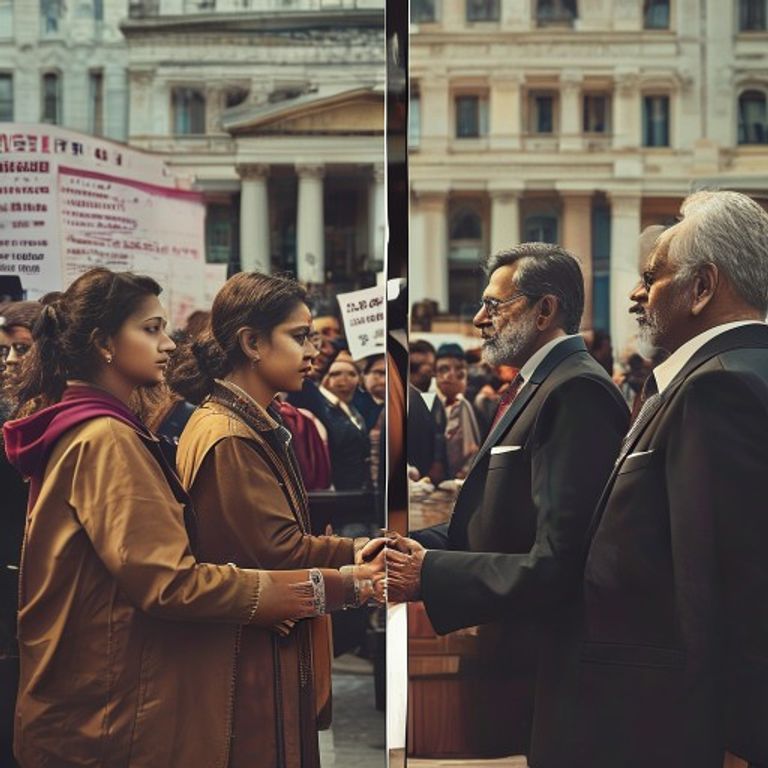
NEET-UG Paper Leak: Protests Escalate as Cockroach Janata Party Demands Accountability
NEW DELHI – The nation is gripped by a growing crisis following widespread allegations of a NEET-UG paper leak, an issue that has now ignited fervent protests across the country. In a significant development, leaders of the Cockroach Janata Party met with Union Minister JP Nadda today, pressing for immediate accountability and concrete government actions. Simultaneously, demonstrators, primarily students and youth, marched resolutely towards Parliament, articulating their profound dissatisfaction with the handling of the alleged leak. The Union Minister, acknowledging the gravity of the situation, requested time to consult with his party’s leadership regarding the demands tabled by the Cockroach Janata Party. The escalating situation underscored the urgency of governmental intervention, even as Union Home Minister Amit Shah engaged in a crucial meeting with the Education Minister within the precincts of Parliament. The intensity of the protests peaked near Parliament, where police resorted to mild force and tear gas to manage demonstrators attempting to breach security barricades, highlighting the volatile nature of the public’s discontent.
The NEET-UG Examination: A Gateway to Medical Aspirations
The National Eligibility cum Entrance Test-Undergraduate (NEET-UG) stands as the single most important examination for millions of aspiring medical students in India. It is the sole gateway to undergraduate medical (MBBS), dental (BDS), and other allied courses in government and private institutions across the nation. Conducted annually, this highly competitive examination draws over 2 million candidates, each year vying for a limited number of seats, making its integrity paramount to the future of India’s healthcare sector and the dreams of countless young individuals. The preparation for NEET-UG is an arduous journey, often spanning years, involving significant financial and emotional investment from students and their families. Coaching centres proliferate, promising success, and the pressure on students is immense. Therefore, any compromise to the sanctity of this examination, such as a paper leak, is not merely an administrative lapse but a profound betrayal of trust and an attack on the very principle of meritocracy.
Allegations of Leakage and Public Outcry
Rumours and concrete allegations of the NEET-UG paper leak began circulating shortly after the examination, raising immediate red flags among candidates and educational experts. Social media platforms became a hub for students sharing evidence, expressing concerns, and demanding transparency. The initial reports suggested that the examination paper, or at least significant portions of it, had been circulated on encrypted messaging platforms hours before the official start time in several regions. This led to an immediate erosion of confidence among students who had diligently prepared, fearing that their hard work would be undermined by unfair advantages gained by others through illicit means. The public outcry quickly escalated beyond mere academic concern, transforming into a broader debate about systemic corruption, the security of high-stakes examinations, and the accountability of the National Testing Agency (NTA), the body responsible for conducting NEET-UG.
Cockroach Janata Party’s Resolute Stand and Demands
Seizing upon the palpable public anger and the disillusionment among the youth, the Cockroach Janata Party emerged as a prominent voice demanding justice for the affected students. The party, known for its vocal opposition on critical national issues, wasted no time in mobilizing its cadre and supporters to amplify the demand for a fair resolution. Their leaders articulated a series of specific, non-negotiable demands to the government:
- Immediate Cancellation of the NEET-UG 2024 Examination: Arguing that the sanctity of the exam has been irrevocably compromised, the party insists on a complete annulment of the conducted test.
- Conducting a Fresh Examination: They call for a re-examination, ensuring stringent security protocols and transparency throughout the process to restore confidence.
- Independent High-Level Inquiry: The party demands an impartial investigation, preferably by a judicial commission or an independent agency, to unearth the masterminds behind the leak and identify any complicity from within the administrative machinery.
- Accountability and Punishment: Calls for stringent legal action against all individuals, including officials, involved in the leak, advocating for severe penalties to deter future occurrences.
- Systemic Reforms in NTA: Beyond immediate actions, the Cockroach Janata Party emphasized the need for a complete overhaul of the National Testing Agency’s operational procedures, technological infrastructure, and oversight mechanisms to prevent similar incidents in the future.
These demands were at the forefront of the discussions held by the Cockroach Janata Party leaders with Union Minister JP Nadda, indicating a clear, unyielding stance from the opposition.
The March Towards Parliament: A Day of Confrontation
As the political negotiations unfolded, the streets of the capital witnessed a powerful display of public dissent. Hundreds of students, parents, and members of the Cockroach Janata Party converged for a planned march towards the Parliament building. The atmosphere was charged with slogans demanding “Justice for NEET Students” and “Accountability Now.” Carrying placards and banners, the demonstrators expressed a potent mix of frustration, anger, and a desperate plea for their voices to be heard. The march was organized to exert public pressure on the government, ensuring that the issue remained at the top of the national agenda. As the procession neared the high-security zone surrounding Parliament, police had erected multiple layers of barricades to prevent protestors from approaching the sensitive area. Despite warnings, a segment of the demonstrators, fueled by their passion and desperation, attempted to breach these barricades. This led to a direct confrontation where law enforcement personnel were compelled to use mild force, including water cannons and the deployment of tear gas shells, to disperse the crowd and maintain order. Several protestors were detained, though later released, in what marked a visible escalation of the agitation.
High-Level Consultations: Government’s Internal Deliberations
Amidst the escalating street protests and political pressure, the government initiated high-level internal deliberations. The meeting between Union Home Minister Amit Shah and the Education Minister within the Parliament complex was a clear indication of the gravity with which the ruling dispensation was viewing the crisis. Such a meeting, involving two key cabinet ministers, suggests that the issue has transcended beyond a mere educational administrative problem and has entered the realm of significant political and governance challenge. Discussions would likely have focused on potential response strategies, including the feasibility and implications of cancelling the examination, the scope of an inquiry, and measures to restore public confidence. The government finds itself in a precarious position, balancing the demands for justice from affected students against the administrative complexities and potential legal challenges of re-conducting such a massive examination. Union Minister JP Nadda’s request for “time to consult leadership” reflects the careful and strategic approach the government is expected to take, indicating that a comprehensive decision might involve multiple stakeholders and careful consideration of all ramifications.
The Far-Reaching Impact on Students and Public Trust
The alleged NEET-UG paper leak has inflicted a profound psychological and emotional toll on millions of students who had dedicated years of their lives to preparing for this examination. For many, NEET-UG represents not just an exam but the culmination of a lifelong dream to become a doctor, a beacon of hope for their families, and a pathway to socio-economic mobility. The uncertainty surrounding the results, the accusations of unfair play, and the prospect of a re-examination have plunged these young minds into a vortex of stress, anxiety, and despair. Many students come from humble backgrounds, where every rupee spent on coaching and study materials is a significant sacrifice. The financial burden of a potentially delayed academic year, coupled with the emotional exhaustion, is immense. Furthermore, the incident has severely dented public trust in the integrity of the national examination system. If such a crucial examination can be compromised, questions arise about the fairness and transparency of other competitive exams, potentially eroding faith in the very institutions designed to uphold meritocracy. This erosion of trust can have long-term consequences for the social fabric and the motivation of future generations.
Calls for Systemic Reforms: Beyond Immediate Resolution
Beyond the immediate demands for cancelling and re-conducting the examination, the NEET-UG paper leak has reignited widespread calls for fundamental systemic reforms within India’s examination bodies, particularly the National Testing Agency. Experts and activists argue that a holistic approach is required to safeguard the integrity of such high-stakes tests. This includes implementing advanced technological solutions for secure paper distribution, such as encrypted digital delivery systems that activate only at the examination centre. Enhancing physical security measures at printing presses and distribution hubs, coupled with strict surveillance and accountability mechanisms for all personnel involved, is also crucial. Furthermore, there is a strong push for a robust legal framework with harsher penalties for those involved in paper leaks, ensuring that the deterrent effect is significant. Transparency in investigation processes, public disclosure of findings, and independent oversight of examination bodies are seen as vital steps to restore credibility and prevent future recurrences. The focus is not just on punishing the culprits but on building an impregnable system that prioritizes fairness and equity for all aspirants.
Conclusion: A Test of Governance and Resolve
The ongoing crisis surrounding the NEET-UG paper leak represents a significant test for the government’s resolve in upholding justice and transparency within the education system. The Cockroach Janata Party’s assertive stance, coupled with widespread student protests, underscores the national demand for accountability and swift action. While the Union Minister JP Nadda has sought time for internal consultations, the urgency of the situation is undeniable, particularly with high-level meetings already underway between key cabinet members. The implications extend far beyond the immediate concerns of an examination, touching upon the aspirations of millions, the integrity of educational institutions, and the fundamental trust between citizens and the state. NewsMatrix will continue to monitor developments closely as the nation awaits a comprehensive and equitable resolution to this critical issue, hoping for a response that reassures the affected students and reinforces faith in the sanctity of the examination process.