
 By NewsMatrix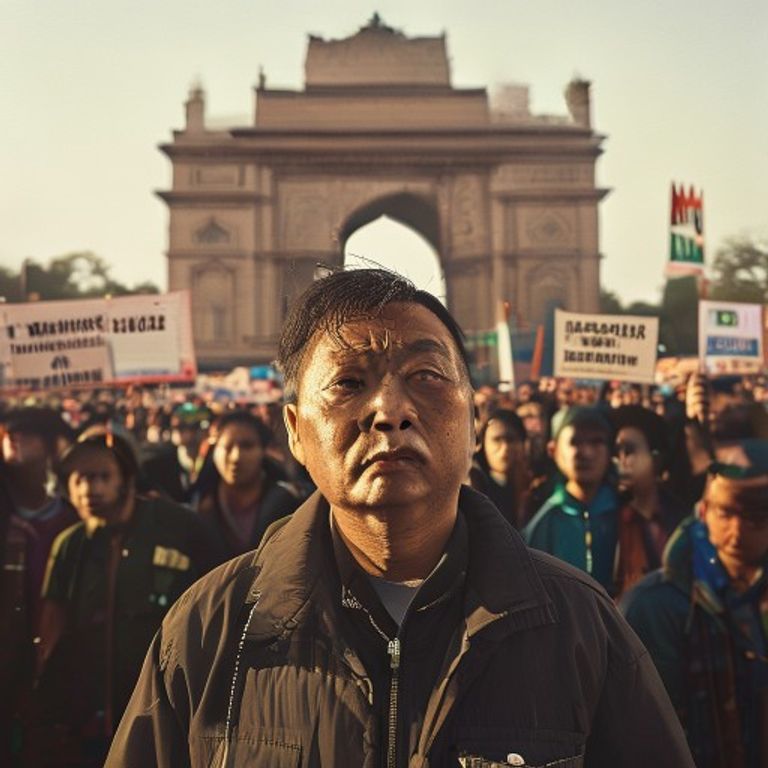
In a significant turn of events that underscores the escalating tensions surrounding the environmental and constitutional demands for Ladakh, renowned innovator and education reformist Sonam Wangchuk, currently hospitalized, has expressed his desire for temporary release to join the ongoing Sonam Wangchuk Protest march. Wangchuk, whose health deteriorated during an intense hunger strike advocating for Ladakh’s protection under the Sixth Schedule of the Indian Constitution, has reportedly recovered sufficiently to seek discharge, signaling an unwavering commitment to his cause despite the personal toll. His supporters, meanwhile, have voiced increasing concerns over what they perceive as undue restrictions on his movement and communication while under medical care, adding another layer of complexity to an already volatile situation.
The movement, spearheaded by Wangchuk, seeks to safeguard Ladakh’s fragile ecosystem and unique cultural identity from the potential adverse impacts of industrial development and uncontrolled tourism. The demand for statehood and inclusion under the Sixth Schedule aims to grant greater autonomy and protection to the region’s indigenous population, allowing them to better manage their land, resources, and traditions. The recent developments, including Wangchuk’s hospitalization and the subsequent public outcry, have brought the focus of national and international media squarely on Ladakh, highlighting the democratic right to peaceful protest and the delicate balance between governance and citizen aspirations.
Sonam Wangchuk’s Resolve Amidst Health Recovery
A Leader’s Unwavering Commitment
Sonam Wangchuk, an engineer, innovator, and education reformist whose work inspired the popular Bollywood film ‘3 Idiots,’ has long been a vocal advocate for sustainable development and environmental conservation in the Himalayan region. His latest activism, a hunger strike commenced to press for specific demands for Ladakh, saw his health decline to a critical point, necessitating his hospitalization. However, recent reports indicate a marked improvement in his condition, allowing him to contemplate rejoining the grassroots movement.
Sources close to Wangchuk have confirmed his improved health and his strong resolve to be physically present with the protestors. “He feels well enough to join us,” stated a close associate, preferring anonymity due to the sensitivity of the situation. “His spirit is unbroken, and he believes his presence will energize the movement and send a clear message about the urgency of our demands.” This development introduces a new dynamic to the protest, as Wangchuk’s physical presence on the streets could significantly amplify its visibility and impact, potentially drawing even larger crowds and greater media attention.
The hunger strike, which lasted several days, was a testament to Wangchuk’s dedication. His decision to put his body on the line resonated deeply with many, both within Ladakh and across the nation, who view him as a symbol of integrity and commitment to public welfare. The very act of seeking temporary release from medical care to return to the heart of the protest underscores the depth of his conviction and his belief in the power of direct action and peaceful demonstration.
Questions Arise Over Hospital Restrictions
While Wangchuk’s health has reportedly stabilized, his supporters and family have openly questioned the circumstances of his hospitalization, particularly the perceived restrictions on his movement and communication. Allegations of limited access to visitors and controlled communication channels have fueled suspicion and concern among his followers, who believe these measures might be an attempt to isolate him from the ongoing movement and public discourse.
“It is highly concerning that a public figure, even while recuperating, should face such restrictions,” stated a representative of the Apex Body of Leh (ABL) and the Kargil Democratic Alliance (KDA), the joint organizations spearheading the protest alongside Wangchuk. “We believe in the democratic right to communicate and receive visitors, especially when one is fighting for a just cause. These restrictions only serve to further agitate the public and deepen mistrust.”
The authorities, on their part, have maintained that any measures taken are solely for Wangchuk’s medical care and safety, ensuring his recovery without undue disturbance. However, the lack of transparency surrounding these restrictions has only served to intensify the scrutiny and further solidify the belief among supporters that their leader is being unduly constrained. This aspect of the situation has become a secondary point of contention, running parallel to the primary demands for Ladakh’s constitutional protection and statehood.
The Genesis of the Protest: Demands for Ladakh’s Future
Safeguarding a Unique Himalayan Region
The core of the Sonam Wangchuk Protest lies in a set of critical demands aimed at preserving the environmental and cultural distinctiveness of Ladakh. Following the bifurcation of the erstwhile state of Jammu and Kashmir in August 2019, Ladakh was carved out as a Union Territory directly administered by the central government. While this move was initially welcomed by many who sought separation from Kashmir, concerns soon emerged regarding the lack of legislative protection for the region’s land, jobs, and unique identity.
The primary demand is for Ladakh’s inclusion under the Sixth Schedule of the Indian Constitution. This provision grants autonomous administrative powers to tribal areas in certain states, allowing them to protect their culture, land rights, and manage local governance. Proponents argue that given Ladakh’s predominantly tribal population and its fragile Himalayan ecosystem, such a safeguard is not just desirable but essential for its long-term survival and sustainable development. Without it, they fear, the region is vulnerable to unchecked exploitation from external industries and developmental projects that could irrevocably damage its delicate balance.
Beyond the Sixth Schedule, the movement also advocates for statehood for Ladakh. This demand stems from the desire for greater local representation and decision-making power, arguing that direct central administration, while providing security, often overlooks nuanced local needs and aspirations. Statehood, combined with Sixth Schedule protection, is seen as the optimal framework for Ladakh to chart its own course while remaining an integral part of India.
Wangchuk and his allies have repeatedly emphasized that these demands are not separatist in nature but are aimed at strengthening Ladakh’s integration with India by ensuring its distinct character is respected and protected within the constitutional framework. They argue that a secure and self-governing Ladakh, with its unique culture and environment preserved, would be a stronger asset to the nation.
A Hunger Strike’s Ultimatum
Prior to his hospitalization, Sonam Wangchuk had issued a clear ultimatum regarding his hunger strike: he would continue until the demands for Ladakh were met, or he would end it if a credible assurance and roadmap for their fulfillment were provided by the government. This declaration highlighted the gravity of the situation and the depth of the protestors’ commitment, putting immense pressure on the central government to engage in meaningful dialogue.
The threat to continue the strike, even to the point of severe health consequences, underscored the perception among protestors that their voices were not being adequately heard through conventional channels. It marked an escalation of tactics, moving from peaceful rallies and discussions to a form of individual civil disobedience designed to draw urgent attention to the cause. Wangchuk’s willingness to endure personal suffering for the collective good galvanized support and drew comparisons to historical figures who have used non-violent resistance to achieve political objectives.
The government’s response to this ultimatum has been largely perceived as insufficient by the protestors. While there have been sporadic attempts at dialogue, a concrete roadmap or a clear commitment to address the core demands, particularly regarding the Sixth Schedule, has remained elusive. This lack of perceived progress is what continues to fuel the ongoing demonstrations and Wangchuk’s resolve to rejoin them.
Clashes and Continued Protests Near Parliament
The March Towards Jantar Mantar
The Sonam Wangchuk Protest has seen a significant escalation in recent days, with thousands of supporters attempting to march towards the Parliament House in New Delhi. The iconic Jantar Mantar, a traditional site for protests in the capital, became the converging point for hundreds of protestors, many of whom had traveled long distances from Ladakh and other parts of India to express solidarity with Wangchuk and his cause. The march was intended as a direct appeal to lawmakers, aiming to bring the demands for Ladakh’s constitutional safeguards and statehood directly to the attention of the highest legislative body.
The atmosphere at Jantar Mantar was charged with emotion and determination. Chants of “Ladakh seeks justice!” and “Save Ladakh!” echoed through the air as protestors, carrying banners and placards, articulated their grievances and hopes. The peaceful demonstration, however, took a tense turn as the protestors attempted to move beyond the designated protest area and advance towards the Parliament complex, which is a high-security zone.
Confrontation with Authorities
As the protestors attempted to breach police barricades and proceed towards Parliament, clashes erupted between the demonstrators and law enforcement personnel. Police forces, deployed in large numbers, intervened to prevent the march from proceeding further, citing security protocols and prohibitory orders in the area. Reports from the ground indicated scenes of pushing and shoving, with some protestors being detained by the police.
Eyewitnesses described a determined but non-violent attempt by the protestors to assert their right to march, met by a firm response from the police aimed at maintaining order and preventing a breach of security. While the clashes were contained, they underscored the deep frustration felt by the protestors and the government’s resolve to control the movement’s trajectory, particularly in sensitive areas of the capital. The detentions served as a stark reminder of the challenges faced by movements seeking to make their voices heard in the political heart of the nation.
The incident near Jantar Mantar further highlighted the growing divide between the protestors’ aspirations and the state’s response. It also brought into sharp focus the broader debate about the limits of peaceful protest in a democratic society, especially when it targets highly secured governmental institutions. Despite the confrontation, the protestors vowed to continue their agitation, signaling that the momentum of the movement remains undiminished.
The Road Ahead: Challenges and Aspirations
Balancing Development and Preservation
The ongoing Sonam Wangchuk Protest is more than just a call for political restructuring; it’s a profound debate about the future of a sensitive ecological zone and its indigenous inhabitants. The demands for Sixth Schedule protection and statehood are rooted in a broader philosophy of sustainable development, one that prioritizes ecological balance and local empowerment over unchecked industrial expansion. Ladakh, with its sparse population, unique high-altitude desert ecosystem, and rich Buddhist cultural heritage, represents a delicate balance that activists fear is under threat.
The central government faces a significant challenge in addressing these demands. On one hand, there is the imperative to facilitate development and integrate all regions into the national growth trajectory. On the other, there is a constitutional and moral obligation to protect tribal communities and fragile environments, as enshrined in various provisions of the Indian Constitution. Finding a middle ground that satisfies both aspirations without compromising either is the crux of the current dilemma.
Dialogue and negotiation are paramount. A constructive engagement between the central government, representatives of Ladakh, and figures like Sonam Wangchuk could pave the way for a resolution that respects the democratic will of the people while ensuring the region’s long-term sustainability. Ignoring the demands or suppressing the protests without addressing the underlying issues risks further alienation and escalation.
A Call for Humane Resolution
As Sonam Wangchuk expresses his readiness to leave the hospital and rejoin the frontline of the protest, the spotlight remains firmly on Ladakh. His improved health and renewed determination serve as a powerful symbol of resilience for the movement. The questions surrounding his communication restrictions in the hospital further amplify the narrative of a struggle for basic rights and freedoms alongside specific political demands.
The clashes near Jantar Mantar highlight the intensity of the public sentiment and the urgency with which the protestors seek a resolution. It is a critical juncture where the government’s response will define not only the future of Ladakh but also set a precedent for how similar regional aspirations are managed across the diverse landscape of India.
For a global audience, the Sonam Wangchuk Protest encapsulates universal themes of environmental justice, indigenous rights, and the power of non-violent resistance in the face of perceived governmental indifference. The world watches to see if a democratic nation can find a humane, equitable, and sustainable solution to the heartfelt demands of its citizens in one of its most unique and ecologically sensitive regions.
The path forward requires empathy, political will, and a genuine commitment to dialogue. The hope remains that the improved health of Sonam Wangchuk will pave the way not for further confrontation, but for a renewed push towards a peaceful and mutually beneficial resolution that secures the future of Ladakh and its people.