
 By NewsMatrix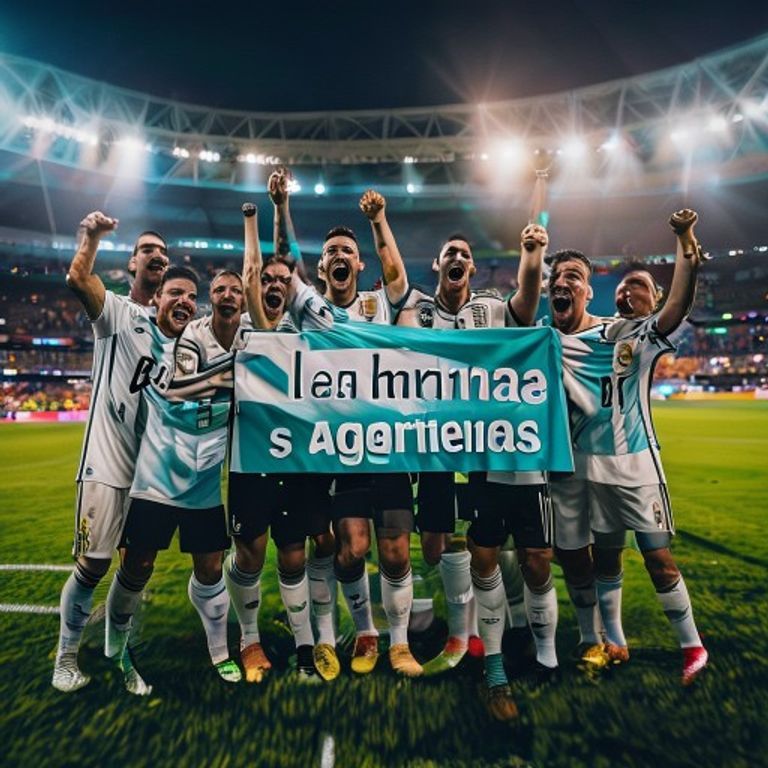
Argentina Triumphs Over England in World Cup Semifinal Amidst Geopolitical Statement
Atlanta, USA – In a captivating display of skill, tenacity, and raw emotion, Argentina emerged victorious against England with a 2-1 scoreline in the FIFA World Cup semifinal held on Wednesday in Atlanta. The exhilarating match saw the South American giants secure their place in the highly anticipated final, igniting widespread celebrations among their fervent supporters and the team. Yet, the euphoria of the sporting achievement was quickly intertwined with a potent political message, as Argentine players, during their post-match celebrations, proudly displayed a banner bearing the resolute declaration, “Las Malvinas son Argentinas” (“The Malvinas are Argentine”). This powerful act, witnessed by millions globally, unequivocally underscored Argentina’s long-standing Malvinas sovereignty claim over the Falkland Islands, transforming a moment of sporting triumph into a significant geopolitical statement.
A Clash of Titans: The Semifinal Showdown
The atmosphere at the Mercedes-Benz Stadium was electric, a cauldron of anticipation as two of football’s most storied nations clashed for a coveted spot in the World Cup final. From the whistle, both teams exhibited a blend of tactical discipline and individual brilliance, reflective of the immense stakes. England, known for their disciplined approach and attacking prowess, sought to control the midfield, while Argentina, spearheaded by their talismanic captain, relied on their creative flair and incisive counter-attacks.
The first half was a tense affair, characterized by robust challenges and near misses. Argentina broke the deadlock midway through the half, a meticulously crafted goal that sent their fans into raptures. The lead, however, was short-lived, as England responded with an equalizer before the interval, capitalizing on a set-piece opportunity. The parity at halftime set the stage for a thrilling second half, with both teams knowing that a single moment of brilliance or error could decide their fate.
As the second half unfolded, the intensity escalated. Tackles flew in, and goalkeepers were called into heroic action. It was Argentina who ultimately found the decisive breakthrough, a stunning individual effort that saw a player weave through the English defense before slotting the ball home with precision. The remaining minutes were a testament to England’s fighting spirit, as they pressed relentlessly for an equalizer, but Argentina’s defense held firm, weathering the storm until the final whistle blew, confirming their hard-earned 2-1 victory and a ticket to the final.
The Banner Unfurled: A Resurgent Malvinas Sovereignty Claim
The immediate aftermath of the final whistle was a cascade of unbridled joy for the Argentine contingent. Players embraced, tears flowed, and the roar of their supporters filled the stadium. It was amidst these scenes of triumph that a poignant and politically charged moment unfolded. From the stands, a group of Argentine fans passed a large banner down to the celebrating players. Without hesitation, several key members of the squad held it aloft, presenting its stark message to the world: “Las Malvinas son Argentinas.”
This phrase, deeply etched into the collective consciousness of Argentina, refers to the Falkland Islands, known in Argentina as Islas Malvinas. The act was not merely a spontaneous display of fan sentiment but a powerful reiteration of a national grievance that dates back centuries, culminating in the brief but brutal 1982 Falklands War (Guerra de Malvinas) between Argentina and the United Kingdom. The war, which claimed the lives of hundreds, ended in a British victory, but for Argentina, the question of sovereignty over the islands remains an open wound and a core tenet of its foreign policy.
For Argentines, the Malvinas are not just a geographical territory; they symbolize national pride, historical injustice, and a perceived colonial legacy. Successive Argentine governments have consistently pressed their Malvinas sovereignty claim on the international stage, utilizing diplomatic channels and international forums to advocate for their position. The sight of their football heroes, fresh from a monumental victory, amplifying this message resonated deeply within Argentina, transforming the sporting arena into a platform for national assertion.
The display also carried significant symbolic weight given the opponent. England, as the sovereign power of the Falkland Islands, was not just Argentina’s rival on the football pitch but also the other party in the enduring dispute. This added an extra layer of meaning to the banner, suggesting a direct challenge or reminder directed at their historical adversary, underscoring the intertwining narratives of sporting rivalry and geopolitical tension.
Sports and Diplomacy: An Enduring Intertwining
The incident at the World Cup semifinal is far from an isolated event in the annals of sports history. The world of athletics has frequently served as a microcosm for broader political, social, and cultural currents. From the “Black Power” salute at the 1968 Olympics to the boycotts of the Cold War era, major sporting events have often been utilized by athletes and nations as platforms for making powerful statements, raising awareness, or protesting injustices.
The Olympic Charter and FIFA’s own statutes generally espouse the principle of keeping politics out of sport. Article 3 of FIFA’s statutes, for example, states that “Discrimination of any kind against a country, private person or group of people on account of race, skin colour, ethnic, national or social origin, gender, disability, language, religion, political opinion or any other reason is strictly prohibited and punishable by suspension or expulsion.” While the Malvinas banner may not fall directly under “discrimination,” it certainly constitutes a political statement, which often leads to scrutiny and potential disciplinary action from governing bodies.
The challenge for sports organizations like FIFA lies in balancing the desire for political neutrality with the reality that athletes are also citizens with rights to freedom of expression. When such expressions are perceived to represent national sentiment rather than individual opinion, and especially when they touch upon sensitive international disputes, the situation becomes particularly complex. FIFA will likely need to assess the context of the display, the intent behind it, and its potential impact on international relations, particularly between the UK and Argentina.
The diplomatic ramifications could be substantial. The UK government, which maintains that the Falkland Islanders have the right to self-determination and have repeatedly voted to remain British, is expected to react to the incident. Such a public display, particularly in a high-profile global event, can strain diplomatic ties and complicate ongoing efforts to foster good relations between the two nations, despite existing cooperation in other areas. The incident serves as a stark reminder that even decades after the conflict, the Malvinas question remains a highly sensitive and unresolved issue for Argentina.
Global Reactions and Media Scrutiny
The immediate aftermath of the banner display saw a flurry of reactions across traditional and social media platforms. In Argentina, the act was widely celebrated, seen as a courageous and patriotic assertion of their rightful claim. National media outlets lauded the players for not only achieving a monumental sporting feat but also for upholding a core national conviction on a global stage. Social media platforms in Argentina buzzed with messages of support, solidarity, and renewed calls for international recognition of their sovereignty claim.
Conversely, in the United Kingdom, the banner was met with condemnation. British politicians and media figures expressed dismay, viewing the act as an inappropriate and provocative politicization of a sporting event. Arguments were made that such displays violate the spirit of sportsmanship and disrespect the memory of those who lost their lives in the 1982 conflict. The incident will undoubtedly fuel further debate within the UK about Argentina’s persistent claims and the broader implications for Anglo-Argentine relations.
Internationally, the incident sparked a broader conversation about the role of sports in international diplomacy and national identity. Analysts from various countries weighed in, offering perspectives on the historical context of the Malvinas dispute, the ethics of political statements in sports, and the potential for such acts to either rally national support or exacerbate international tensions. The World Cup, intended as a celebration of global unity and sporting prowess, once again found itself at the nexus of complex geopolitical narratives.
The Road Ahead: Finals and Geopolitical Aftershocks
With their semifinal triumph, Argentina now turns its attention to the ultimate prize: the FIFA World Cup final. The team will undoubtedly be focused on their preparations, aiming to cap off a remarkable tournament with the coveted trophy. However, the shadow of the Malvinas banner will likely linger, prompting discussions and possibly actions from FIFA regarding the appropriateness of such political displays.
Beyond the football pitch, the incident has undoubtedly sent ripples through diplomatic channels. While immediate drastic actions are unlikely, the event serves as a potent reminder of the fragility of international relations and how deeply ingrained national grievances can resurface in unexpected contexts. The Malvinas sovereignty claim remains a live issue, and this latest public assertion by Argentine athletes will likely reinvigorate diplomatic efforts by both sides to reiterate their positions on the international stage.
The event also underscores the enduring power of symbolism in international affairs. A simple banner, held aloft for a few moments, can encapsulate decades of history, emotion, and political struggle, transforming a sporting celebration into a powerful reaffirmation of national identity and a call for international attention to an unresolved territorial dispute. It highlights how major global events, whether sporting or otherwise, can become arenas where historical narratives and contemporary aspirations collide.
Conclusion: More Than Just a Game
Argentina’s 2-1 victory over England in the FIFA World Cup semifinal was, without doubt, a momentous sporting achievement, a testament to the team’s talent and resolve. It secured their well-deserved place in the final, igniting nationwide jubilation. Yet, the jubilant scenes were imbued with a deeper significance through the display of the “Las Malvinas son Argentinas” banner. This act elevated the event beyond a mere football match, transforming it into a powerful global platform for Argentina’s persistent Malvinas sovereignty claim.
The incident serves as a stark illustration of the indelible link between sports, national identity, and geopolitics. It showcased how athletes, as national representatives, can become conduits for deeply held national aspirations and historical grievances. While FIFA may deliberate on the appropriateness of such political statements, the message from the Argentine team was clear and resonated profoundly with their countrymen: the Malvinas dispute, though often relegated to diplomatic chambers, remains a vibrant and central component of Argentina’s national narrative. As Argentina prepares for the final, the world will remember not only their footballing prowess but also the powerful political declaration that accompanied their historic victory, affirming that sometimes, a game is indeed much more than just a game.