
 By NewsMatrix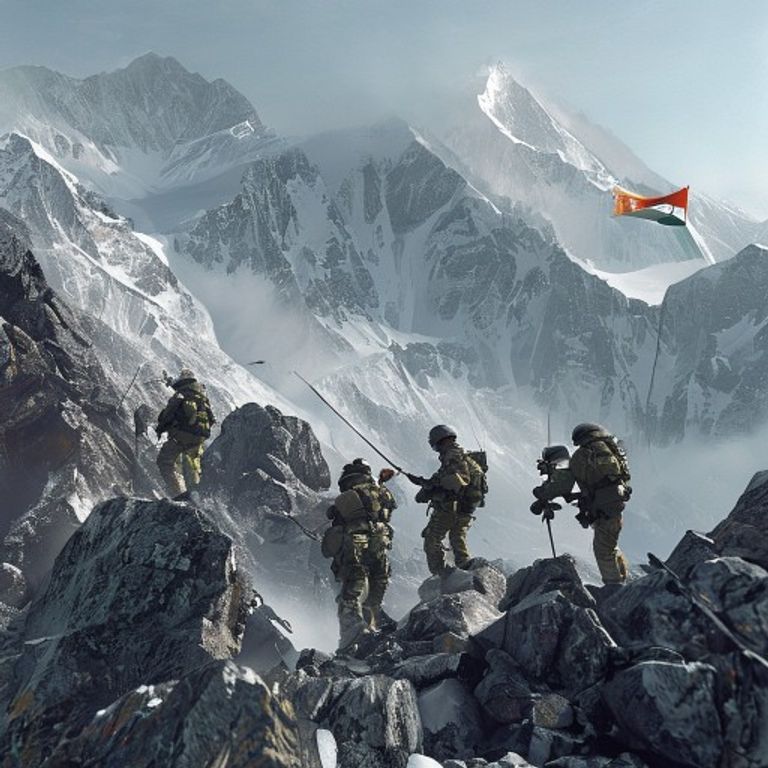
New Delhi, India – The annals of military history are replete with dates that signify monumental shifts, moments when the tide of conflict irrevocably turns. For India, July 14, 1999, stands as such a day, etched deeply into the national consciousness as the undisputed Kargil War Turning Point. It was a day that heralded a decisive victory for the Indian Armed Forces, marking the beginning of the end for the Pakistani incursion into Indian territory and a powerful reaffirmation of India’s sovereignty.
Twenty-five years ago, the rugged, unforgiving peaks of Kargil bore witness to one of the most challenging high-altitude conflicts in modern warfare. What began as a clandestine infiltration by Pakistani troops, disguised as Kashmiri militants, quickly escalated into a full-blown war, testing the resolve and capabilities of the Indian Army to their limits. Yet, amidst the perilous climbs, the brutal cold, and the relentless enemy fire, the Indian forces demonstrated unparalleled courage and strategic brilliance, culminating in the pivotal events of mid-July.
The Genesis of Conflict: A High-Altitude Betrayal
The Kargil War, code-named Operation Vijay by India, erupted in May 1999 when Pakistani forces and irregulars occupied strategic heights on the Indian side of the Line of Control (LoC) in the Kargil district of Jammu and Kashmir. These heights, largely uninhabited during winter due to extreme weather, provided Pakistan with a formidable tactical advantage, overlooking the vital Srinagar-Leh National Highway (NH 1D). The objective was clear: to sever India’s link to Siachen and Ladakh, thereby internationalizing the Kashmir issue and forcing India to concede territory.
The discovery of the intrusions caught India by surprise, triggering an immediate and robust response. The Indian Army, initially challenged by the suddenness of the attack and the formidable terrain, quickly mobilised. The initial phase of the war was marked by arduous climbs, fierce hand-to-hand combat, and heavy casualties as Indian troops attempted to dislodge well-entrenched enemy positions.
July 14, 1999: The Decisive Turn
By July 1999, the Indian Army had been fighting relentlessly for over two months. The strategic importance of reclaiming key peaks like Tiger Hill, Tololing, Pt 4875 (Batra Top), and Three Pimple Complex became paramount. These features were not merely geographical points; they were commanding positions that allowed Pakistani forces to control vital supply routes and observe Indian movements.
The weeks leading up to July 14 were characterised by some of the most intense battles of the war. Indian artillery, including the formidable Bofors guns, played a crucial role in softening enemy defences, while infantry units launched daring assaults under constant fire. The courage displayed by soldiers, often operating in oxygen-deprived conditions and navigating treacherous slopes, was extraordinary. It was during this period that India meticulously planned and executed a series of coordinated operations that would eventually break the back of the Pakistani resistance.
Regaining Strategic Heights
While the actual recapture of specific peaks like Tiger Hill and Tololing occurred slightly before July 14, the cumulative effect of these victories created an irreversible momentum. By July 14, the Indian Army had consolidated its control over a significant number of strategic heights, severely limiting Pakistan’s tactical options and supply lines. The Indian tricolour flying atop these recaptured peaks sent a clear message: India was determined to reclaim every inch of its territory.
- Tiger Hill: Recaptured on July 4, 1999, after a prolonged and heroic battle, its fall was a major psychological blow to Pakistan and a morale booster for India.
- Tololing: This critical feature, overlooking NH 1D, was secured in mid-June, setting the stage for subsequent advances.
- Pt 4875 (Batra Top): Named after Captain Vikram Batra, who was martyred while leading an assault here, its capture was another significant victory.
The coordinated operations were a testament to the seamless integration of infantry, artillery, and air power. The Indian Air Force’s Operation Safed Sagar provided crucial air support, conducting sorties in difficult mountain terrain, targeting enemy bunkers and supply dumps, and further isolating Pakistani positions.
The Fire and Fury Corps: Epitome of Courage
The XIV Corps, famously known as the ‘Fire and Fury Corps’, bore the brunt of the fighting in Kargil. Stationed in Leh, this Corps is responsible for guarding the Line of Actual Control (LAC) with China and the Line of Control (LoC) with Pakistan. Their experience in high-altitude warfare proved invaluable, but even for them, the Kargil intrusions presented unprecedented challenges.
The Fire and Fury Corps highlighted exceptional courage and coordinated operations during this critical period. Their units, including battalions from the Grenadiers, Rajputana Rifles, Naga Regiment, and others, displayed unwavering resolve. Soldiers navigated minefields, faced direct machine-gun fire, and endured frostbite and exhaustion, all while scaling near-vertical cliffs. The stories of individual bravery, exemplified by PVC awardees like Captain Vikram Batra, Rifleman Sanjay Kumar, Grenadier Yogendra Singh Yadav, and Late Captain Manoj Kumar Pandey, became enduring legends, inspiring a nation.
The logistical challenges were immense. Transporting troops, ammunition, food, and medical supplies to altitudes exceeding 16,000 feet under enemy observation required meticulous planning and execution. Engineering regiments worked tirelessly to clear paths and create infrastructure in hostile environments. The collective effort and synergy among different arms of the military were pivotal to overcoming these seemingly insurmountable obstacles.
International Pressure and Pakistan’s Troop Withdrawal
As the Indian Army steadily pushed back the intruders, the international community’s attention focused on the escalating conflict. India, maintaining its stance that the LoC was inviolable and refusing to cross it, garnered significant diplomatic support. The United States, in particular, played a crucial role in pressing Pakistan to de-escalate.
On July 4, 1999, then-Pakistani Prime Minister Nawaz Sharif met with U.S. President Bill Clinton in Washington. Clinton reportedly delivered a stern message, urging Pakistan to withdraw its forces unconditionally. Faced with increasing international isolation and the Indian Army’s relentless advances, Pakistan found itself in an untenable position. The Pakistani military’s initial claims of Kashmiri freedom fighters were debunked by overwhelming evidence of regular army involvement.
It was against this backdrop that Pakistan announced its decision to withdraw its troops from Indian territory. While the exact date of this announcement is debated, the pressure culminated around mid-July, coinciding directly with India’s successful recapture of critical strategic positions. July 14, therefore, became emblematic not only of military gains but also of diplomatic success, where Pakistan’s aggression was globally condemned, forcing their hand.
Operation Vijay Declared a Success: A Nation Rejoices
On July 14, 1999, Prime Minister Atal Bihari Vajpayee, addressing the nation, declared Operation Vijay a success. This announcement was met with widespread relief and jubilation across India. It was a declaration that validated the sacrifices of hundreds of soldiers, assuaged the anxieties of a nation, and underscored India’s unwavering commitment to its territorial integrity.
Vajpayee’s declaration was more than a formal announcement; it was a powerful statement of national resolve and decisive leadership. It signified that India had successfully repelled a well-planned aggression, reclaimed its land, and demonstrated its military prowess without crossing the international border, thereby maintaining diplomatic credibility.
The declaration also initiated the final phase of the war, primarily focused on clearing the remaining pockets of resistance and ensuring a complete withdrawal of all Pakistani forces. By July 26, 1999, officially celebrated as Kargil Vijay Diwas (Kargil Victory Day), the war was declared unequivocally over, with all intruders evicted.
Legacy and Lessons from Kargil
The Kargil War left an indelible mark on India. It led to a comprehensive review of India’s defence preparedness, intelligence gathering, and high-altitude warfare capabilities. The recommendations of the Kargil Review Committee, headed by K. Subrahmanyam, resulted in significant reforms within the Indian defence establishment, aimed at enhancing inter-agency coordination and modernising the armed forces.
More profoundly, Kargil fostered a renewed sense of national unity and patriotism. The entire nation rallied behind its soldiers, with an outpouring of support, donations, and prayers. The war highlighted the immense sacrifices made by the armed forces and cemented their place of honour in the hearts of every Indian citizen.
For the global community, Kargil served as a stark reminder of the volatility of the India-Pakistan relationship and the dangers of misadventure along a heavily militarized border. It underscored the importance of respecting international borders and the Line of Control, which remains a critical dividing line between the two nuclear-armed neighbours.
Conclusion
July 14, 1999, stands as a beacon in India’s military history – the Kargil War Turning Point when the tide of conflict definitively turned in India’s favour. It was a day forged in the fires of battle, cemented by the indomitable spirit of its soldiers, and declared successful by its leadership. It speaks volumes about the extraordinary courage of the Fire and Fury Corps and the unified strategic vision that allowed India to overcome monumental challenges.
The victory in Kargil was not just a military triumph; it was a triumph of national character, resilience, and unwavering commitment to sovereignty. As India remembers the heroes of Kargil, July 14, 1999, will forever be revered as the day India asserted its might, reclaimed its territory, and delivered a powerful message of its unyielding resolve to protect its borders against any aggression.