
 By NewsMatrix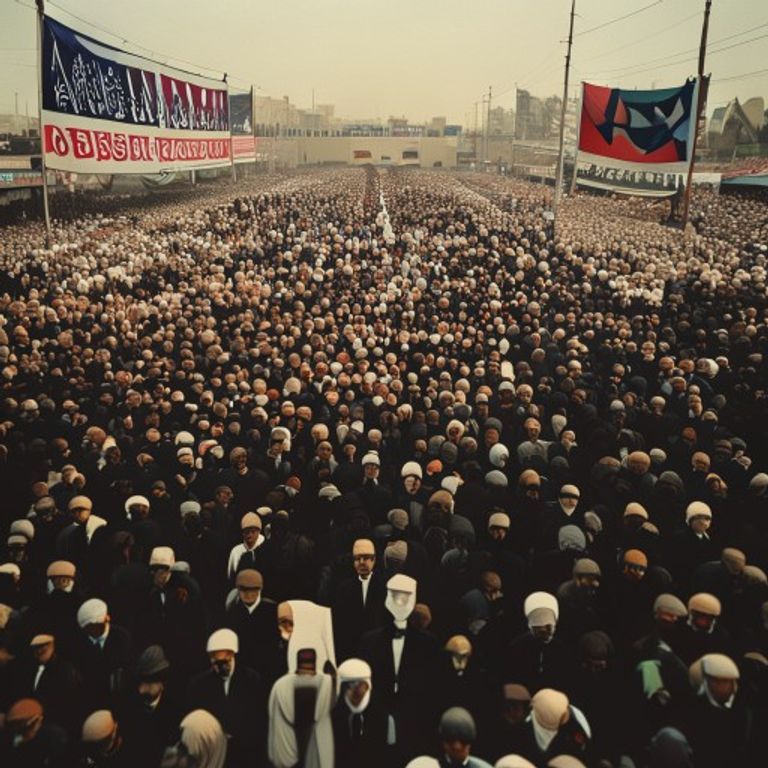
In a powerful display of both grief and political defiance, hundreds of thousands of Iranians gathered in Tehran to bid farewell to the late Supreme Leader, Ayatollah Ali Khamenei. The funeral, which had been delayed due to ongoing regional instability, served as a stark reminder of the deep-seated animosity that continues to define the relationship between Tehran and the West. As the procession moved through the capital, the atmosphere was thick with anti-American and anti-Israel sentiment, punctuated by chants that echoed through the streets, signaling a continuation of the hardline policies that have characterized Iran’s stance on the global stage for decades.
A Nation in Mourning and Defiance
The streets of Tehran were transformed into a sea of black, as mourners from across the country converged to pay their respects. For many, this was more than a funeral; it was a manifestation of loyalty to the ideals of the Islamic Revolution. The scale of the gathering underscored the enduring influence of the late Supreme Leader, whose policies shaped the trajectory of the nation for decades. Yet, amidst the prayers and the lamentations, the political undertones were impossible to ignore.
As the body of the late Supreme Leader was transported, chants of ‘Death to America!’ and ‘Death to Israel!’ reverberated through the crowded thoroughfares. These slogans, while commonplace at state-sanctioned events in Iran, carried a particular weight in the current geopolitical context. Reports from the ground indicated that a performer during the ceremony explicitly called for the demise of former U.S. President Donald Trump, further highlighting the visceral nature of the rhetoric being employed at the event.
A Geopolitical Crossroads
The timing of this funeral is critical. NewsMatrix has been closely tracking the ongoing, fragile negotiations between Washington and Tehran aimed at curbing Iran’s nuclear ambitions and de-escalating regional tensions. The displays of hostility witnessed during the funeral serve as a stark reminder of the massive hurdles facing these diplomatic efforts. While diplomats may sit at the negotiating table, the sentiments expressed by the crowds on the street illustrate a fundamental divide that remains as wide as ever.
The narrative being projected from the funeral procession is one of uncompromising resistance. By emphasizing the anti-Western rhetoric, the Iranian state is signaling to its domestic audience—and the international community—that the transition of power, regardless of the individual, will not result in a pivot toward a more accommodating foreign policy.
The Ceremony and Its Significance
The funeral proceedings were marked by elaborate traditional rites. Prayers were led by the prominent cleric Ayatollah Jafar Sobhani, a figure whose presence underscored the religious legitimacy of the event. Attendees included a comprehensive cross-section of the Iranian political and military elite, reinforcing the unity of the state machinery in the wake of the leader’s passing.
The delay in the funeral, caused by recent regional conflicts and logistical challenges, added a layer of intensity to the occasion. The period of uncertainty likely served to harden the resolve of the mourners, transforming the event into a focal point for nationalistic fervor. Key highlights of the day included:
- The massive turnout of mourners, demonstrating the organizational reach of the state.
- The conspicuous absence of diplomatic representatives from many Western nations, highlighting the ongoing isolation.
- The prominent display of banners and placards calling for regional resistance.
- The central role of religious leaders in framing the funeral as a reaffirmation of the revolutionary path.
The View from NewsMatrix
At NewsMatrix, we recognize that the events surrounding the funeral of Ayatollah Ali Khamenei represent a pivotal moment for the Middle East. The rhetoric witnessed on the streets of Tehran is not merely performative; it is a reflection of a deeply ingrained political identity. The challenge for international policymakers is to reconcile these sentiments with the necessity of diplomacy.
If the goal of the current diplomatic engagement is to foster stability, the signals emerging from Tehran suggest that this will be an uphill battle. The deep-seated animosity, fueled by years of sanctions, regional proxy wars, and direct confrontations, creates a volatile environment where miscalculation is a constant threat. The funeral serves as a lens through which we can observe the rigidity of the current political structure in Iran.
Looking Ahead: The Future of Iran-US Relations
As the international community watches and waits, the central question remains: can diplomacy survive the weight of historical grievances? The scenes in Tehran suggest that the path toward any form of normalization is fraught with obstacles. The late Supreme Leader’s influence will likely continue to cast a long shadow over Iranian policy for years to come.
For observers tracking these developments through NewsMatrix, it is clear that the status quo is increasingly fragile. The convergence of domestic grief and international defiance during the funeral serves as a potent reminder that in the realm of geopolitics, the echoes of the past have a profound impact on the possibilities of the future. The international community must remain vigilant as Iran navigates this period of transition, aware that the slogans shouted in the streets of Tehran today may well dictate the diplomatic realities of tomorrow.
In conclusion, the funeral of Ayatollah Ali Khamenei was more than a mourning ritual; it was a defiant statement of purpose. It highlighted the challenges of diplomacy in a climate of intense hostility and underscored the reality that, despite the best efforts of negotiators, the shadow of conflict looms large. NewsMatrix will continue to monitor the situation, providing in-depth analysis of how these events shape the evolving landscape of global politics.